
February 7th is a day that doesn’t have much history for birthdays with the Yankees’ organization. In fact, only three players born on that day have ever worn the pinstripes: combining for, essentially, one full season of MLB at-bats between them.
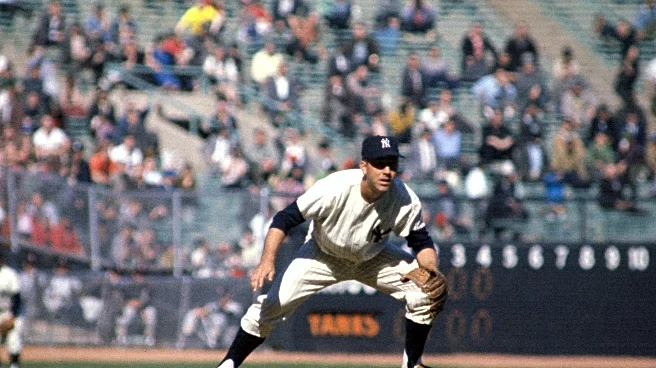
There’s Frank Leja, who had seven combined at-bats with the Yankees from 1954-55 due to “bonus baby” rules at the time holding him back from the minors, beginning and ending his tenure with the team before his 20th birthday. He only managed a small stint
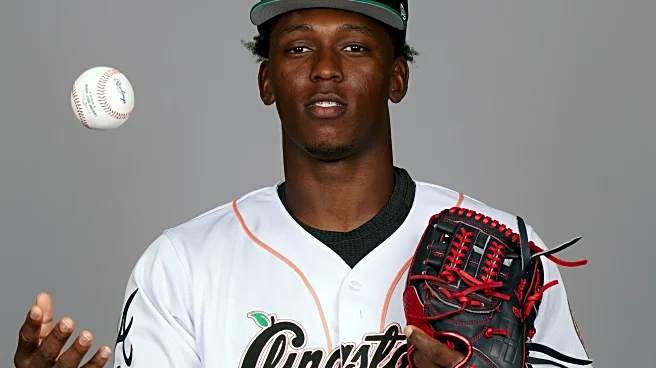
with the Los Angeles Angels in 1962, long afterwards. The other player is another player who debuted exceptionally early with the Yankees, but one whose story is (hopefully) not close to complete in former super prospect Jasson Domínguez.
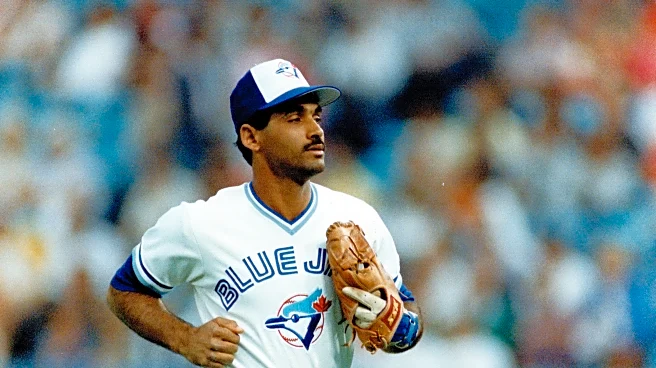
But while Domínguez has the most at-bats of the three, the third player is someone who managed to thrive outside the Bronx, where he got limited at-bats early before putting together an admirable career. That man is the late Dámaso García.
Dámaso Domingo García
Born: February 7, 1957 (Moca, Dominican Republic)
Died: April 15, 2020 (Santo Domingo, Dominican Republic)
Yankees Tenure: 1978-79
García’s path to baseball is an interesting story in it of itself. He started out playing soccer, captaining not only his university team in the Dominican Republic at age 17, but also the national team at the 1974 Central American and Caribbean Games in 1974. The host nation went just 1-3 in the group stage, being eliminated, but García scored the opening goal of the tournament against Bermuda.
Soccer had been part of García’s life since he was seven, but he would have a different calling. Epy Guerrero, a scout for the Yankees at the time, was able to get García to join the organization in 1975 despite limited baseball experience. His bat was understandably inconsistent in the minors given his relative inexperience—he would hit for a good average but post-OPS’s below .700 up the ladder—but he made his way to the majors in 1978 after hitting .268 with 22 stolen bases for Triple-A Tacoma. García debuted for the eventual World Series champions on June 24th as an eighth-inning defensive replacement.
When mainstay Willie Randolph went down with an injury, García was promoted and presented with an opportunity to show the big-league club what he was about. For the next three weeks, the 21-year-old got a majority of reps at second base, usually being pulled late in games for a pinch-hitter. García struggled, slashing just .195/.227/.195 in 44 plate appearances before being demoted in mid-July and spending the rest of ’78 in Tacoma as the Yankees went back-to-back in the World Series.
Back in Triple-A to start the ’79 campaign (but in Columbus this time!), García played just 34 games and struggled, not making it back to the majors until September due to Randolph’s stranglehold on second base. He was again unimpressive, hitting .263 but with no walks and one extra base hit in 38 plate appearances in 11 games. The signs were there that he was soon to be traded, as he was primarily used at shortstop instead of his natural position.
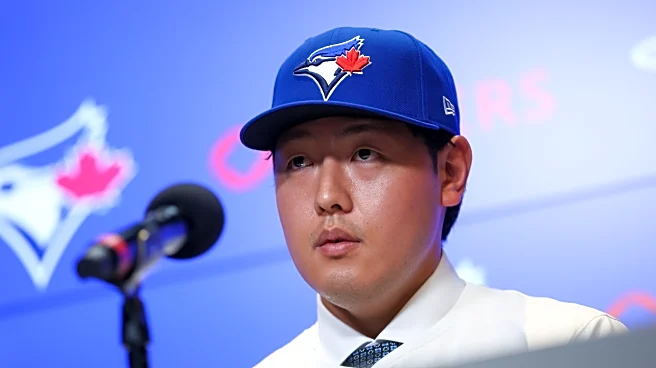
The trade finally did come in the offseason, as the Yankees sent García along with old playoff hero Chris Chambliss and lefty Paul Mirabella to the Toronto Blue Jays on November 1st in exchange for a package of Rick Cerone, Tom Underwood, and Ted Wilborn. Cerone was the man who the Yankees really had their eye on in this trade since they believed that he could help fortify the catching position as they tried shake off the shock of losing Thurman Munson to tragedy. Cerone would get down-ballot MVP votes in an AL East-winning season in 1980, but his bat fell off a cliff after that. Underwood would be a solid starting pitcher for the Yanks for a year and a half, and Wilborn barely played in pinstripes.
Despite García’s impending breakout, the Yankees really had nowhere for him to play. Randolph would be a mainstay for another decade at second base, Bucky Dent would last through ’82 and was a folk hero at shortstop, and Graig Nettles, while in his mid-30s, continued to give the Yankees good at-bats at third base for another few seasons. If García played, say, left field or first base, maybe they would have regretted it more.
García became a full-time starter in Toronto in 1980, coming fourth in AL Rookie of the Year voting after hitting .278 with an 81 OPS+. A broken wrist and a bout with the flu derailed his ’81 campaign, but he returned in ’82 to get down-ballot MVP votes and his first and only Silver Slugger, hitting .310 with 54 stolen bases, accruing a career-high 4.6 rWAR. García once again eclipsed the .300 mark in ’82, but didn’t earn any accolades.
García’s reputation as a great bat-to-ball second baseman finally earned him the All-Star nods in ’84 and ’85 that had eluded him, despite posting worse statistical seasons than he did in ’82 and ’83. He finally got his crack at the postseason in 1985, when the Blue Jays won 99 games and their first AL East crown by two games over García’s old Yankees.
The Jays took a 3-1 series lead on the Kansas City Royals, but saw their World Series hopes go up in flames with three consecutive defeats to the eventual World Series champions. García’s lone RBI in the series came in a 6-2 defeat in Game 7, but he notched a pair of doubles in Game 3 and one in Game 4 in what was an acceptable performance for him in his one and only playoff appearance.
After being Toronto’s leadoff hitter for a half-decade, García was moved down the lineup card in 1986 in what would be a season of drama for the now-29-year-old, who burned his jersey in mid-May due to a brutal slump and got into clubhouse altercations by August, torching his relationship with the franchise he broke out with. He was traded to Atlanta in the offseason, but missed all of 1987 with a knee injury.
García returned in 1988, but was a shell of himself. His career was over by ’89, playing out the string with the Braves and Montreal Expos. He tried to cling to what was left of his career by joining the Yankees for spring training in of 1990, but was cut before Opening Day.
After García retired, he was diagnosed with a malignant brain tumor in 1991 that was supposed to take his life within six months, limiting his motor skills. He defied the odds and recovered in time to throw out the first pitch at a playoff game for the Blue Jays in ’92—prior to Toronto’s eagerly-awaited maiden voyage in the Fall Classic—before slipping away into retirement. García was certainly touched by the moment.
“I couldn’t believe it,” the 35-year-old García told the Toronto Star when he was asked to throw out the first pitch. “I can’t describe the feeling. I thought it was a joke at first. It’s such a nice honor.”
Sadly, García did pass away from cancer just a few years ago, in April 2020. He was 63. We send our best to his friends and family on this more happy anniversary and hope they take comfort in the memories he provided all those years.
See more of the “Yankees Birthday of the Day” series here.