





There’s a kind of relationship that only championship basketball produces. It isn’t friendship or a business. It’s something more volatile than either, built over four title runs, a thousand film sessions, and three knockdown fights a year just to establish the rules.
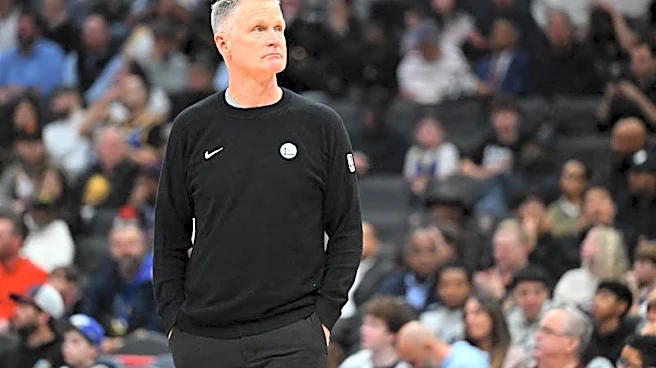
Steve Kerr gave us the most honest line of the entire Warriors postmortem cycle when he told The New Yorker’s Charles Bethea:
“There [are] things he’s done that I can never forgive him for, and yet I will do anything for him.”
Not “I’ve
forgiven him.” Not “we worked through it.” The things remain unforgivable. The loyalty remains absolute. Those two facts coexist without resolving, and that tension is exactly what made this dynasty breathe.
Kerr described their early years together as a negotiation of dominance, two fiercely competitive people establishing territory. He had to show the rest of the team he was in charge. Draymond, being Draymond, required that demonstration repeatedly and enthusiastically. What emerged was genuine mutual fluency, the kind where you can anticipate someone’s argument before they finish making it because you’ve had it enough times to have it memorized. Then December happened, and all that fluency got tested at max volume.
Which brings us to Draymond’s side of the ledger.
During a 120-97 win over Orlando on December 22, the two turned the Warriors bench into a press conference nobody scheduled. Draymond eventually left for the locker room and never came back. From the outside it looked like another episode. From the inside, according to Draymond himself on The Draymond Green Show, it was something far more specific:
“I had to say what I had to say back, and then he went crazier and crazier. And the look that I saw in his eyes, I’m like, ‘I should leave.'”
That’s not impulsivity. That’s a man who has studied Steve Kerr for over a decade reading the temperature in real time and making a calculated decision to exit before the situation became something neither of them could walk back. What followed the game was the part that reframes everything. Draymond told Kerr directly that he didn’t think Kerr had ever truly liked him. Kerr cried. The man who played for Phil Jackson, who coached four champions, who has operated in the NBA pressure cooker for three decades, broke down when confronted with the possibility that the person he fought hardest questioned whether he was genuinely valued. That’s not weakness. That’s what it costs to care deeply about something difficult.
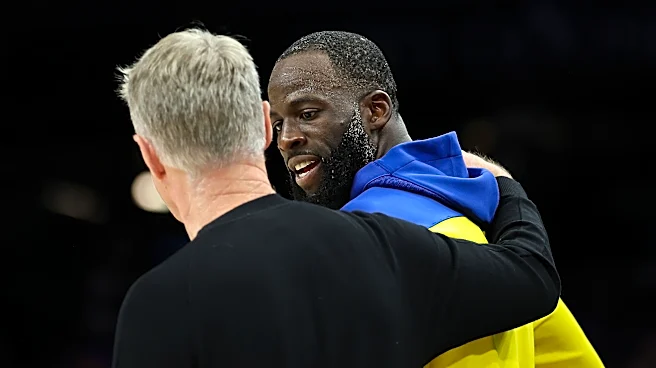
Check out Draymond’s reaction:
That’s the whole thesis right there, delivered cleaner than any analyst could package it. The unforgivable things are real. The debt is also real. Both are permanent, neither canceling the other out. Kerr, for his part, made clear that his uncertainty about returning as Warriors coach isn’t abstract. It’s personal. The reason walking away feels complicated is sitting right there in the locker room:
“I don’t want to abandon those guys. If Steph and Draymond were retiring this year, I think this would be an easy decision: we all go out together.”
Twelve years. Four championships. Three fights a year becoming one major blowout a season becoming tears in a hallway after a December win over Orlando. What Kerr and Draymond built wasn’t comfortable or clean. It was exactly what championship relationships look like from the inside: real enough to wound, strong enough to survive the wounds, and honest enough to name both truths out loud without flinching.
That’s the rarest thing in professional sports. Not the rings or the wins. But the willingness to stay in something that never fully heals and still choose it anyway.