




The first half of the 2026 WNBA season is almost over, and while we’ve learned a lot, there are still a number of significant unknowns and uncertainties.
As we approach the midseason mark, here are three questions that need to be answered over the season’s final 20 or so games.
In the comments, be sure to let us know your thoughts, as well as share your questions.
1. How good are the Valkyries, really?

Golden State’s defense is not a fluke.
Over the last two weeks, the Valkyries rank fourth in the league in defensive rating, anchored by elite
work on both first chance defense and forcing turnovers. This isn’t smoke and mirrors. It’s a roster built to switch, contest and force mistakes, with Kiah Stokes protecting the rim and Veronica Burton, Gabby Williams and the plethora of wings they have applying ball pressure that shows up in the numbers.
The problem is on the other end.
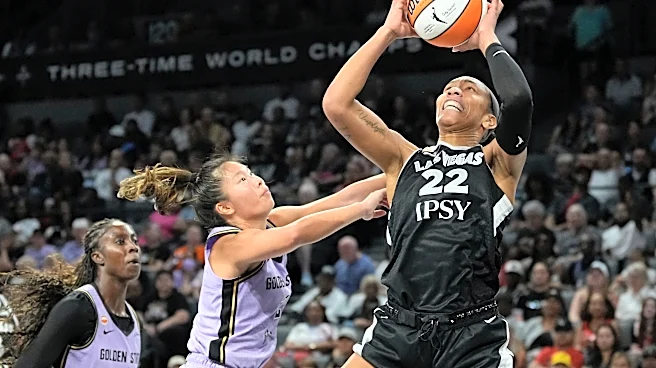
Golden State ranks 13th in the league in offensive rating over the last two weeks. Over their last six games against legitimate competition, the Valkyries have gone 4-2, with wins over the Dallas Wings, Atlanta Dream and New York Liberty balanced by a loss to the Minnesota Lynx and a genuinely ugly blowout to against the Las Vegas Aces, a game where Vegas held Golden State to a stretch of 5-for-30 from three and 1-for-15 in the first half alone.
That’s the tension defining this team. When the shots fall, Golden State’s defense is good enough to beat anyone; when they don’t, there’s no offensive infrastructure to bail them out.
Over the last two weeks, they are shooting below 30 percent from 3,, which is scary because they rely on 3s more than any team in the league. Late in games, specifically, the offense has grown stagnant, with too much one-on-one and not enough of the ball movement that can get them easier looks earlier in possessions.
The honest answer is that the Valkyries are a genuinely dangerous team with a real ceiling problem. Their defense and personnel, length, switchability and two-way wings make them a matchup nightmare for a lot of good teams. But until the offense finds a second gear beyond shooting variance, they’re a team that can steal a series against anyone and just as easily get run off the floor by a team that simply makes its shots.
2. How will the Lynx reintegrate Napheesa Collier?

This is the most fascinating chemistry question in the league.
Napheesa Collier underwent surgery on both ankles this offseason and has yet to appear in a game. In her absence, rookie Olivia Miles has been sensational, running a league-leading pick-and-roll partnership with Natasha Howard that has been the engine of Minnesota’s offense. Miles and Howard alone have run the most pick-and-rolls in the entire league at 1.126 points per direct action—elite efficiency at high volume.
Last season, that exact screening usage belonged to Collier, who has finished as MVP runner-up in back-to-back years. Now Minnesota, sitting on the league’s best record at 15-4 without her, has to figure out how to layer a two-time MVP finalist back into an offense that’s working without her.
The likely answer is positional flexibility rather than direct replacement.
Collier isn’t just a screener; she’s one of the few players in the league who can shoot efficiently from everywhere while also creating her own shot in the midpost, which means Minnesota doesn’t have to run her through the exact same actions Howard occupies.
The more interesting wrinkle is whether Miles and Collier in the same pick-and-roll actually hurts the offense, since teams could sag off Howard, whose value is more as a roller and rebounder than a spot-up shooter, to load up on Miles and Collier. Head coach Cheryl Reeve will certainly have options, which can include letting Collier run actions with Miles or Kayla McBride as the screener rather than replacing Howard outright.
Collier, who returned to team activities this week but does not have timeline for her season debut, has talked about the adjustment period, noting there’s a natural learning curve playing with new teammates for the first time.
This could be a rare case where a team may genuinely be better positioned to ease a superstar in slowly, rather than needing to force it.
3. Are there any big trades in the works?

The prospective trade market has been quieter on true stars than expected, partly because the new CBA’s core and supermax structure makes moving max players costlier than it used to be. But several rumored names are worth tracking heading into the August trade deadline.
Alyssa Thomas in Phoenix is certainly a name to consider. The Mercury have been disappointing to say the least, but her two-way value, while not what it used to be, still would be extremely impactful for teams looking for another ball-handler.
Jessica Shepard signed with Dallas this offseason and has been an All-Star lever player on offense. But, the defense leaves a lot to be desired. Her value is higher than it’s ever been before, and if Dallas believes the lack of rim protection she provides puts a long-term ceiling on the team, now would be the right time to consider a trade. The same goes for Arike Ogunbowale, who has struggled mightily on offense this year, but has a reputation that precedes her.
Shakira Austin was a restricted free agent this offseason, but the offer sheet the Toronto Tempo tendered to her was matched by the Washington Mystics, so she stayed put in DC. The question of whether she is a part of the Mystics’s long-term future is a real one.
Betnijah Laney-Hamilton re-signed with the Liberty after missing all of 2025 with a knee injury, and New York hasn’t played her nearly as much this year. She was a healthy scratch in the Commissioner’s Cup final.
These are all very good players that can still provide strong value on contending teams or in alternate destinations that are better fits. The more realistic midseason transaction activity likely will come from teams out of playoff position looking to offload. Watch the bottom of the standings over the next month, that’s where the first signs of trade smoke might be found.