
The respective signings of George Herd and Brian Clough in April and July 1961 added an extra dimension to Sunderland’s attacking threat for 1961-62. Their first full season saw the club put together a strong
promotion push that made them the third highest scorers in Division II, but the increased goalmouth action was not quite enough in the final reckoning, and the charge fell at the final hurdle when after a strong run in the Lads suffered a bitterly disappointing day in Swansea.
Having gone to Wales knowing that victory in their last match of the programme would most likely have taken the club back into the top-flight, the draw that followed instead proved to be hugely costly with Leyton Orient snatching the second promotion spot and forcing Sunderland into 3rd place, which in the pre play-off days was close, but not close enough sadly. One of the things that made the situation harder to take was the fact that earlier in the season the team had shown itself well capable of beating the Swans on their day, having made light work of them in the reverse fixture up on Wearside.
Sunderland romped away with the points in December although prior to kick-off there was some doubt about whether the match would even get to be played. The UK suffered a very harsh winter in 1961 and rivals Newcastle United had already seen their scheduled trip to Leeds United being called off a day early following a pre-game inspection that identified heavy frost, whilst a similar review that took place at Roker on the Friday evening concluded that the steady overnight rain that was forecast should take out the remaining ‘bone’ in the surface a little further north.
The prediction proved correct and ensured Roker’s proud record of not having a first team game postponed due to weather since Christmas Day 1925 was still intact. Progressively bitter temperatures did mean that by the end of the month that boast could no longer be made, with Charlton Athletic’s intended trip becoming the first in 36 years to have to be rearranged, but for now things were okay and Alan Brown’s team were raring to go.
A glance at the eventual final score might have had people thinking that Swansea Town had still been caught cold by their hosts but for the opening 45 they actually put up a strong fight, their tight marking and “shudder-prompting” tackling impressing the Sunday Sun’s Alan Sleeman despite the first half being what he described as “patchier than a down-and-out’s trousers”. Town even managed to take the lead when they pinched possession from Charlie Hurley and Brayley Reynolds struck a composed finish in the 22nd minute, but their advantage was to be short lived.

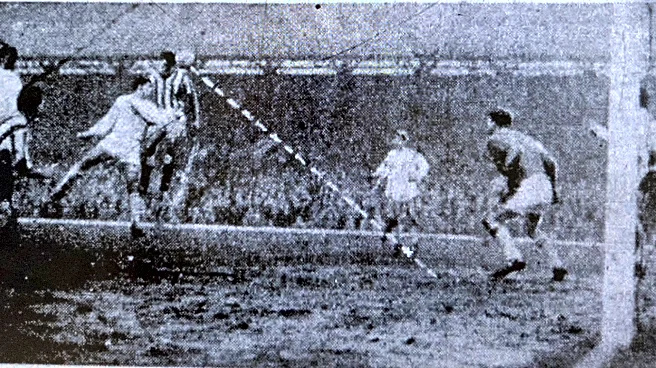
Within seconds of the opener Ambrose Fogarty had levelled, reaching a high through ball that had been misjudged by Mike Johnson and banging it in. The pass had been provided by Hurley, who was desperate to atone for his earlier momentary slip, and it had been well played seeing as prior to that Sunderland’s attack, according to a somewhat frisky Sleeman anyway, had “about as much effect on the Swansea goal as a four-letter word in an Army barrack-room.” Perhaps it was the Swansea players that were cursing Fogarty though, as he nudged his team ahead before the break when he reacted to a goalkeeping fumble a forced the ball over the line after it had been swept into the box by Stan Anderson and nodded down by Hurley.
Sunderland were given a boost at half time when it emerged that Reynolds would be unable to continue having damaged his leg and they would therefore be up against only ten men. Tempers had flared when Peter Donnelly was cautioned for a rather foolish foul on Hurley, with Reynolds tangled up in the resulting “rough stuff”, and once the second half began Hurley had even more reason to try and hammer home the advantage – faultless since inadvertently assisting the opener and now looking to dish out some retribution for the late tackle he’d suffered, he made the most of Swansea’s numerical disadvantage by switching into a more attacking position.
Unsurprisingly, he had a hand in the next goal, passing out wide to Harry Hooper. The winger quickly beat two men before crossing for Clough, who had lost his marker, to convert, and whilst the next goal was via a controversially awarded penalty for Swansea there now seemed little danger of a fight back. Sleeman, not for the first time unimpressed by the officiating, felt Fogarty had won the ball cleanly from Ken Morgan, but referee Peter Rhodes was not in agreement and Peter Wakeham had no chance with Graham Williams’ spot kick.
What Wakeham could do was gather the ball shortly afterwards and send a booming kick into the Swans’ half, leading to Clough pressurising Mel Nurse into a mistake and lobbing the bouncing ball over John King. Fogarty was on hand to prevent anybody clearing the attempt as it dropped over the line, so would have to wait for his own hat-trick goal, whereas Clough was mere seconds away and achieved his feat after more good work from Hooper out wide.
Hooper was one of the few players to catch the eye either side of the break and he got himself on the scoresheet when he took a pot shot from distance with five minutes left, his dummy and feigned shaping up to pass when 25 yards away from goal catching everybody out as he then suddenly went for it with a dipping strike. A short corner at the death then gave Fogarty his claim to the match ball – he was once again on hand to tuck away a rebound when the ball came loose – and leave the seven goal conceding Swans with their heads a-swimming on their return to Glamorgan.
A big win the for the hopeful Lads, it’s just a shame they couldn’t have kept a couple of those goals back for the final day instead…
Saturday 9 December 1961
Football League Division One
Sunderland 7 (Fogarty, 22’, 37’, 89’, Clough 55’, 67’, 68’, Hooper 84’)
Swansea Town 2 (Reynolds 21’, Williams (pen) 65’)
Sunderland: Wakeham; Irwin, Ashurst; Anderson, Hurley, McNab; Hooper, herd, Clough, Fogarty, Overfield.
Roker Park, attendance 27,560