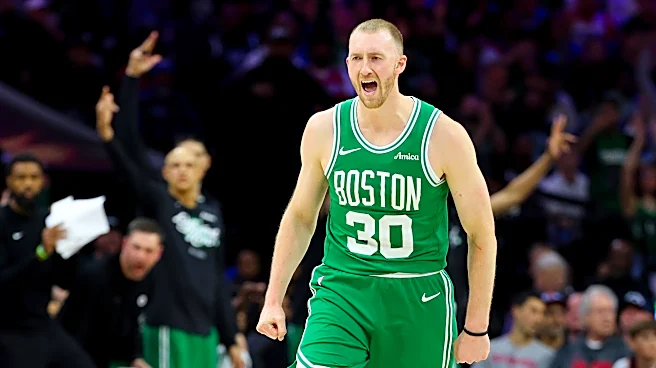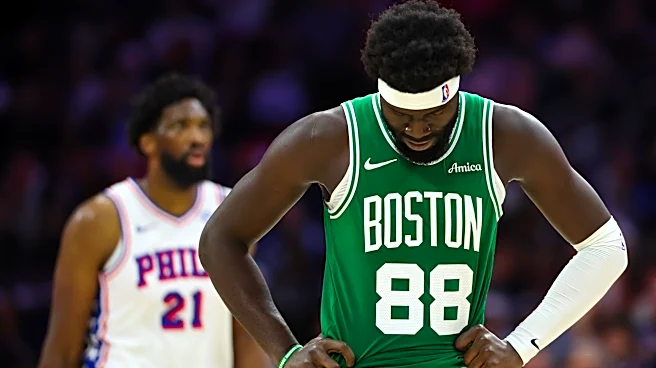





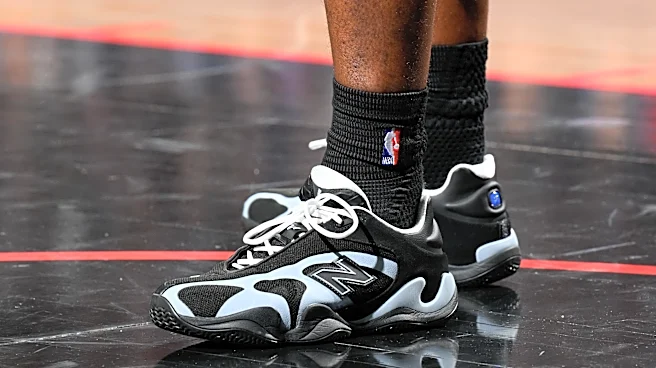
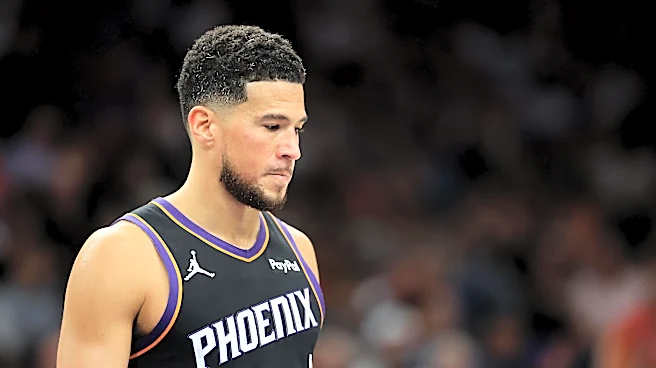
Neemias Queta embodied the Celtics’ season while speaking in the locker room following their Game 7 loss earlier this month. He showed so much promise and growth until it stalled against the Sixers. Foul trouble left him off the floor for most of the series, again raising questions of Boston’s front court despite a 56-win regular season.
“It starts with me, me being better,” Queta said. “But it’s just the nature of the job as a center — you’re in a lot of positions where you can get fouls. Whether
it’s ball screens, whether it’s box-outs, whether it’s one-on-one defense, protecting the rim as well … I gotta start looking at myself, being better, first and foremost, and after that, it’s being consistent. I’ve shown flashes.”
The flash came in the form of a full regular season where Queta stayed healthy, logging 76 games, and emerged as one of the league’s most efficient starting centers at 26. He averaged 25.3 minutes per game, up from 13.9, with 10.2 points, 8.4 rebounds and 1.3 blocks each night on 65.3% shooting.
His fouls from 5.4 times per 36 minutes in his first season with Boston to 4.0, a process that began in his native Portugal after the Celtics traded Kristaps Porzingis and saw both Al Horford and Luke Kornet depart in free agency. He was preparing for the EuroBasket tournament, where he needed to play as his team’s offensive hub. In Boston, Queta would almost certainly become the Celtics’ starter, having spent the previous two seasons learning between the G-League and Boston’s bench.
“You have to give him credit,” Joe Mazzulla said in March. “Part of telling him in the summer that he was going to be the starting center was giving him the time to properly wrap his mind around it. Physically, mentally, and emotionally prepare himself for what it means to be the starting center for the Celtics. And I think he’s taken on that ownership and responsibility well, and he’s got to keep it going. He has a responsibility now to continue to get better, regardless of the process. In less than 24 hours, we have to do it again, and then on. He cares about winning, he cares about getting better.”

Watching Queta juggle those two responsibilities in Lisbon became an all-day affair last July while I attended his week-long basketball camp. Queta worked out in the morning, attended most of the camp sessions where he interacted with hundreds of kids, only breaking for a few hours to receive treatment and rest. Then, he returned to close out the days and train again before the sun set, tossing up hook shots, post jumpers, threes and more as he moved between offensive and defensive drills. The sessions often left Queta drenched and laid out on the gym floor as dinnertime approached. But even with the option to skip the final session, he chose to run sprints and get up more shots.
That trip made it clear what motivated Queta. His role as Portugal’s first and only NBA player ever attracted well-wishers and many more who wanted photos from athletes at his tiny old Barraleinse youth basketball gym to an older couple at a local favorite restaurant. His work ethic was born from the struggles of his parents, who immigrated from Guinea-Bissau; his late father Djaneuba lived abroad to work while his mother Mica spent most of the day traveling to Lisbon by ferry to earn money in the city. A mural that stretched the height of an apartment building in the neighborhood Vale da Amoreira where he grew up encapsulated that responsibility. Taking over the center position for one of the world’s most popular franchises only added to that pressure.
“It’s not really what we were expecting, but we’re in a position where I’m growing, I’m developing at a steady pace and with big responsibilities comes the demand of I need to show out every day … I’ve been working on it and I feel like I’m getting ready for it … I think I’ll step up for the occasion and all the other guys as well. We’re not really the group that everybody points out as the best,” Queta told me last summer. “We’re here to prove them otherwise.”
Queta did that between leading Portugal to EuroBasket’s knockout stage through battles with Alperen Sengun, Nikola Jokic and Porzingis in group play, albeit while watching the clinching game from the locker room following a controversial ejection. He finished fourth in Most Improved Player voting, received All-Defensive team votes and led the Celtics in net rating with Boston finishing as the league’s best team at deterring opponents from shooting at the rim. Steph Noh’s salary projection site assessed Queta’s contributions as worthy of $29.3 million this year under the current salary cap — he made the league minimum.
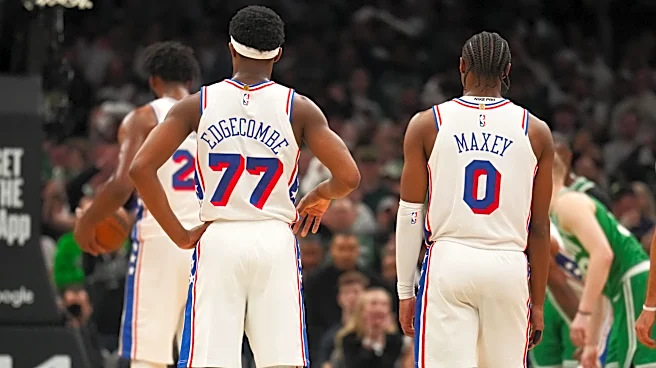
The 76ers erased that impact quickly by taking Queta off the floor. He logged only 15 minutes in the Celtics’ blowout win to open the series after picking up early fouls guarding Tyrese Maxey and Paul George. Deadline addition Nikola Vučević, a hedge against injuries or inconsistency at the position into the postseason, closed Game 2 in his place and received the bulk of the Game 3 minutes. Joel Embiid returned in Game 4 and drew two fouls in less than three minutes, taking him out again. Back court fouls frustrated Mazzulla, moving screens added to the trouble and Embiid barreled through anyone the Celtics placed in his way between Games 5 and 6. Queta finished the series with 4.1 fouls per 36 minutes.
“The big ones are some plays, it’s hard if somebody’s driving at him and he’s jumping vertical,” Vučević said. “Or he’s battling in the post, things like that, that just happens. But I think the ones where they get the rebound and we have to get back on defense and he’s trying to steal the ball, things like that, little cheap ones those could help him.”

By Game 7, Mazzulla replaced Queta in the starting lineup with Luka Garza as part of bold, sweeping changes to the starting lineup. Queta responded with 17 points, 12 rebounds and a full fourth quarter effort with his fellow regular contributors. He survived most of the frame with five fouls, but it was too little, too late.
The Celtics will now assess Queta’s strides with his postseason shortcomings, similar to most of the rest of the roster that came up short in the first round. Queta’s emergence still emphasizes an astounding drafting, scouting and development job by the Celtics front office under Brad Stevens. Queta arrived in Boston on a two-way contract in 2023 and logged only his first 30-minute NBA game in 2024-25. Game 7 marked his 13th of the 2026 season, showing strides in the pick-and-roll once Jayson Tatum returned that’ll keep him in play to retain his starting spot.
For Queta, a final season playing on the three-year, minimum deal that he signed following the championship season comes with a team option that could allow he and the team to discuss a long-term deal as soon as this summer. That would’ve been a no-brainer at one time, and now, Queta might find himself in a familiar territory to the one he found himself in when the Sacramento Kings waived him three years ago: proving himself all over again.
“(The playoffs) were different,” Queta admitted. “I was on the bench a lot of times. I can be better with that, fouls and all that … obviously, the game slows down, you’re playing the same team over-and-over again. They understand your tendencies and know your scout, running plays is harder-and-harder, game-by-game. I think that’s the main thing. You go through the same team over and over again, there aren’t as many breakdowns offensively and defensively, and the attention to detail is more there.”