


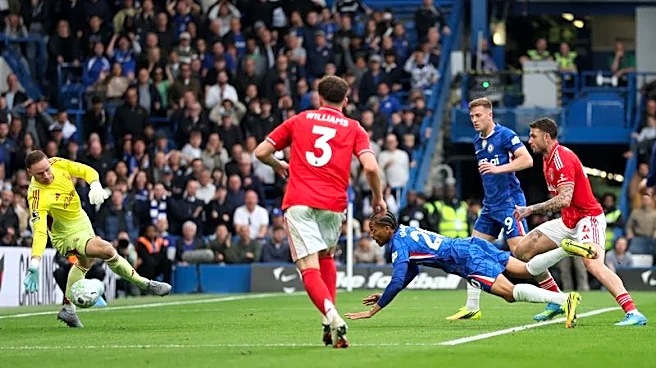
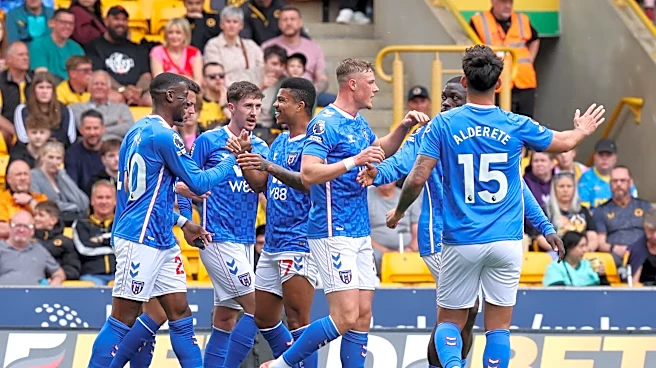
Sunderland returned to action down in the Black Country after a dismal showing against Nottingham Forest.
Facing an already-relegated Wolves side who were already playing with next season in mind, how did yet another set play take away the opportunity to add three more points to the away tally for the season?
Sunderland lineup
With a full week to recover from the disastrous result at the hands of relegation-threatened Nottingham Forest, Régis Le Bris was left with several key decisions to make around how he set his
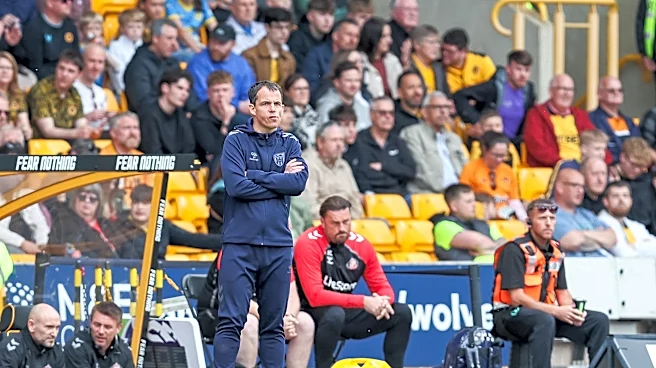
side up against a Wolves team that were surely going to play without fear under Rob Edwards following confirmation of relegation to the EFL Championship.
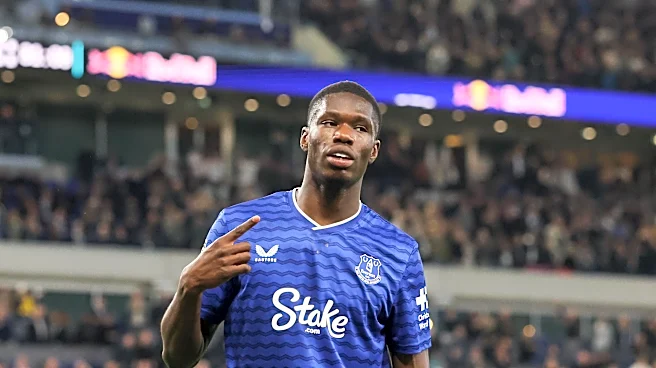
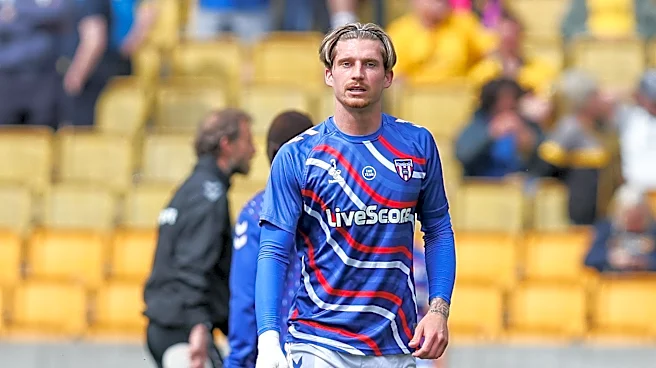
In an attempt to provide some natural defensive stability but also mirror and contain the defensive shape of the hosts, Le Bris made two changes in midfield as Habib Diarra and Chris Rigg both dropped to the bench in favour of Chemsdine Talbi and Trai Hume.
With a shift back to the system we deployed earlier in the season, Sunderland set up in a hybrid 4-3-3 / 5-4-1 system with Hume acting as wide midfielder whilst in possession before dropping in to form a defensive back five when we lost the ball and looked to defend more deeply.
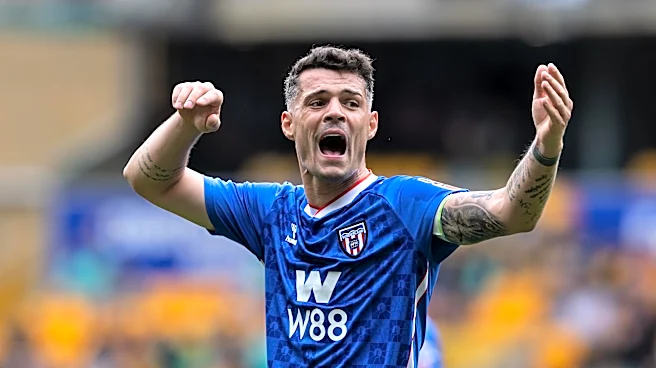
Elsewhere, Enzo Le Fée was able to resume his playmaking duties in the centre of the pitch whilst Noah Sadiki and Granit Xhaka both anchored the base of midfield when required.
The positional flexibility of Hume meant that although Sunderland were unlikely to utilise him as an out-and-out winger, he could tuck inside to support play, act as a direct aerial duel winner out wide and also allow space for Nordi Mukiele to overlap and provide crossing opportunities.
After shipping five goals the week prior, Le Bris was always likely to make a more defensive switch to solidify his backline and avoid further embarrassment at the hands of the side that sat bottom of the league with nothing left to play for; therefore, when the team was announced, it didn’t come as much of a surprise to fans online and in the concourse.

Wolves lineup
With relegation officially confirmed during the month of April, Edwards was looking ahead to next season as he made three changes from the side that lost 1-0 to Spurs the week prior.
Goalkeeper Jose Sá missed out through injury and was replaced by Dan Bentley. Yerson Mosquera replaced Matt Doherty in central defence, whilst Tolu Arokodare came in to replace Rodrigo Gomes in the forward line.
Under Edwards, Wolves have often operated in a 3-4-3 system that utilises two attacking wing backs/wide midfielders and two floating forwards behind a central striker — or in this case a target man in the form of Tolu.
With the presence of the Brazilian midfield duo of André and João Gomes — both of whom look likely to move away for big money in the summer — Wolves have a pair of strong runners in midfield and therefore can afford the luxury of playing more attacking wingbacks in Hugo Bueno and Pedro Lima on either flank.
Given the sheer size of Tolu, leading the line at 6’6, it’s easier to have a cluster of players running off the big front man in order to play more directly. Therefore, Sunderland needed to be wary of the off-the-ball movement when it came to Wolves’ attacking phases of play, and having witnessed Tolu chest down several direct balls inside the box in the reverse fixture, it was going to be a physical challenge for Sunderland’s defenders.

“…And justice for set pieces”
After a rather timid opening ten minutes, Sunderland found themselves in front through a well-worked set piece which came at a time when the fans were becoming critical of the poor defensive coaching on display from corners and free kicks this season — something that saw Forest put the game out of sight in a twenty-minute spell.
Granit Xhaka whipped in an inch-perfect delivery and Nordi Mukiele was on hand to plant his header firmly past Bentley, having already scored past Sam Johnstone in the reverse fixture earlier this season.
Whilst Mukiele was aided by some poor Wolves marking, set pieces have been a real issue of contention for Sunderland of late, and to see him score from a set piece & xG of only 0.19 was a nice break from what felt like the opposite constantly occurring at the other end of the pitch in recent weeks.
Sunderland looked in control and likely to push on as several bright exchanges between Le Fée and Talbi down the left eventually saw the latter break through, only to see his effort rather tamely roll into the palms of Bentley around the twenty five-minute mark. Sadiki also tried, but his effort from the edge of the area was blocked.
Whilst the possession numbers remained fairly even during the opening period, Sunderland never really allowed the Wolves midfielders to turn in dangerous situations and it looked to be a fairly comfortable afternoon as discontent began to spring from sections of the home support.

A long-haired affair
Just after the twenty five-minute mark, a long ball was played up to Tolu in an effort to be more direct and respond from going a goal down. Dan Ballard and Tolu were involved in an aerial duel — which the latter won before taking a tumble and allowing the referee to continue play.
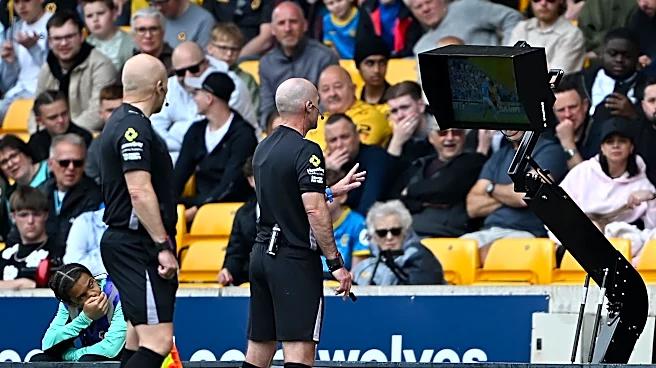
During the next dead-ball situation, VAR examined the potential for violent conduct and after several replays, it was all but a formality that the Sunderland man was to be dismissed for pulling the hair of his opponent during the duel.

Although there’s been lots of discourse surrounding calls to amend the rule — including a lengthy discussion on Match of the Day — I had no complaints with the decision and accepted that whilst it was harsh, Ballard ultimately gave the referee a decision to make and the officials chose to demonstrate consistency and show the red card.
What was arguably worse for Ballard and Sunderland is that he’s almost certainly been ruled out of the remainder of the season and duels against Benjamin Šeško, Beto and Liam Delap — all of which he’d likely thrive in — so he’ll be a big miss for Sunderland.
Once Ballard was giving his marching orders, Sunderland were quick to change shape without needing to make any further personnel changes due to the flexibility of Hume.
Mukiele shuffled inside to central defence whilst Hume dropped in at right back, Talbi moved over to the right and Le Fée the left, leaving Sunderland in a 4-4-1 shape with Brian Brobbey left to lead the line.
Sunderland get through to the break unscathed
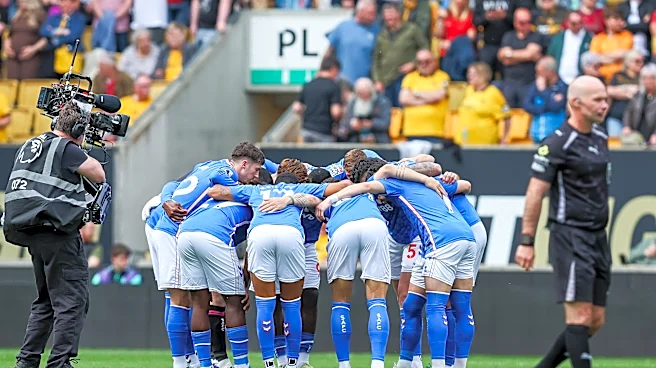
Despite seeing out the first half with a numerical disadvantage, Sunderland were able to control the game and to keep Wolves at arm’s length, and in felt like was going to be a fairly comfortable afternoon.
The possession figures remained similar at 51/49% in favour of the hosts, but Sunderland covered the space well and only completed thirteen fewer passes than the hosts’ 160 — even with the sending off.
With two shots on target and an even amount of xG with both teams not breaking 0.5, Le Bris’ players did well to retreat into the compact defensive shape which had served us so well earlier in the season, and it resulted in a smattering of boos from the home supporters as the whistle blew.
Although the second half was going to be difficult, Sunderland still seemed in control of this one at the halfway mark.

“Old habits die hard”
As expected, the second half began with Wolves under clear instruction from Edwards to apply early pressure to the Sunderland goal, and Lima was substituted for a more conventional winger in Rodrigo Gomes to try and exploit our compact shape and drive to the by-line in the spaces provided out wide.
After a flurry of shots on the Sunderland goal, Wolves were awarded a corner and once again in a similar way to how Forest and Aston Villa targeted Hume in the defensive phase of corner routines, they were able to punish us.

Santiago Bueno was able to get the jump on Hume thanks to some clever movement, blocking runners and superior physicality before rising up to head past the helpless Robin Roefs who was caught on his heels and unable to collect the outswinging corner to the back post, giving Bueno a chance to power a header home and equalise for Wolves.
Sunderland have now fallen foul to four instances of poor set piece defending in two matches, with each of the goals all involving a specific targeting of Hume when attacking corners or deep free kicks.
Whilst Hume is traditionally strong in the air from full back, winning 2.03 headed duels per 90 (which ranks him in the top 15% in the league), he does so with a win rate of 49.2%, meaning that whilst he’s winning duels, he’s also losing over half of those he attempts on average,
In contrast, Mukiele wins a similar number of duels per 90 at 2.51. He also does so at a 61.2% win ratio, which shows the margins of operation in the league and the fact teams will target any deficiencies they’re able to find.
Despite Hume’s smaller build and profile compared to the highest levels of physicality in the Premier League, he’s by no means a weak aerial duel player but it’s clear that given the frequency with which he’s been hunted by opposition teams, it’s become an identifiable weakness that other teams have specific instructions to exploit — and it needs to be addressed as we move forward.

Le Fée catches the eye in midfield
Although the game ultimately became a one-sided affair during the second period as Sunderland looked to grind out a positive result on the road, we once again got a look at how influential Le Fée can be when he gets to operate in his preferred central midfield role.
The Frenchman recorded fifty touches, with five passes into the final third, one chance created and six tackles made, while also winning 7/12 of his overall ground duels.
Where Le Fée shines is in his ability to complete all of the “dirty work” not associated with a creative midfield player, and among Premier League attacking midfielders, he ranks within the top 7% for blocked shots, interceptions, tackles and defensive contributions.

Although he’s capable of producing a moment of magic out on the left, his influence when played centrally allows him to pick up the attacking pockets of space on either side of the pitch laterally, providing similar passing triangles to that which we saw under Le Bris and from Rigg last season, as he drifted to support either winger and form overloads when required.
Given that Diarra’s been struggling on the pitch since his miss against Aston Villa, Le Fée is likely to get another chance to operate centrally against Manchester United. This may provide a larger sample size and to help us gauge whether the Frenchman can become the true successor to Xhaka as he starts to reduce his game time over the next two seasons.

The final push starts here!
With a full week between fixtures and our chances of European football fading, Le Bris will likely have access to a near full squad with the return of Nilson Angulo and Bertrand Traoré, leaving only Romaine Mundle and Ballard unavailable for the home game against Manchester United.
With many of our fringe players potentially looking for moves away in the summer and players such as Angulo, Jocelin Ta Bi, Talbi and Traoré all fighting for either playing time or starting spots next season, it’ll be interesting to see if we see more ‘traditional’ winger pairings in the final three games of the season.
With the chance to pass the fifty-point mark still on the table, Le Bris will be ignoring any suggestions that Sunderland are on the beach — even though the point we secured on the road mathematically confirmed safety for this season.