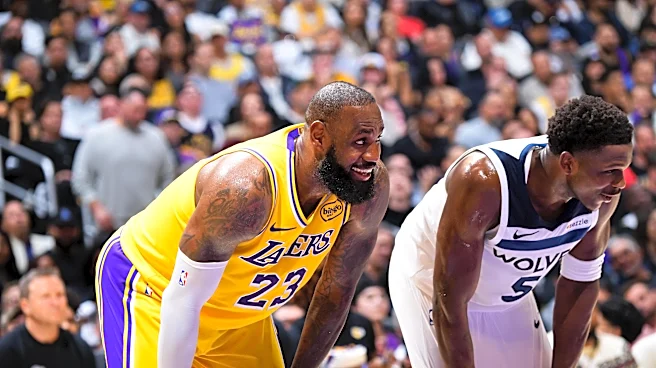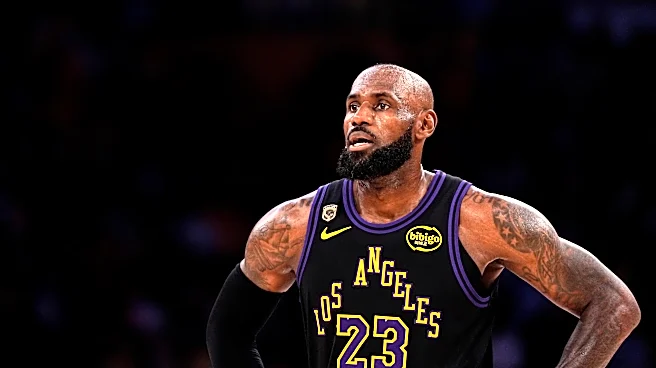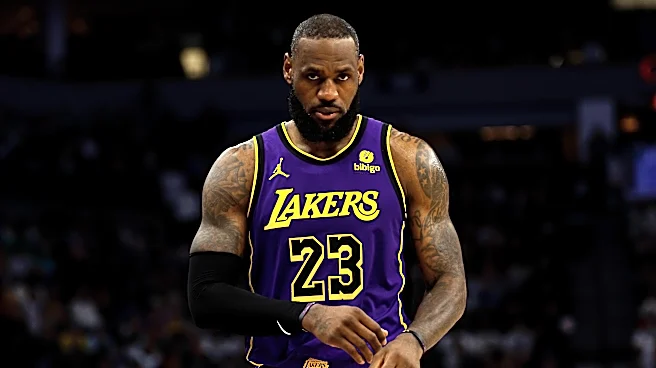



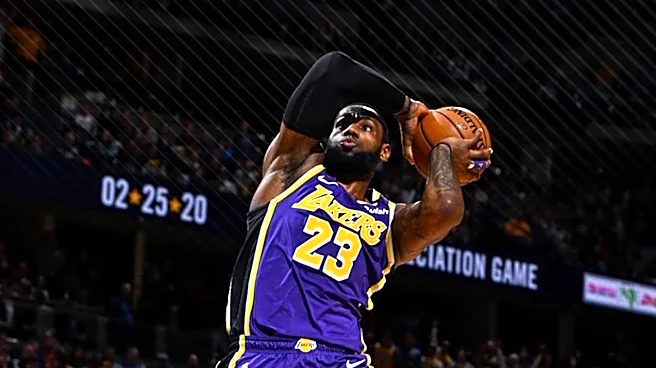



From the moment LeBron James confirmed he would not be returning to the Los Angeles Lakers, the entire NBA ecosystem lost its collective mind.
This is what happens when the league’s all-time leading scorer, even at this stage of his career, suddenly becomes available. It doesn’t matter that he is no longer 28-year-old LeBron. It doesn’t matter that he is not going to spend 82 games dragging a flawed roster uphill with one hand while solving everyone’s spacing problems with the other. It doesn’t even matter that the league has
changed around him or that the next generation has already started taking over the room. LeBron is still LeBron, which means the second he hit the open market, every contender, near-contender, dreamer, faker, and front office with a pulse started asking the same question.
Could we talk ourselves into this?
LeBron leaving Los Angeles did not exactly come out of nowhere. The writing was on the wall the moment Rob Pelinka completed the Luka Doncic trade in 2025. That move effectively marked the beginning of the next Lakers era, and no matter how much everyone tried to dress it up with polite quotes and organizational fluff, the truth was obvious. Once Luka arrived, the Lakers stopped being LeBron’s team. Austin Reaves inking a massive $185 million deal only reinforced the point. The franchise had picked its future. LeBron was still great, still marketable, still one of the smartest basketball players who has ever lived, but he was no longer the center of gravity in Los Angeles.
For most of the season, the conventional wisdom was that if LeBron left the Lakers, two destinations made the most sense. Golden State had the bromance angle: LeBron and Steph Curry, the two defining players of the 2010s, finally joining forces for one last ride in California. It would have been shamelessly sentimental and probably irresistible from a ratings standpoint, the NBA equivalent of getting Pacino and De Niro back together. The other obvious option was Cleveland, the full-circle ending, the place where it began and the place where LeBron could close the book in front of the fans who have lived every chapter of his career more intensely than anyone else.
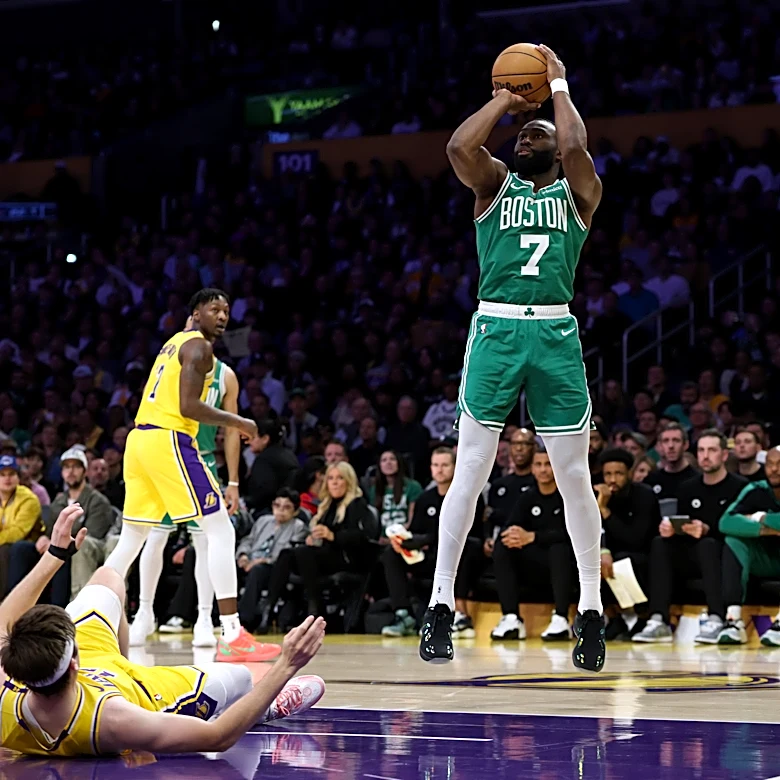
But the NBA moves fast, and this offseason turned into a blender. Giannis Antetokounmpo landing in Miami suddenly made South Beach more than just a nostalgia trip. Boston’s head-scratching decision to ship Jaylen Brown to Philadelphia transformed the Sixers into a fascinating, dangerous, high-volatility contender. The landscape shifted so dramatically that what once looked like a simple retirement-tour decision became a full-blown feeding frenzy. Suddenly this was no longer just about where LeBron wanted to say goodbye. This became about which team could convince him that he still had one more meaningful title chase left.
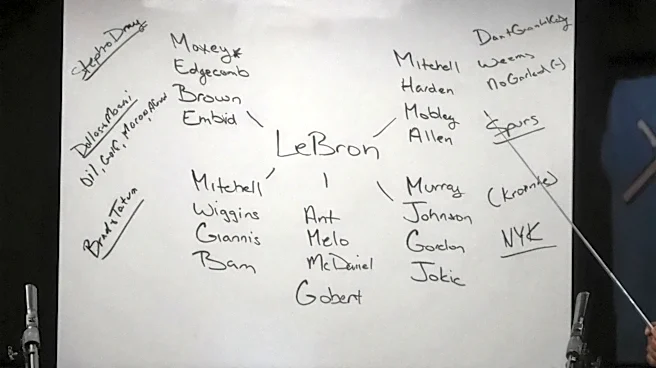
Then Rich Paul grabbed a whiteboard.
On his Game Over podcast with Max Kellerman, Paul sent the speculation machine into hyperdrive by openly breaking down potential LeBron destinations, and while there were plenty of names scattered across the board, five teams found themselves in the center of the conversation: Cleveland, Miami, Denver, Philadelphia… and Minnesota.
Yes, Minnesota.
Cleveland has to be treated seriously because it is Cleveland. We do not need to rehash the entire quarter-century relationship between LeBron and the Cavaliers. Everyone knows the story. The hometown kid. The impossible expectations. The departure. The return. The 2016 title. The block. The parade. If LeBron wants the cleanest storybook ending, Cleveland is sitting there with the lights already dimmed and the montage music cued up. But before anyone files the Cavaliers away as the inevitable choice, it is worth paying close attention to what Paul said about the Knicks. He suggested that if New York had not just won the NBA title, LeBron becoming a Knick would have been a lock.
That is revealing. If the emotional pull of Cleveland were truly the priority, the Knicks would not have been framed that way. If this were only about sentimentality, the Cavaliers would already have the contract inked. Instead, Paul’s comments make it clear that LeBron is still thinking about basketball stakes, competitive opportunity, and legacy architecture. Cleveland can offer a beautiful ending, but the roster fit is not nearly as clean. The Cavaliers are talented, but they needed seven games to survive Toronto, a team that has only become more dangerous after adding Kawhi Leonard. Then Cleveland got absolutely trounced by the Knicks. Adding LeBron would make them better, obviously, but would it really put them over New York, Philadelphia, Miami, Detroit, Boston, Toronto, and whoever comes out of the West? That is much less clear.
Miami has the glamour and the history, and the Giannis acquisition certainly changes the equation. LeBron returning to South Beach with Giannis already in place would be a headline factory. But the Heat gutted so much of the roster to land Antetokounmpo that the depth question becomes impossible to ignore. In today’s NBA, depth is not a luxury. It is oxygen. You cannot survive four rounds with two stars and a rotating cast of guys you hope can hit corner threes every other night. The Knicks are still the Knicks. Philadelphia is suddenly loaded. Detroit remains formidable. Toronto got better. Boston, even weakened, is not disappearing. Miami with Giannis and LeBron would be fascinating, but it is not hard to imagine that roster running out of bodies before it ever gets close to the finish line.
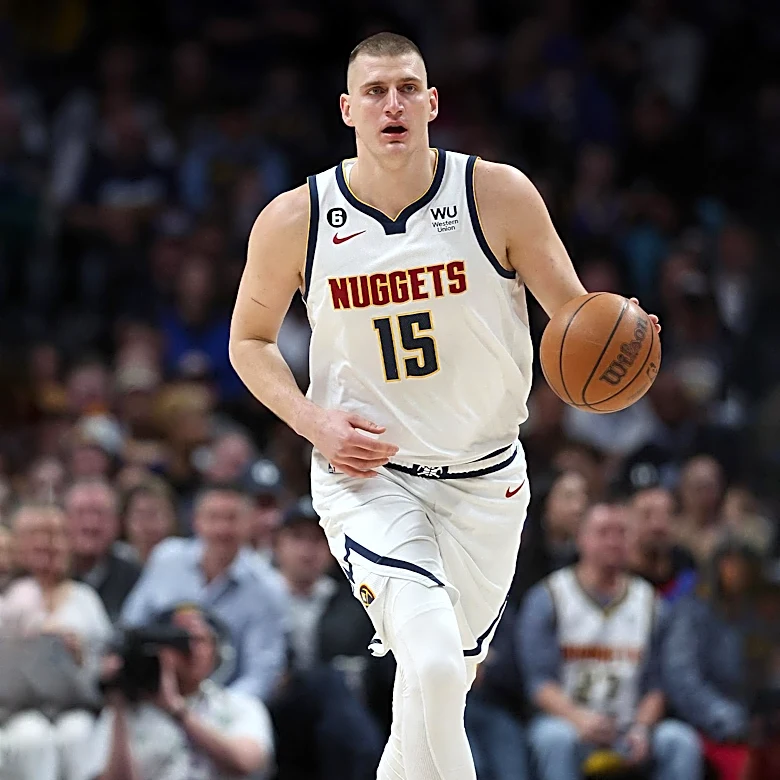
Denver is the basketball nerd answer if you want to create the highest-IQ frontcourt pairing in league history. LeBron next to Nikola Jokic would be absurd from a passing and processing standpoint. Every possession would feel like two grandmasters playing chess while everyone else is still trying to remember how the horsey moves. But the fit has one glaring problem: Denver’s biggest weakness is defense, and defense is no longer LeBron’s calling card at this stage of his career. The Nuggets would score, but could they stop anyone? This is still the same Denver team that was embarrassingly bounced in the first round by a battered Minnesota squad missing Anthony Edwards and Donte DiVincenzo. In a West that still includes San Antonio and Oklahoma City, it is hard to view Denver as the best path to another title, even with LeBron.
That leaves the two teams that make the most basketball sense if LeBron wants to compete without simply jumping onto the easiest possible bandwagon. The first is Philadelphia. The Sixers became instantly more dangerous by adding Jaylen Brown, and a lineup featuring Tyrese Maxey, VJ Edgecombe, Brown, LeBron, and Joel Embiid looks terrifying on a graphic. The East is also the easier road, which matters when you are trying to reach the Finals for an 11th time and your odometer has more miles on it than any player in history. But every Philadelphia argument eventually reaches the same uncomfortable checkpoint: Joel Embiid’s health. Do you really want to pin the final chapter of LeBron’s career on Embiid being upright, mobile, and available for two straight months of playoff basketball? That is a massive gamble. Without Embiid anchoring the middle, that roster becomes much easier to question against New York, let alone against Wembanyama or an Oklahoma City front line featuring Chet Holmgren and Isaiah Hartenstein. And Philadelphia fans, passionate as they are, can turn on a bad situation faster than almost any fan base in sports. We saw how quickly the mood shifted from the joy of beating Boston to the wreckage of getting demolished by New York. That is not exactly a soft landing for the grand finale.
Which brings us to the Timberwolves.
The basketball fit is almost too obvious, which is probably why people are having such a hard time taking it seriously. We are conditioned not to put LeBron James and Minnesota in the same sentence unless the sentence is, “LeBron James is not going to Minnesota.” The franchise does not have the cachet of the Lakers, Celtics, Knicks, Bulls, or Heat. It does not have the warm-weather advantage. It does not have the glamour. It does not have the institutional championship pedigree of San Antonio. The Wolves are an expansion franchise that spent most of its existence wandering through the NBA’s basement with a flashlight and a half-eaten granola bar.
But if you strip away the brand name and actually look at the basketball, the Wolves are tailor-made for LeBron.
They have Anthony Edwards, a top-five player with everything you could want from a modern superstar other than the fully hardened championship killer instinct that comes only from time, scars, and being around people who know exactly what that climb requires. LeBron could help teach him that. The two became fast friends during the 2024 Paris Olympics, and if LeBron wants a young running mate who can keep the basketball world engaged and give the documentary crew more material than they know what to do with, it does not get much better than Ant. Edwards is charismatic, fearless, hilarious, explosive, and still young enough to absorb lessons from someone who has lived every possible version of NBA pressure.
They have LaMelo Ball, newly acquired and wildly talented, a gifted passer who spent years in a losing environment in Charlotte and could benefit enormously from LeBron’s knowledge. LaMelo’s creativity is undeniable, but he has never been in a situation where winning was the daily expectation. LeBron could help shepherd him into that world. He could show him what matters, what does not, when to take risks, when to control the game, and how to translate flash into winning. That kind of mentorship is not some throwaway subplot. It could be franchise-altering.
They have Jaden McDaniels and Rudy Gobert, which matters because LeBron’s defense has slipped with age and Minnesota is better equipped than almost anyone to cover that up. McDaniels can take the toughest perimeter assignment. Gobert can clean up the paint. The Wolves would not need LeBron to be 2013 LeBron defensively. They would need him to be smart, positioned correctly, engaged when it matters, and surrounded by elite defensive infrastructure. That is a much more realistic ask.
A starting five of LaMelo Ball, Anthony Edwards, Jaden McDaniels, LeBron James, and Rudy Gobert would be the best starting five in the league. It has creation, size, defense, playmaking, athleticism, experience, and multiple ways to win. LeBron would not be asked to carry the offense every night. He would not be asked to save the franchise by himself. Edwards would remain the alpha dog. Ball would handle a major share of the playmaking. McDaniels and Gobert would provide the defensive backbone. LeBron would be the championship brain, the stabilizer, the veteran leader, the guy who walks into the huddle during a 12-2 run and stops everyone from lighting themselves on fire.
That is exactly what Minnesota has been missing.
And the beauty of this scenario is that it would not be ring chasing in the cheap sense. Joining Oklahoma City, New York, or San Antonio would feel like attaching himself to a finished product. Joining Minnesota would be different. The Wolves are talented enough to win, but they have not won. They have come close, they have made deep runs, and they have repeatedly been just flawed enough to fall short. LeBron would not be coasting into a dynasty. He would be trying to finish the job for a franchise that has never finished it before.
The situation would be akin to Tom Brady going to Tampa Bay. At the time, it felt strange. The greatest quarterback ever leaving the most finely tuned NFL machine of the century to join the Buccaneers, a historically strange franchise wearing digital-clock-number uniforms, seemed off. But Brady looked at the football situation and saw what everyone else took too long to appreciate. Tampa Bay had the receivers, the defense, the coach, and the infrastructure. It simply needed the right quarterback to turn a talented roster into a champion. Brady took the risk, went to a franchise without the same pedigree, and immediately changed its history.
Minnesota’s situation is not identical, but the parallel is sitting right there. The Wolves have the talent. They have the superstar. They have the defense. They have the playmaker. They have the front office. They have an ownership group that includes Alex Rodriguez, a fellow athlete-turned-billionaire who gives LeBron at least one familiar type of power-broker in the room. They have a title-hungry market in the Twin Cities, a place carrying the longest championship drought in North American sports among cities with four major men’s teams. What they do not have is pedigree. What they do not have is the final piece of belief, poise, and championship authority.
LeBron could be that.
Would he actually choose Minnesota? Probably not. Even writing it still feels strange. There are decades of NBA logic telling us that players like LeBron do not pick franchises like the Timberwolves unless something has gone wrong in the simulation. But if LeBron truly means what he says, if the contract is secondary, if weather and market size are secondary, if this is really about basketball fit, meaningful competition, and one last chance to chase a championship the right way, then there is not a better option on the board.
Not Cleveland, if sentimentality is not the top priority.
Not Miami, if depth matters.
Not Denver, if defense matters.
Not Philadelphia, if Embiid’s health is the deciding variable.
Minnesota has the cleanest fit, the clearest role, the highest upside without pure coattail riding, and the most legacy-enhancing challenge available.
You can write on the whiteboard all day. You can circle teams, draw arrows, make columns, debate history, market size, weather, branding, and legacy. But if LeBron James is asking the right basketball questions, the math is pretty clear.
The answer is the Minnesota Timberwolves.
Now we wait to see whether common sense actually wins.