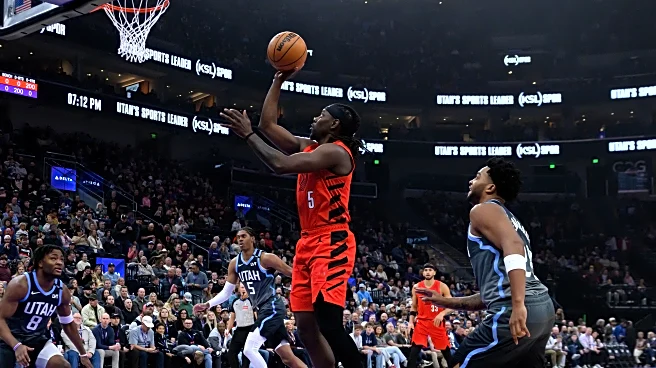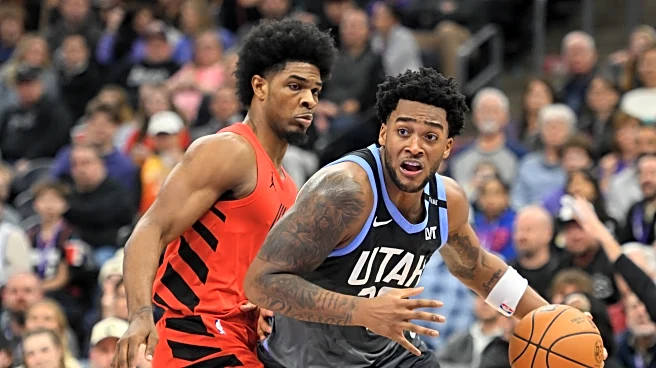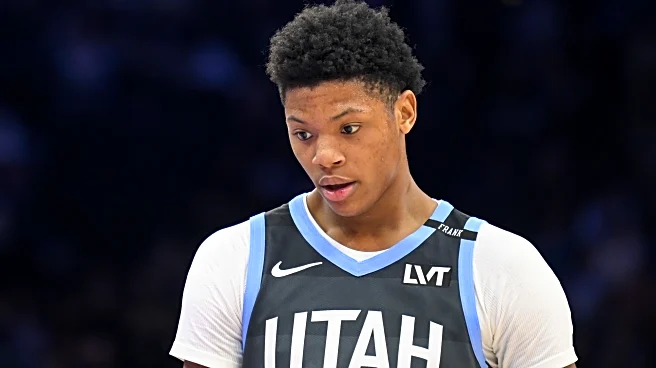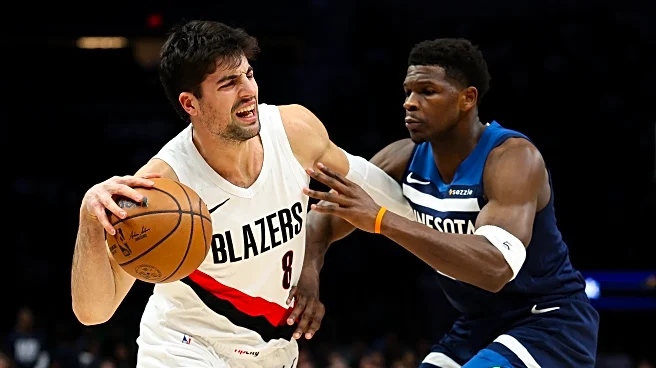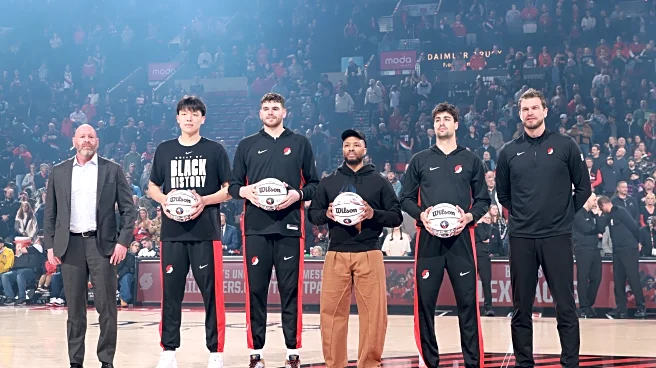


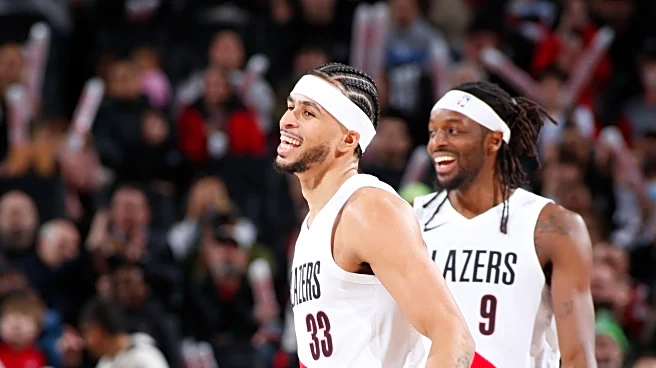
The Portland Trail Blazers and the Moda Center had soul on Monday night. Or grit. Or heart. Or whatever spiffy intangible you want to call it. It was present, and it was loud in the fourth quarter versus the Detroit Pistons.
The shorthanded Blazers rallied back from a 21-point deficit in the second half, slowly overtaking the Eastern Conference’s top team with a massive a 22-4 run over the fourth quarter’s opening eight minutes. A sellout crowd of 19,335 swelled with each stop and basket, trying to will
their home team across the finish line. When forward Toumani Camara completed the comeback with a 3-pointer to give the Blazers a 100-99 lead with 4:13 left, it felt like the roof might come off.
“It looked like nobody could stop us,” Portland forward Sidy Cissoko said about that moment.
The all-heart, all-hustle two-way contract player embodied the spirit of the comeback with big defensive moments and 16 points off the bench (including 10-13 from the free throw line). He also put into words the feeling in the air at the 4:13 mark in the fourth: A Blazers win seemed almost inevitable.
“I think it was just energy,” Blazers guard Shaedon Sharpe said about what caused everything to click during that stretch. “The fans were in it. We were doing everything right.”
Then, in a blink, everything went wrong.
The Blazers gave up six offensive rebounds over the final four minutes. They turned the ball over three times. They went 2-6 from the free throw line — part of a 29-43 mark from the stripe that had everybody in the building thinking about Bill Schonely. A refereeing gaffe outside of their control made the road even harder. The elements compounded to extinguish the magic that had been brewing only a few minutes before. A 100-99 lead quickly turned into a 110-102 defeat.
The latest loss followed what is becoming a challenging trend this season. The Blazers fight extra hard to overcome obstacles and their own shortcomings. They keep close or even take the driver’s seat late against opponents — sometimes in games they should have no business staying in. Then after all that work, they come undone by little mistakes during closing time.
“I keep saying that we always have a chance,” Blazers acting head coach Tiago Splitter said. “ … We worked pretty hard on defense to get [the lead back], but then it was three offensive rebounds [in a row], a couple turnovers, that’s the game, basically. Again, those little details at the end can kill the game.”
In November, the Blazers pulled off near-miraculous comebacks against the Bulls and Magic to take late leads, then had their hearts ripped out at the buzzer both times. Earlier this month in Detroit, the Blazers took a five-point lead with three minutes left against this same stout Pistons team. Then Detroit dashed Portland’s hopes with a prompt 14-2 run. Last Thursday against Sacramento, the Blazers ultimately won the game, but it came after surrendering a 15-point lead with 2:30 left in regulation and a six-point lead with 33 seconds left in overtime.
The agonizing losses have been painful lessons about late-game execution and avoiding lapses. Monday night against Detroit amounted to another one, even though the fight was so admirable.
Once again, injuries zapped the Blazers of talent and depth against Detroit. Starting forward Jerami Grant was a late scratch with left Achilles tendon soreness, joining key veteran Jrue Holiday and most of Portland’s backcourt rotation on the inactive list. The remaining Blazers couldn’t shoot, going 7-32 from deep on the game. Portland had to scrap and claw for buckets over the first three quarters, while Detroit’s offense generated much easier looks. Things were trending toward early garbage time as the fourth quarter approached.
And yet, the Blazers somehow managed to flip the game on its head. Sharpe led the way with 25 points on a smooth 11-21 shooting. Center Donovan Clingan put up 17 points and 10 rebounds, while grabbing key offensive rebounds and locking down the paint during that fourth-quarter run. Forward Deni Avdija struggled to shoot by his super standards, but he was still in the thick of it all with 18 points (4-12 shooting from the field, 9-15 on free throws), nine assists and eight rebounds.
The Blazers only scored 24 points during the fourth quarter, emphasizing how they made their move with defense. In one of the biggest sequences of the game, Cissoko dunked the ball to cut the deficit to single digits, then drew an offensive foul on Pistons star Cade Cunningham, fouling him out of the game with most of the fourth quarter remaining.
“My dad told me if you don’t play with your heart on the court, you don’t need to play this game,” Cissoko said. “That’s me. If I can die on the court, I will die on the court.”
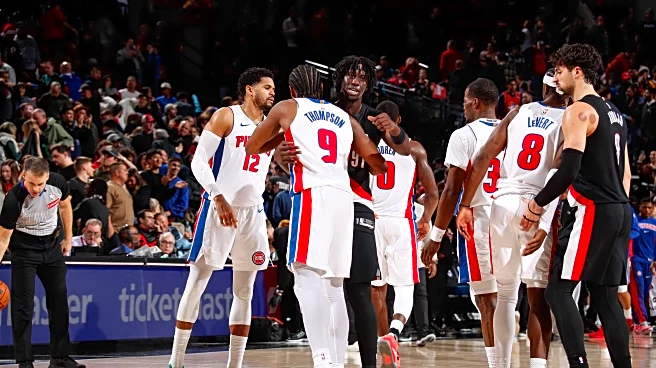
Cunningham’s disqualification is a large reason why a Portland win felt so certain when the Blazers finally got that 100-99 lead. But three straight offensive rebounds led to Detroit taking the lead right back with free throws. On the next possession, Detroit guard Ausar Thompson picked Sharpe’s pocket in the backcourt and got a breakaway dunk — marking one of Sharpe’s eight turnovers. Clingan missed a pair of free throws on the next possession. Avdija split free throws on Portland’s next two possessions after that. After finally summiting the mountain and taking the lead, the Blazers immediately found themselves in a hole again, trailing 107-102 with 1:41 remaining.
That’s when a bad — and strange — officiating break effectively ended the game for Portland. On the next possession, Avdija was whistled for fouling Pistons forward Tobias Harris on a 3-point attempt with 0.6 seconds left on the shot clock. After an irate Avdija protested in the official’s ear, Splitter called timeout to challenge the call. The replay showed a clean block from Avdija, and the call was overturned to a no-call. However, even though the deflected shot landed in Clingan’s hands, and even though the shot clock would’ve run out if the whistle hadn’t blown, the refs resumed play with a jump ball at center court and a reset shot clock. Since the whistle blew with the ball still in the air, the refs ruled there was no imminent possession. The Pistons won the tip, scored to go up seven, and the Blazers didn’t have a second miracle in them.
“The referee told me they talked back and forth with the league in Secaucus, so that was the right call, he said,” Splitter said about that controversial challenge situation.
The aftermath of the loss had the Blazers repeating familiar talking points: They’d watch film, try to learn from it, and keep moving. After another great effort came up empty-handed and dropped the Blazers to 12-17, it got this writer wondering if that record is representative of the Blazers’ quality of work this season. Cissoko was presented with that question, and he explained the nuance of Portland’s up-and-down play well.
“I would say yes and no,” he said. “Because we gotta play for 48 minutes. There’s a lot of games that we had where we probably played for 40 minutes, 45 minutes. That’s not the game. We’re a young team. We’re missing some important guys on the team, so it’s just a matter of time. We’ll figure this out.”