


Sometimes you don’t know what you’ve got till it’s gone — only I think we really did.
Whether I like it or not, I seem to have fallen into a deep forensic assessment of my beloved Juve, and where, or when, it all started to go horribly, terribly, average. Where, my friends, did Juventus’ era of dominance began to unravel?
Now, before anyone says “when we lost the Scudetto” — congratulations, well done — I want to be a little more detailed in my thinking. The last three Scudetti we won were on a negative
points track and clearly some rot had already set in. Some would point to Cristiano Ronaldo’s arrival. Others would blame the departure of Antonio Conte, or the return of Massimiliano Allegri, or the failed transition for the post-BBC era, or the off-field turmoil that followed.
Having looked at this for a few weeks, having sifted the pain, having listened to the history tapes, I have come to the conclusion that the most compelling argument, the single most important moment occurred, very away from the pitch and attracted far less attention at the time.
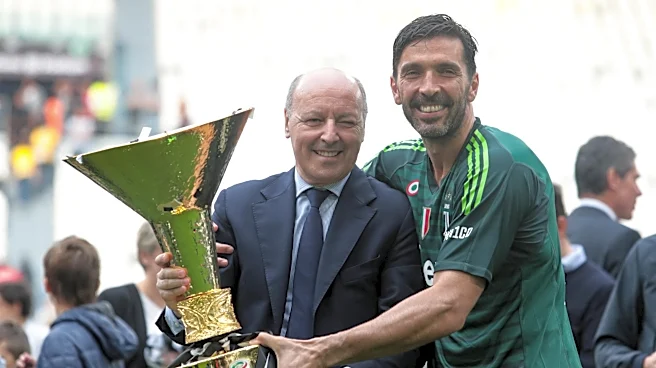
The day Beppe Marotta sauntered off into the Milanese sunset. A double hit, if you will.
When Marotta arrived in Turin it was 2010 and our beloved Juventus were in the midst of down period. The club had finished seventh in Serie A — the first of two straight seasons in seventh — and appeared trapped in a cycle of poor recruitment, managerial instability and strategic drift. (Sound familiar, anyone?)
What followed over the next decade was one of the greatest rebuilding projects in modern European football, and I think something that may be more Marotta-centric than Juve-centric. We’re looking at you, Inter.
Between 2011 and 2018, Juventus won seven consecutive Scudetti, reached two Champions League finals and re-established themselves among Europe’s elite. While coaches and players received much of the attention, Marotta was the common thread running through the entire project. Was he a genius identifying unknown wonderkids? Not especially. Did he negotiate unbelievable deals? No more than some. Could he spend more money? Nope, not really.
Now, I get it. Let’s start with “bargains” — I hear that was his main game. Andrea Pirlo arrived for free. A teenage Paul Pogba arrived for free. Andrea Barzagli cost less than many clubs spend on youth prospects. Carlos Tevez represented extraordinary value. Arturo Vidal became one of the best midfielders in Europe after joining from Bayer Leverkusen. Sure. But bargains could be had. Guess what, though? They … all … worked … out.
Looking at cost per player exclusively on the transfer misses the point. Old mate Beppe’s greatest strength was understanding how these pieces fit together. This was not just a team of champions, it was a champion team. A carefully assembled machine.
Gianluigi Buffon, Giorgio Chiellini, Leonardo Bonucci and Barzagli formed a defensive unit perfectly suited to one another. Vidal, Pirlo, Pogba and Claudio Marchisio balanced creativity, physicality and tactical intelligence. In attack, Tevez, Alvaro Morata, Mario Mandzukic and Paulo Dybala each offered different solutions. The squad had coherence. Every acquisition appeared to fit within a plan, and a game plan.
Now, to something controversial. What if I said that the most underrated — but perhaps most important — aspect of any sporting director’s role is not to make good decisions. It is, in fact, preventing bad ones. The best executives protect clubs from themselves, from ego, from panic, from new shiny things.
They prevent short-term thinking from overwhelming long-term planning. The Marotta machine developed a reputation for exactly that. We chased no waterfalls, we were blinded by no stars, and we did not tilt at windmills.
Marotta left Juventus in October 2018. Coincidentally, or perhaps not, Juventus soon began to look like a completely different club. We started to make major individual investments and looked like we were after immediate outcomes.
The Ronaldo signing remains one of the most debated decisions in club history. Set aside the COVID-19 pandemic — and the terrible effects — and you are left with a commercial assessment that it elevated Juventus’ global profile. A sporting perspective that it delivered on goals and gave us moments of brilliance. But it also represented a philosophical change and the end of our golden period. Our club had spent years carefully balancing and building for squad construction, and now, suddenly, appeared willing to stretch its financial and sporting model around a single superstar. I wonder if Marotta would have approved?
The years following his departure have seen Juventus make a series of squad choices that just didn’t feel like us. High wages became an issue. Signings became difficult to integrate. The midfield failed despite substantial investment. Coaches inherited squads assembled according to different and sometimes contradictory visions.
Let’s be generous and call these “overlapping rebuilds.” I wonder if Beppe would approve? I wonder if he would have said “no”? I wonder if he would have protected us from ourselves?
So, what did Marotta get up to? At the time, Inter were competitive but inconsistent. They had resources and ambition, but lacked stability and planning. Over the following years, Inter developed something remarkably familiar. Signings such as Nicolo Barella, Alessandro Bastoni, Hakan Calhanoglu, Marcus Thuram and Francesco Acerbi reflected strategic planning rather than headline chasing. Inter did not spend the most money, they spent it better.
For years, Inter were chaotic while Juventus represented order, discipline and professionalism. Today, truthfully, you could argue those roles have reversed.
Now, of course, no single individual can fully explain everything that has happened. The core Juve squad was aging. The pandemic created massive challenges. The club faced governance and legal issues. Don’t forget that Italian football itself became more competitive. Even with Marotta in place, maintaining our dominance of the 2010s would have been almost a miracle.
But there is an important distinction between decline and disaster. A club can manage a transition. A club can refresh a squad. A club can gradually hand over from one era to the next. We did not do any of that particularly well.
I think that we football fans often overestimate the importance of players and underestimate the importance of executives. Beppe Marotta never scored a goal. He never made a tackle. He never kicked a ball in anger.
I don’t think we can say that Juventus declined because we lost Beppe. I do think we can say that when we lost Beppe we lost how to deal with decline.