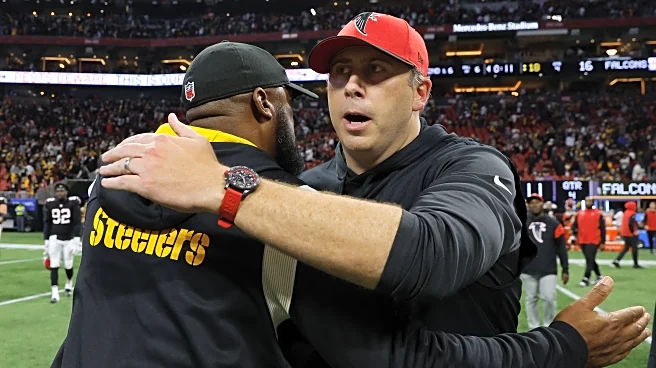



Ohio State’s coaching staff appeared complete when the program announced the hiring of Arthur Smith as offensive coordinator. A former NFL head coach with extensive play-calling experience, Smith’s arrival checked a major box for Ryan Day as he continues to shape a structure that allows him to operate more as a CEO than a hands-on play caller.
But beneath that headline lies a quieter, more intriguing wrinkle. Smith was not hired into one of the 10 on the road recruiting roles permitted by the NCAA.
That decision, intentional and uncommon for a coordinator hire of his stature, leaves Ohio State with one open full-time coaching slot still to fill, and significant flexibility in how it chooses to do so.
The significance of that vacancy cannot be overstated. In modern college football, the 10 on the road recruiters can be as valuable as any schematic mind on staff.
Ohio State’s choice to keep Smith off the recruiting trail suggests a clear prioritization of his NFL-caliber offensive acumen while preserving an additional role for a coach whose primary value could be recruiting, development, or a specialized unit.
In other words, the Buckeyes did not accidentally leave a chair empty. They created one.
One school of thought points directly toward recruiting. Ohio State has long benefited from former Buckeye players who transitioned into high-level recruiters, coaches who understand the program’s culture and can sell it authentically to elite prospects, like Brian Hartline, Tim Walton, and James Laurinaitis.
Some names, like current assistant WR coach Devin Jordan, have surfaced in speculation, reflecting a broader belief that Ohio State could use this slot to add a recruiter whose sole focus is relationship building, territory control, and closing power.
With NIL complexity, earlier recruiting timelines, and intensified competition from SEC programs, a specialist who lives on the trail could be as impactful as any position coach. Ryan Day has consistently emphasized recruiting infrastructure, and this opening gives him the chance to reinforce it without reshuffling the existing staff.
The other logical direction is special teams, a phase of the game Ohio State has treated more collaboratively than centrally in recent seasons. While the Buckeyes have made strides in consistency, they have not employed a true, dedicated special teams coordinator as one of the on the road recruiting staff members since Parker Fleming.
That possibility gained traction when reports emerged that Marty Biagi, Notre Dame’s current special teams coordinator, has been in contact with Ohio State. Biagi brings a well-traveled resume, having coordinated special teams at Notre Dame since 2023 and previously at Ole Miss, Purdue, and North Texas.
His units have generally been disciplined, aggressive, and well-coached, traits that resonate with programs chasing marginal gains at the highest level.
Whether Biagi’s contact is tied to a full-time special teams coordinator role, a hybrid recruiting position, or exploratory due diligence remains unclear. But the interest itself signals that Ohio State is at least evaluating whether dedicating an on the road coaching slot to special teams is the next evolution of its staff.
With scholarship limits tightening, margins shrinking in playoff games, and kicking consistency often deciding postseason outcomes, there is a growing argument that special teams deserve a seat equal to offense and defense at the coaching table.
Ultimately, the open spot reflects Ryan Day’s broader vision. Rather than rushing to fill all 10 roles with conventional hires, Ohio State has left itself optionality.
That flexibility could yield a recruiting ace who strengthens the Buckeyes’ national footprint, or a special teams coordinator who stabilizes a phase of the game that often swings championships. It could even be a hybrid solution that blends recruiting prowess with a specialized focus.
What is clear is that this is not unfinished business, it is strategic patience. Ohio State has built a staff designed to compete immediately while keeping one final lever available to pull. How the Buckeyes choose to use it will say a great deal about where they believe the next competitive edge lies.