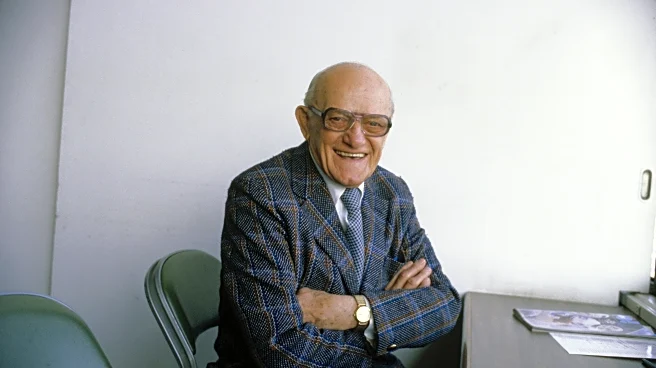

For 99.99999% of major league baseball players, the fact that they made the major leagues is the most historically notable fact about their life. For at least a brief period of time, they were among the best
X-number of baseball players in the world. That’s a pretty incredible thing.
However, in some very rare cases, a person who played in MLB managed to do something else notable in their life. Not just any old “something else” either, they do something in another field that completely overshadows their baseball life. Today’s Yankee birthday post is one of those people.
If you follow other sports, football in particular, you might know this name. But you may not know that they played in the majors, never mind for the Yankees.
George Stanley Halas
Born: February 2, 1895 (Chicago, IL)
Died: October 31, 1983 (Chicago, IL)
Yankee Tenure: 1919
The son of immigrants from the modern day Czech Republic, Halas was born in Chicago in 1895. His father suffered a stroke when George was a child, leading to him and his siblings working odd jobs to help the family make ends meet. Despite that, he still found time to play sports and excelled in several at Crane Tech High School in Chicago.
After graduating, Halas enrolled at the University of Illinois, where he would play on all of the baseball, football, and basketball teams. His athletic career, and life, was nearly ended before it truly began, though. While an employee at Western Electric over the summer, Halas was scheduled to be a passenger on the SS Eastland on July 24, 1915, on a trip the boat was taking on Lake Michigan as the company was taking their employees on a ride to a company picnic. On the trip, the boat wrecked and overturned, leading to the death of over 800 people. As he had been a planned passenger on the boat, his name was listed as among the deceased in newspapers in following days. In reality, Halas had been running late that day as he was attempting to put on weight for football season and missed the boat having been training and weighing himself.
Having emerged from the event unharmed, Halas returned to Illinois and excelled in all three sports. On the diamond, after hitting .350 in his sophomore season, Halas caught the eye on Yankees’ scouts, but put his athletic pursuits on pause to serve in World War I. Following his return from the Navy, the Yankees finally inked him in 1919.
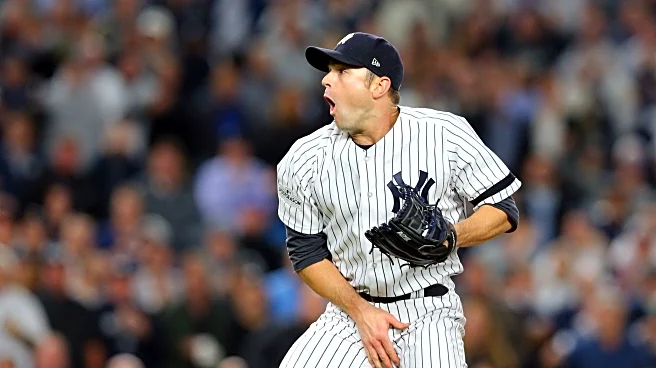
Upon going to spring training, Halas quickly made an impression and was soon being projected to make the team that season. However, he suffered a hip injury in one spring game, causing him to miss the start of the season. While he eventually did return and made his MLB debut on May 6th, the injury continued to affect him. Halas would appear in 12 games for the 1919 Yankees, but went just 2-for-22 at the plate. The Yankees eventually sent him to the minor league St. Paul Saints for the rest of 1919.
After that season, the Yankees quite famously acquired some guy named Babe Ruth, who took over Halas’ right field position. The team wanted to return Halas to the Saints to get some more seasoning. He was willing to do that but requested that the Saints pay him the same salary the Yankees had been. St. Paul’s owner was also willing to do that, but requested the Yankees release him so he could be a full-time player for the Saints. (The minor leagues had much looser affiliations back then.) The Yankees were at that time unwilling to let the still promising prospect go. In the end, Halas decided to give up baseball, as he still had career prospects in another sport.
While playing baseball, Halas had also played a bit of semi-pro football in the offseason. In 1920, A.E. Staley Company, a starch manufacturing company in Decatur, IL, gave him an offer to work at the company, but to also play for and run their budding semi-pro football team. He accepted the offer and began putting together a team — the Decatur Staleys — picking blue and orange, the colors of his alma mater of the University of Illinois, for the team uniforms.
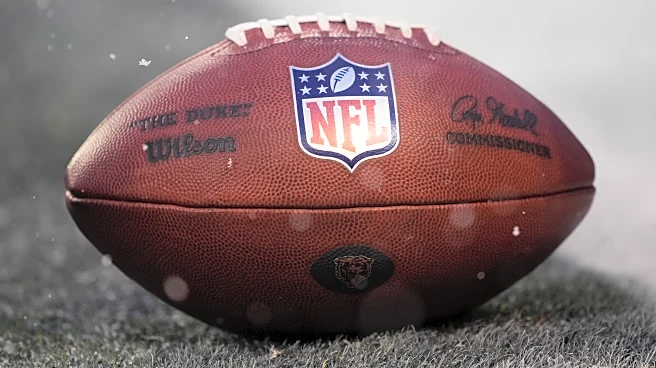
Later in 1920, Halas represented the team at a meeting that led to the formation of the American Professional Football Association. Two years later, the APFA would be renamed the National Football League. The following year, the Staley Company was going through some financial hardships, and Halas took over full control of the team, moving them to Chicago. After working out an agreement to rent Wrigley Field, Halas later renamed the team the “Bears” as a nod to the Cubs.
Halas continued playing for the team through 1929, and coached them off and on through 1967. Under Halas’ ownership, the Bears won eight NFL championships in the years before the AFL merger and the Super Bowl era. He remained an owner and involved with the team until his death in 1983. His family still controls the Bears, with grandson George McCaskey currently in charge of the franchise. Two years after his passing, the Bears won Super Bowl XX, with a line in the famous “Super Bowl Shuffle” song dedicated to “Papa Bear Halas.”
The NFL is by far the most popular sporting league in the United States today, and Halas played a role in both the founding and the development of it. Had things played out a little differently, he might’ve been a star for the Yankees instead.