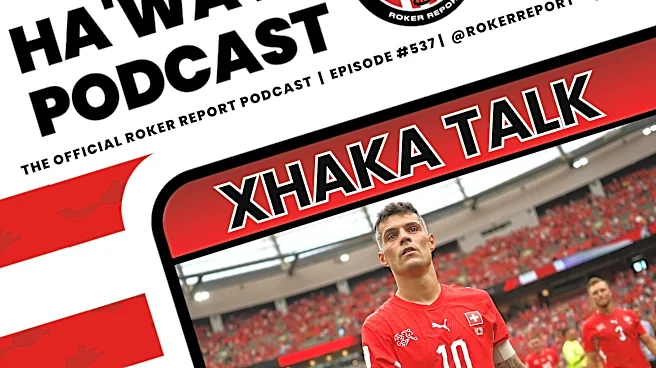











This week has brought a transfer story that no Sunderland fan wanted, along with a flood of speculation across social media and news sites.
This is, of course, the supposed news that Granit Xhaka is trying to force a move to Chelsea to be reunited with his former boss, Xabi Alonso, who has recently been named as the latest man to take the hot seat at Stamford Bridge.
It’s hard to delve too deeply into this as I write because, in all honesty, it feels as though nobody really knows the truth apart from
Xhaka himself – and he’s thousands of miles away playing for Switzerland at the World Cup.
A lot has been said about Xhaka over the last few days, and I’m keen to avoid getting dragged too deeply into all of this until a concrete conclusion emerges.

Until then, speculation and clickbait will fill the void created by the uncertainty surrounding Xhaka’s future, and that seems to be the way of modern sports journalism at a certain level.
Away from all of this, we’ve been told a lot over the last few days – mainly by Chelsea fans – about the Premier League’s so-called ‘food chain’. The suggestion is that, when one of the traditional ‘Big Six’ clubs comes in for your players, you should simply stand aside and accept it.
Chelsea have enjoyed plenty of success in recent years, with a Champions League title and a host of domestic trophies in their cabinet over the last two decades. However, they head into next season without European football – something Sunderland can offer players that Chelsea currently cannot.
There is undoubtedly a pull there, but I’d also suggest that the attraction of living in London (it ain’t all that) and the vast – and often eye-watering – wages Chelsea can offer still give them an advantage over clubs playing European football next season.
Chelsea supporters also can’t seem to understand why Sunderland value their captain and Player of the Season at more than £8 million. Just because you don’t want your club to pay any more than that doesn’t mean it dictates his value to us as the selling club.

Being told to simply accept that bigger clubs can pick and choose whichever players they want is a rotten way for football to operate, and it often feels as though the hard work done by clubs outside that elite group can only take them so far before the cycle repeats itself.
You only have to look at Tottenham, who narrowly avoided relegation last season and are now spending hundreds of millions of pounds while other clubs remain hamstrung by financial restrictions, to find an example.
There is a clear pecking order in the Premier League, and the so-called Xhaka saga has highlighted it once again. Sunderland haven’t had much experience of bigger clubs trying to prise away their best players in recent years, largely because we’ve rarely had players attracting this level of attention.
One thing that can be said, both from this situation and recent transfer windows in general, is that Sunderland’s board know when to negotiate and know when to stand firm. On the evidence we’ve seen so far, that doesn’t look likely to change anytime soon.