

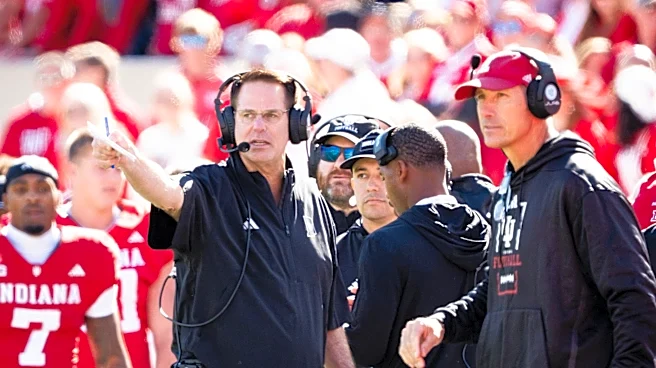
The defending national champions come to Montlake on Saturday having won 25 of their last 26 games, but they don’t look much like last year’s team when they blew out most teams. While the 2026 group is 9-1 (6-1 Big Ten), they have been winning very ugly. Since October, Indiana has needed overtime twice, a fourth quarter comeback against Nebraska and a 60 yard field goal (!) as time expired to stay in the playoff hunt. Their only loss is a 19-15 defeat to Ohio State that came down to the smallest
of margins, as a wide receivers foot landed out of bounds in the end zone right as he caught the ball. The defense is still elite, but the offense has struggled and not come close to the consistent heights of 2025.
The Numbers
- Scoring Offense: 31.9 PPG (41st in FBS)
- Big Ten Scoring: 24.9 PPG (8th in Big Ten)
- Total Offense: 422.7 YPG (33rd in FBS), 7.0 yards per play (9th in FBS)
- Rushing Offense: 182.2 YPG (41st), 5.2 YPC (21st)
- Passing Offense: 240.5 YPG (46th), 9.3 YPA (8th), 60.1% completions (88th)
- Third Down: 41.7% (67th)
- Red Zone: 84.6% (76th)
- Sacks Allowed: 15 (41st)
- Turnovers Lost: 7 (10th)
Key Players
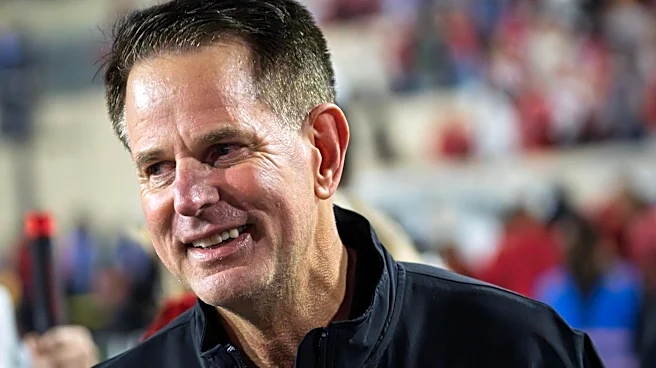
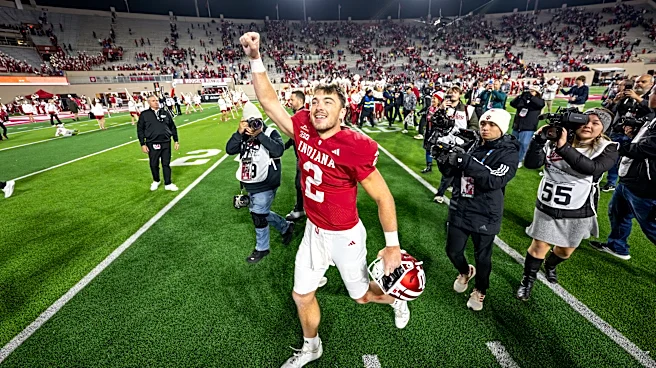
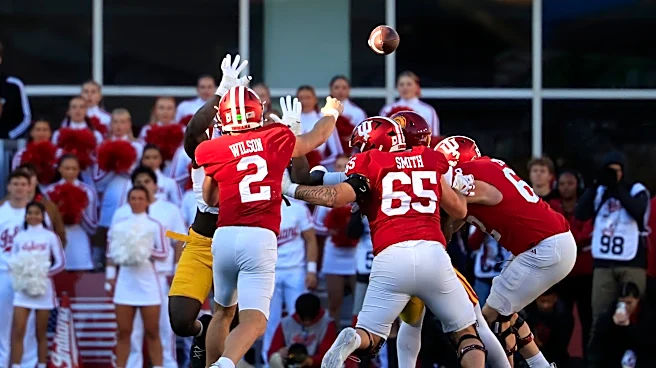
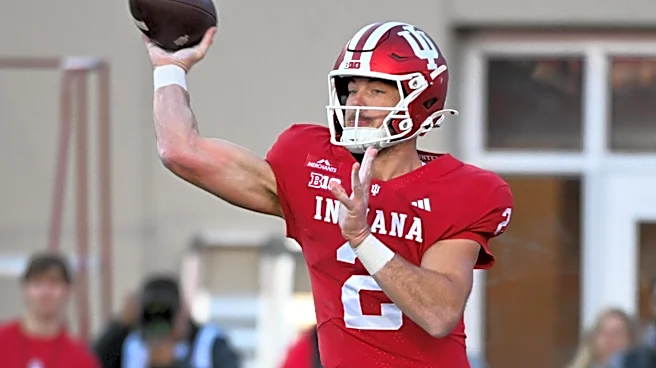
Quarterback Josh Hoover, the TCU transfer brought in to replace Fernando Mendoza, hurt his throwing shoulder against Ohio State and hasn’t been the same since. Seventh-year senior Grant Wilson replaced him and led a comeback against Minnesota two weeks ago, and then threw for 305 yards in a 27-13 win over USC last week. That was Indiana’s first 300 yard passing game of the season. Cignetti hasn’t named a starter for Saturday, but every sign points to Wilson. So far this year he’s 30-of-49 for 535 yards, 5 TD and 1 INT. His 10.9 yards per attempt tells you how he plays in that he trusts his receivers and isn’t afraid to throw them open down the sideline. He’s a 6-foot-3, 220-pound pocket passer with enough mobility to escape and a veteran feel for the game. However, he can be streaky. Josh Hoover is probably the more talented passer on paper. He’s thrown for 1,860 yards, 19 TD and 2 INT, and he was one of the most efficient deep ball throwers in the country through September. On the other hand, since the shoulder injury, he hasn’t completed more than 50% of his passes in any game.
Indiana has one of the best receiver duos in college football. Charlie Becker is a contested catch machine with 53 grabs, 950 yards and 10 touchdowns at almost 18 yards a catch. He’s a long strider who can simply run by corners who don’t force him inside. He’s also 6-4 and tracks the deep ball as well as anyone in the country. Nick Marsh is also big at 6-3 and is the other half of a dangerous pairing with 42 catches for 749 yards and 8 TDs. Marsh is the more physical, run after catch threat. He turned a skinny post into a 75 yard score at Nebraska and finished that game with 187 yards. Behind them, Shazz Preston (15 catches, 248 yards) and Davion Chandler (11 catches, 131 yards, 4 TD) take what’s left. Chandler has quietly become a reliable red zone target. TE Brock Schott is mostly a blocker in a young tight end room.

The backfield is banged up. RB Turbo Richard is the most explosive back on the roster, with 113 rushes, 745 yards and 6 TDs at 6.6 a carry, including a 204 yard game against Rutgers. He is a one cut and go runner who’s got some burst, in addition to contact balance to turn a small crease into a big gain. He missed last week with a shoulder injury and is questionable for Saturday. RB Lee Beebe Jr. has carried the bigger load with 150 carries for 786 yards. He’s a steady, downhill grinder who helps keep the offense on schedule.
Up front, LT Carter Smith is arguably the best player on the offense and one of the best tackles in college football. He’s a former All-American with more than 40 consecutive starts, and should be a first or second round pick in the 2027 NFL draft. The interior has been more patchwork replacing last year’s talent. This line is still good, but it isn’t the wall it was last year. The 15 sacks allowed are the most of the Cignetti era at this point in a season.
The Scheme
Offensive coordinator Mike Shanahan runs a pro style offense built on the run game. It’s a mix of inside zone and gap runs from under center and the pistol, with plenty of 12 personnel (1 running back, 2 tight ends), motion and pulling linemen. The whole objective is to stay on schedule so play action shots are open on second and 5, and third downs are from manageable distances. Last year’s team was the perfect encapsulation of this: they led the country in shortest average third down distance. They could kill you with death by 1000 paper cuts or with explosives.
This year the offense has struggled, mostly because the run game hasn’t been dependable enough against good defenses. Nebraska held Indiana to 65 rushing yards, and the Hoosiers ran just 44 plays in that game. To counter, Indiana tries to live off explosive play action completions. It’s a bit of an all or nothing pass game: Indiana is 8th nationally in yards per attempt but 88th in completion percentage. They are also 4th nationally in yards per completion.
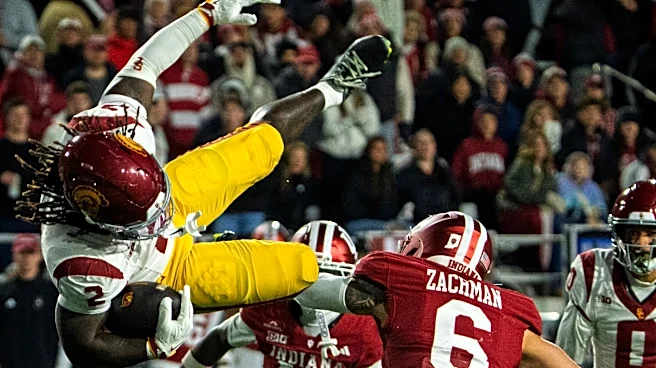
Under Grant Wilson, the formula hasn’t changed much, but the deep ball has come back to life. Against USC, Indiana’s first touchdown drive went 60 yards in six plays, almost all of it on two big throws, and Wilson put the game away with a 42 yard pass to a diving Charlie Becker. His 10.9 yards per attempt is a small sample, but he’s clearly comfortable letting his receivers make plays down the field.
Final Thoughts
Washington defensively can beat this Indiana offense by winning first down. When Indiana can’t run, as against Nebraska, Ohio State and Michigan, the Hoosiers end up in third and medium or long, and the line is more susceptible to pressure, and a quarterback who is either hurt or a career backup has to make plays. Over that four game stretch, Indiana averaged under 18 points a game.
For Washington, that means stopping Beebe (and possibly Richard if he’s playing) with the front seven without bringing a safety into the box every snap, because the deep passes is something this offense still does at a high level. The UW corners will likely spend most of the afternoon on islands against two of the best vertical receivers in the Big Ten, and they need to win at the catch point. Getting pressure on Wilson with four rushers would change everything, since this interior line has been beatable. But, the Washington pass rush hasn’t been anything special this season. Should be another close one.