

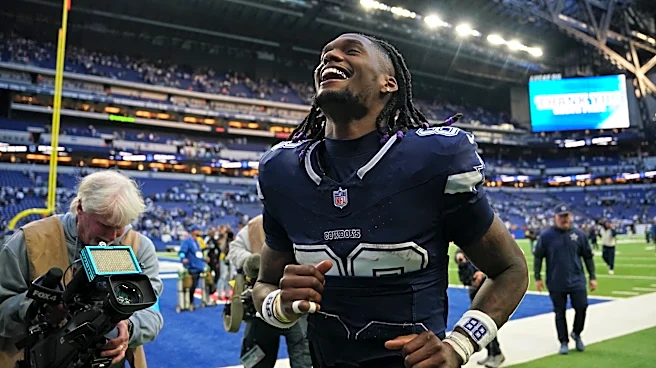
History will lead you in the right direction more often than not. The head-to-head matchups between the San Francisco 49ers and Dallas Cowboys have been one-sided. It’s why it’s a rivalry in name only.
How the 49ers have fared against the NFC East and the Cowboys versus the NFC West is more evidence of what to expect this coming Sunday. The Niners have been terrific in that regard, while Dallas has gone 2-5 in their previous seven games — including a loss to the Jacoby Brissett and Gardner Minshew-led
Cardinals, in a game in which they allowed 30 points.
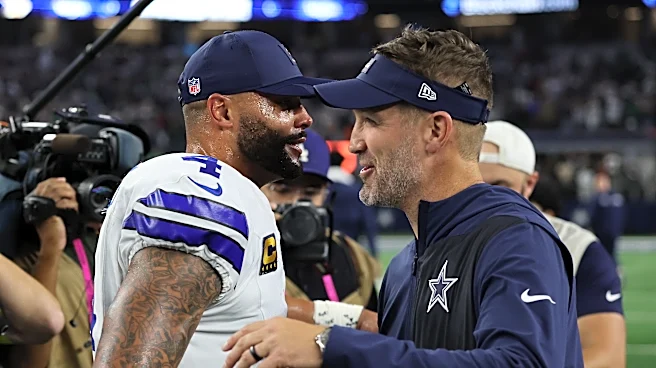
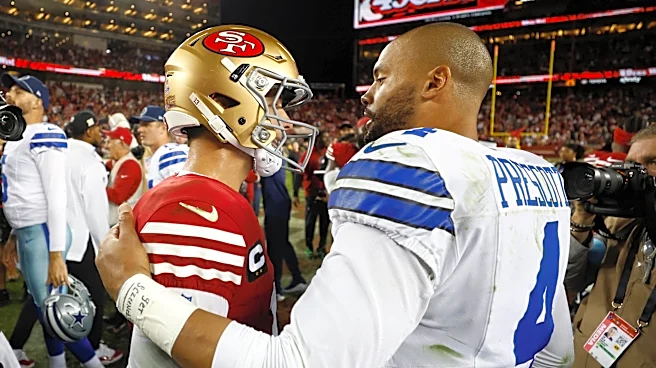
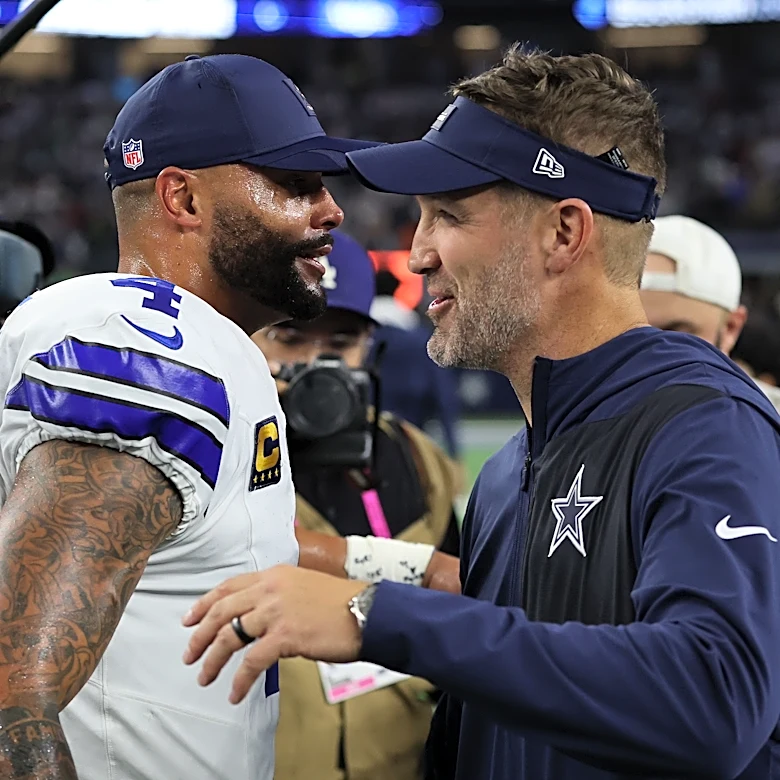
Let’s preview Week 10’s matchup to see whether Dak Prescott can keep pace with Brock Purdy.
What to expect when the 49ers have the ball
Purdy is 3-0 in his career against the Cowboys. His fourth start against Dallas might be the biggest mismatch, at least on this side of the ball, to date. The 49ers are top-three offensively in points per game, EPA per pass, EPA per rush, passing and rushing success rate, and in third-down and red-zone efficiency.
Conversely, the Cowboys are bottom-five or worst in total yards and rushing yards per game, EPA per play and rush, sacks per game, and third-down efficiency. Dallas’s saving grace on this side of the ball is that they are sixth in turnover EPA per game.
Down-to-down, they’ve been lousy. The Cowboys give up a league-high 35.2 yards per opponent possession. After a mid-season quarterback change, Arizona had drives of 70, 80, 58, and 90 yards before a 44-yard game-winning field goal drive in overtime.
Atrocious against the run inside
Quinnen Williams is one of the NFL’s best interior linemen. He’s the ultimate disruptor. Williams leads all defensive tackles with 14 tackles for loss—five more than Jeffery Simmons. His five sacks are tied for third. The 18 run stops are tied for third. Yet, for whatever reason, the Cowboys have been abysmal against the inside run.
When you watch them, the issues stem from getting moved at the point of attack. Ball carriers aren’t getting touched until they cross the line of scrimmage. The eye test matches the stats: Dallas allows the second-most yards before contact per carry this season, at 1.78 yards. They get moved, easily, despite having played only two offenses in the top-15 in rushing success rate.
The 49ers are running more and more inside the tackles. They’re running inside zone at a 19.1% clip, a slight increase from a year ago. This game sets up well for the Niners to keep attacking the Cowboys’ A and B gaps.
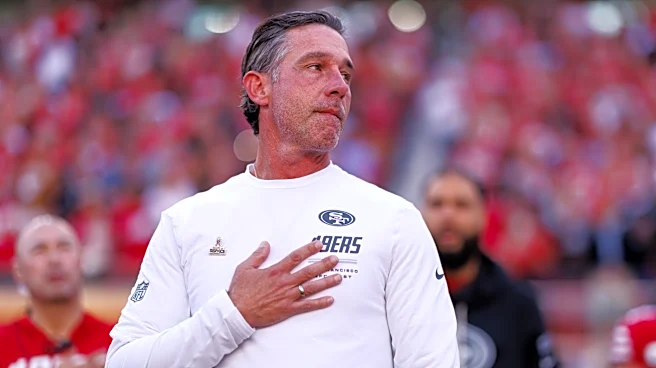
Kyle Shanahan had to be grinning as he watched the 36-play reel of the Cowboys’ defense defending —a term used loosely—inside zone. They allowed 8.08 yards per carry. Seven of those 36 plays went for double digits. They allowed a 58.3% success rate.
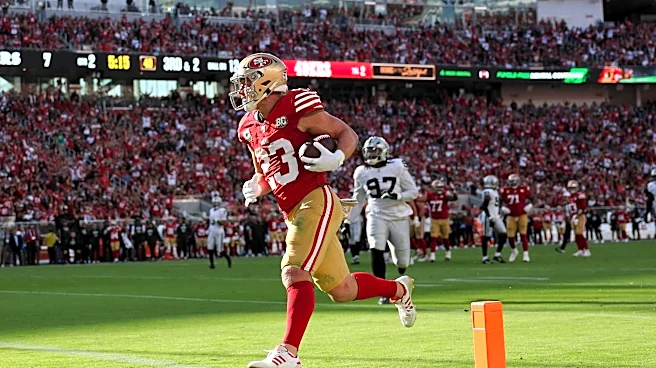
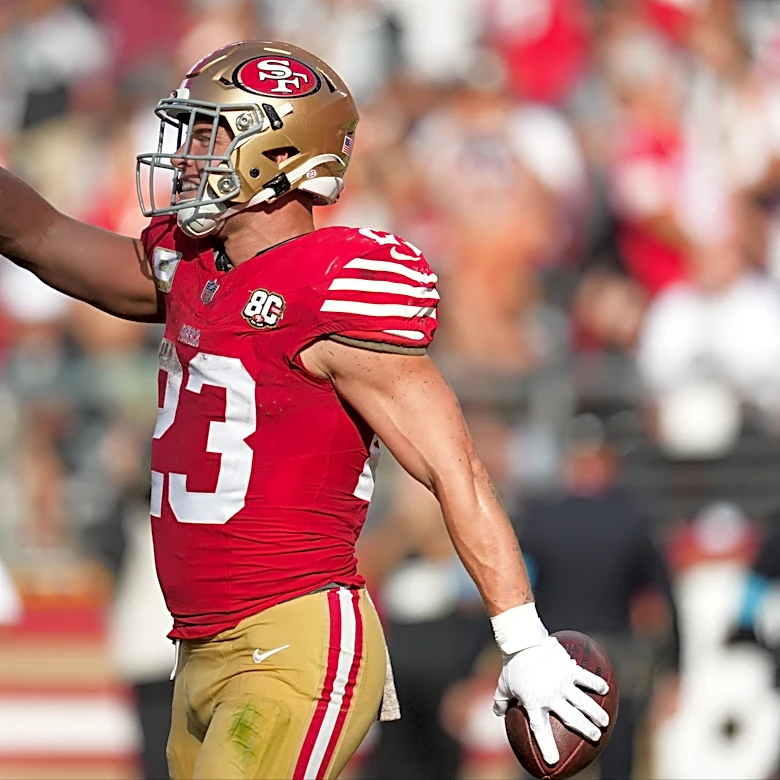
You could build the case that the 49ers aren’t running inside enough this season. Christian McCaffrey had two 11-yard runs on inside zone last week. McCaffrey has 24 inside zone carries this year and averages 5.04 yards per carry, with a 62.5% success rate.
Add in the different motions and window dressing, and it’s tough to see the defense that allowed the best rushing attack (Tampa Bay) its face this season to run for 241 yards slow down the 49ers.
Trent Williams injured his shoulder in practice and is questionable. Veteran Vederian Lowe would take Williams’ place if he cannot suit up.
As big a loss as that would be for the 49ers, the Cowboys are 29th in stuff rate. They do not get stops on the ground. Their linebackers get caught up in the wash, creating massive rushing lanes.
Where can Brock Purdy attack the Cowboys?
The Cowboys allow a good amount of chunk plays through the air. They’re 27th in EPA per pass. They’re also 25th in passing success rate.
Watching Daniel Jones forgo intermediate passes last week for underneath throws was maddening. Receivers were open. They just weren’t targeted.
How has Dallas held up against elite passing offenses? C.J. Stroud threw for 347 yards. Nico Collins and Jaylin Noel each had over 85 receiving yards. Jordan Love threw for 276 yards. Matthew Golden and Christian Watson combined for nine catches and 168 yards.
No Mike Evans again for the 49ers, but this should not be a defense where the Niners need their No. 1 target. The Cowboys don’t create negative plays. What Purdy will see this week compared to next is the polar opposite—the Cowboys blitz 20.2% of the time, the second-lowest mark in the league.
In theory, Purdy should have plenty of time to scan the field and pick Dallas apart. It’s a Vic Fangio-adjacent defense, so the Cowboys will do all they can to take away the middle of the field and funnel targets to lower-percentage areas, like outside the numbers.
Jordan Watkins has ten targets in the previous two games. Cornerback Joey Porter Jr. looks set to return from injury and will look to slow down Watkins hot streak.
The rookie will be on the radar
Rookie Caleb Downs is the player the Niners could find success against. He’s primarily played nickel. Against the Texans, Packers, and Cardinals, Downs allowed all 9 of his targets to be completed for 147 yards.
Heading into Week 9, Downs had allowed a 90.5% completion percentage, which was the third-highest among slot cornerbacks this season. He has one pass breakup. Dallas tried to align him closer to the line of scrimmage, almost like a pseudo-linebacker in coverage against Arizona. He played linebacker 32.1% of the time against the Cardinals. But now he’s facing an offense that thrives over the middle. Downs has nowhere to hide against the Niners.
Old friend Kendrick Bourne caught a slant on Downs, broke a tackle, and gained a bunch of yards en route to a 29-yard gain. Downs was no match for Trey McBride on a 3rd-and-6 target— hello, George Kittle.
Downs is not a big player. He’s 5’11”, 206 pounds, but has a 10th percentile arm length. That shows up in contested situations when he can’t make plays on the ball.
Savion Williams from the Packers got Downs a couple of times on in-breaking routes. Watson and Golden each had a double-digit reception against Watkins on an out route on third down.
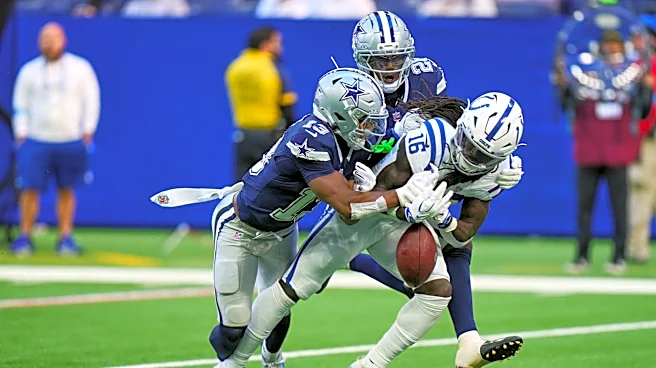
He would’ve allowed two first-down receptions on third down last week to the Colts, but his brother dropped the ball both times. You better believe the rookie will be on the 49ers’ radar.
Whether it’s the No. 1, 2, or slot receiver, the Cowboys are bottom-three in yards after the catch allowed per reception. The No. 2 third-down offense meets the 32nd third-down defense. The No. 1 red zone offense meets the No. 25 red zone defense. Dallas also has six more defensive penalties than the 31st-placed team.
On paper, the only thing stopping the 49ers from scoring in this game is the 49ers. Outside of Quinnen Williams, this defense has zero redeeming qualities.
Will the Cowboys fumble the game away like the Raiders?
The 49ers forced five turnovers, masking the Raiders’ six potential scoring drives.
Luck plays a role in every turnover. To date, the Cowboys are 22nd in turnover EPA lost per game on offense. They make mistakes. Look no further than last week when Dak Prescott fumbled on third down, or CeeDee Lamb fumbled going into score.
Fred Warner and the Niners defense have a penchant for the peanut punch. They’re sixth this year at forcing fumbles, thanks in large part to the soon-to-be Defensive Player of the Year.
Most potent offense the 49ers have faced to date
Starting cornerbacks Renardo Green and Deommodore Lenoir practiced Friday for the first time. Nate Hobbs practiced in full and could make his debut, especially with Upton Stout banged up. It’ll be all hands on deck to slow down the most potent offense on the schedule yet.
Raheem Morris has been a godsend for this organization. He’s developed a scheme that is third at limiting explosive plays and fifth in yards per attempt. The biggest surprise is the 49ers being first in EPA per rush this season.
Warner plays a significant role in limited targets over the middle. Teams are terrified to throw the ball between the numbers at 5 and 15 yards. The 49ers have allowed 31 yards per game, the best in the NFL. Their explosive play rate of 5% is also the league-leading rate. That’s better than 9% of the league average.
But this will be the first team in the top 8 in EPA per pass that the defense has faced. No Jake Ferguson is a big blow; Lamb, George Pickens, and Ryan Flournoy provide plenty of firepower.
Another area the 49ers have been fantastic at is taking away throws to the slot. The Niners allow slot receivers a 51% target share, good for second-lowest in the league. All the post-snap spinning they do at safety, paired with that Warner guy lurking, forces the quarterback to throw outside the numbers. It’s worked to date, but there haven’t been a Lamb and Pickens on the outside, either.
The best receiver the 49ers faced this season, Jaxon Smith-Njigba, had 102 yards on five catches. Brock Bowers had 111 receiving yards last week. Trey McBride had 75 yards back in September. Those are the three players the team’s game plan is built around, and the Niners failed to stop any of them.
It’d be a breath of fresh air to see the Niners’ cornerbacks be competitive in this spot. One thing they have going for them is the game script. The Cowboys may not want to run the ball against San Francisco, even if it’s great on great. Dallas is fifth in rushing success rate. But you won’t run the ball if you’re constantly trailing on the scoreboard.
Prescott, like Kirk Cousins, does not take sacks. This season, the 49ers lead the league in sack percentage on offense at 3%. The Raiders are right behind them at 3.2%. Dallas ranks fifth at 3.8%. Dallas is also eighth in pressure rate allowed.
Things change when the run threat no longer exists. The Niners’ defensive line feasts on obvious passing downs. Osa Odighizuwa gets a shot at redemption from the team that traded him. Keion White and Romello Height get to pin their ears back, while veterans DeForest Buckner and Nick Bosa get their second game together.
When you filter to players with at least 350 passing snaps, the Cowboys tackles rank third and fourth in the highest blown-block rate in the NFL at 5.3% and 5.2%, with a combined eight sacks. For reference, Colton McKivitz has a blown-block rate of 2.3%, and Trent Williams is at 2%.
The 49ers were built to play with a lead and harass one-dimensional offenses. Dallas will score. They’ll probably score a lot. But Prescott will be under pressure to keep pace with Purdy.
San Francisco isn’t the only team stepping up in class. The Cowboys scored 20 points against the Giants in Week 1, but failed to surpass 17 points against the two other playoff defenses they faced this season. It might be premature to assume that’ll change against a defense ranked sixth in the NFL in points allowed per game.
The Cowboys can hurt you on third down (5th) and in the red zone (3rd). The only area outside of sacks where the Niners are below league average is on third downs. One turnover. One punt. One mishap. That’s all it’s taken so far this season, and that’ll likely continue for the 49ers on the road against a team with high expectations coming into the year, but that has failed to live up to the talent. (Something we never say about the Cowboys.)
49ers 38, Cowboys 30.