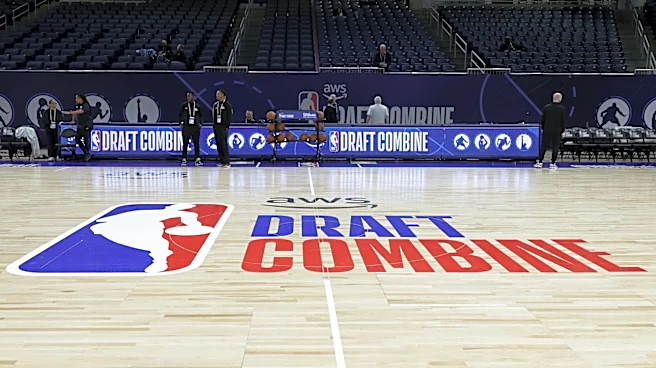






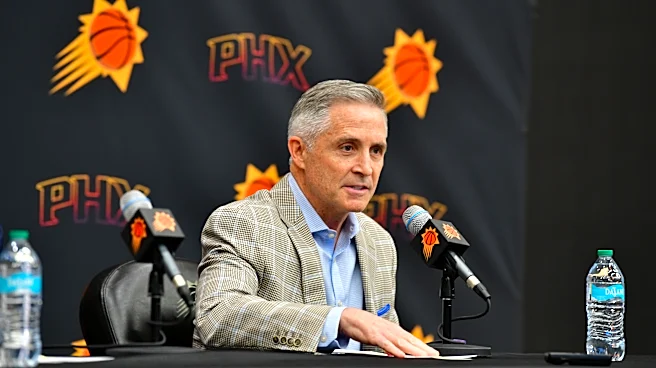
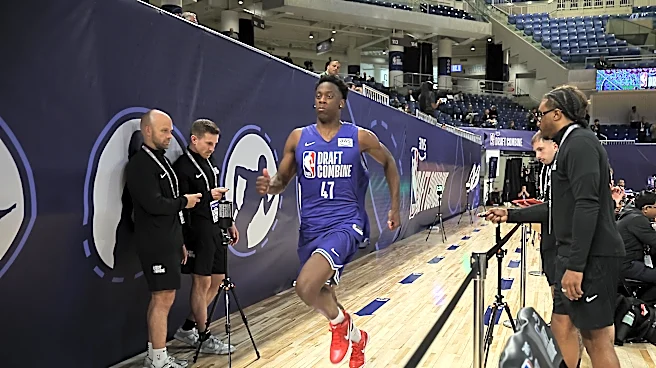
The offseason continues to roll along. Days keep falling off the calendar, and somehow we’re already nearly a month away from the 2026 NBA Draft. Yes, technically it’s still over a month away, which is the funny part about the NBA calendar. The season flies by, then once the offseason hits, time suddenly starts moving like you’re standing in line at the DMV.
That said, we’re officially at the point where draft conversations start taking over the landscape. We begin scouting prospects, building boards,
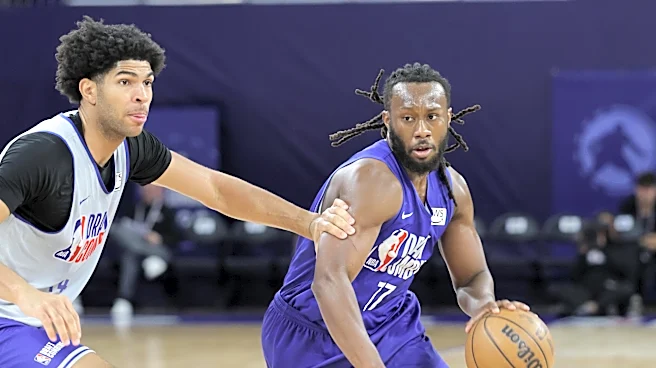
and debating which direction the Phoenix Suns should ultimately take. They have a pick this year, albeit the 17th pick in the second round and 47th overall, but it still presents an opportunity. An opportunity to grow, an opportunity to develop, and an opportunity at hope. Sure, Paul Millsap is probably the best player ever drafted at 47, but maybe that changes. Maybe this year’s pick will be impactful for Phoenix.
Before we can arrive at a definitive answer of which way we think the Suns should go, I think it’s important to first understand what paths actually exist for Phoenix and why those paths matter. Because this isn’t simply about identifying a prospect and calling it a day. There are multiple layers attached to this conversation. Roster construction. Financial limitations. Development timelines. Prospect evaluation. Organizational direction. All of it intertwines together when you’re trying to determine what the Suns should do next.
So let’s talk about it.
Understanding Phoenix’s Roster Picture
Before we even begin exploring who might be available at pick 47, it’s important to first understand who and what the Phoenix Suns currently are from a roster construction standpoint entering this offseason.
This is a team coming off an unexpectedly successful season in which they won 45 games and, quite honestly, still left plenty on the table. Between injuries and a handful of late-season collapses, Phoenix realistically could have been a 50-win team. When you combine that with the messaging from the organization about continuity and development being priorities, there really isn’t a ton of wiggle room attached to this draft class from the Suns’ perspective.
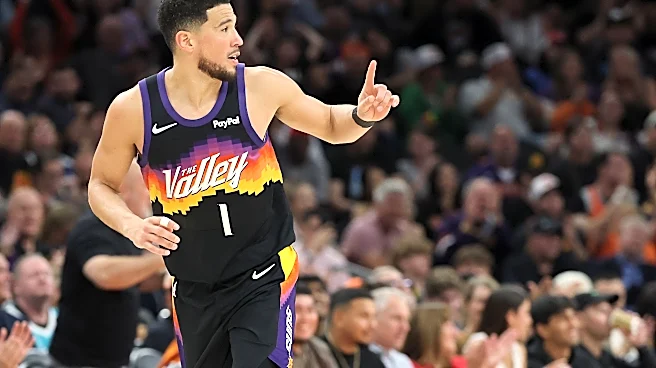
You already have Khaman Maluach and Rasheer Fleming entering their sophomore seasons on guaranteed contracts. Koby Brea returns on a two-way deal. Add Oso Ighodaro and Ryan Dunn into the equation as third-year players, and the youth movement is already alive and well in Phoenix. With Devin Booker leading the way alongside Dillon Brooks and Jalen Green, the Suns largely appear set on the identity they want to carry into next season.
There are still obvious questions surrounding the futures of Collin Gillespie, Jordan Goodwin, and Mark Williams, especially when you factor in the financial implications of retaining all three. We still don’t fully know how aggressive Phoenix wants to be relative to the luxury tax and first apron.
When you look at the roster holistically though, it feels like there may only be one true open roster spot available if the organization successfully brings back the players it wants to retain. That likely leaves Amir Coffey as the odd man out, especially considering Haywood Highsmith is already on a non-guaranteed contract that Phoenix can choose to keep active.
Could the Suns use that roster spot on the 47th pick? Absolutely. Could they leave it open in case they move Grayson Allen, Royce O’Neale, or even Jalen Green in a trade? Sure.
Still, if Phoenix keeps the pick and drafts at 47, the most likely outcome is that player spends significant time on a two-way contract and in the G League. That’s typically what happens with selections in this range, especially when you consider Isaiah Livers will no longer be eligible for a two-way deal next season. And realistically, if the Suns move Allen or O’Neale, they probably aren’t bringing back two players in return. More likely it’s one smaller contract paired with draft compensation.
Phoenix also values flexibility. The organization has consistently preferred keeping that 15th roster spot open throughout the season, and we saw them operate that way last year. If one of their two-way players starts to pop (a la Jamaree Bouyea), that flexibility allows the team to convert them later without having to make a corresponding move.
So that’s where the Suns currently stand from a high-level roster construction perspective. Now comes the harder question. What path should they actually take in the draft?
Three Directions the Suns Could Take
Perhaps it’s rudimentary to say, still, the Phoenix Suns really only have three paths in this draft.
- They can trade up.
- They can trade out.
- Or they can simply make the pick.
Hey, I never said every offseason decision facing Phoenix was overly complicated. This one is actually pretty straightforward.
We’ve already discussed the possibility of trading into the first round, especially with the Oklahoma City Thunder reportedly exploring moving one or both of their first round picks in exchange for future draft capital. If that’s truly the case, Phoenix could probably find a willing partner if it decides moving up is the correct path.
That changes the conversation entirely, though. The 47th pick is most likely a two-way developmental player. If you trade into the lottery range, or even the middle of the first round at 12 or 17, that player immediately occupies a standard roster spot and becomes part of your NBA roster infrastructure moving forward.
We learned from last season that the organization is not interested in automatically handing rotation minutes to young players simply because of draft status. Players still have to earn those opportunities, which honestly is a healthy organizational approach. At the same time, if you trade up that aggressively, there has to be a legitimate developmental plan in place. You need a pathway for that player to realistically become part of the rotation in the near future.
With cap limitations tightening and future draft capital already somewhat limited, Phoenix cannot afford to move up simply for the sake of moving up. If they trade into the first round, it essentially signals they’ve identified a prospect they believe fits both the short-term and long-term vision of the organization, and they’re fully committed to developing him. Otherwise, you’re burning future assets without maximizing the value attached to the move.
There’s another path we really haven’t discussed much either, the possibility Phoenix simply trades out of the draft entirely.
I don’t personally view that as the most likely scenario because the Suns will have an open two-way slot available, and it would make sense to use pick 47 to take another developmental swing. Still, the possibility exists. Maybe Phoenix moves Royce O’Neale and receives a smaller contract and future draft compensation in return, with the 47th pick included in the deal. Unlikely. Still possible.
Maybe the organization simply decides that the current roster is largely complete, aside from some fringe adjustments, and prefers to defer draft capital to create more flexibility in future seasons. The Suns still own a 2027 first round pick, albeit one tied up in swap complications and worst-of-the-worst protections. If Phoenix wants another season to evaluate exactly who and what this roster is before making larger decisions next offseason, moving this year’s second round pick for future value could make some sense.
Then there’s the simplest option of all. Keep the pick. Draft someone at 47, bring him in on a two-way contract, and continue leaning into internal development. Honestly, that still feels like the most likely outcome. Which naturally leads us to the next philosophical thought exercise.
Talent vs. Fit
This is always one of the more fascinating draft conversations. Are you somebody who drafts purely based on talent and the best prospect available? Or are you somebody who believes certain positions can become oversaturated, leading you to prioritize organizational fit and immediate need instead?
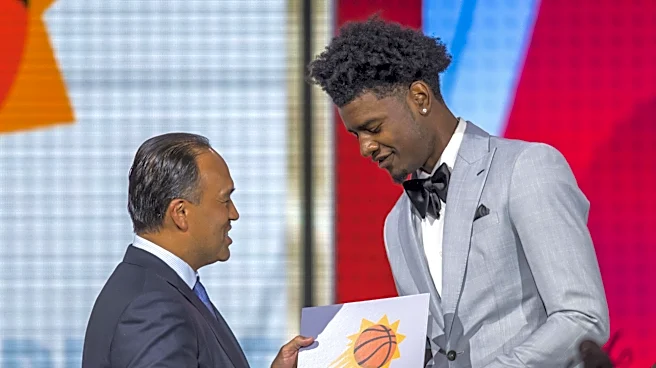
Personally, in most situations, I value talent over fit. The one major exception for me was the 2017 NBA Draft, when I felt adding Josh Jackson was duplicative of T. J. Warren, while De’Aaron Fox sat there on the board as a young point guard who matched the same, dare I say, “timeline” as Devin Booker. But generally, I will always lean toward talent over fit because fit is temporary, while talent can become permanent.
If you pigeonhole yourself into falling in love with a prospect simply because he checks a current organizational need, it becomes an incredibly narrow way to view roster construction. Especially when you’re talking about players on rookie scale contracts. At that point, you’re potentially standing in your own way by drafting the puzzle piece that fits today rather than the player who could someday become the puzzle master.
That said, pick 47 doesn’t necessarily carry the same weighted philosophical debate because that player is not expected to contribute immediately. These conversations feel much heavier when discussing lottery picks, although even there, I still prefer drafting talent first.
When you start looking at the range around 47, there’s a real possibility that some guards become available who intrigue the Suns. Jeremy Fears Jr. and Jaden Bradley are two names that have surfaced recently. If Phoenix believes one of those players is the best talent available at 47, then that’s the direction they should go, even if the current guard room already feels crowded.
Because again, the expectation is not that this player contributes immediately. The expectation is that maybe, two or three years down the line, he develops into something meaningful. And honestly, who exactly the Suns will be two or three years from now is impossible to know.
Now maybe you’re somebody who values fit more heavily, and that’s perfectly fine. It’s a philosophical preference. One I personally disagree with, still a valid philosophy nonetheless. If that’s your approach, then maybe you target a player who fills a positional need for Phoenix today. I just wouldn’t recommend approaching pick 47 through that lens.
Whoever the Suns select, there is almost certainly spending significant time with the Valley Suns in the G League next season, developing reps and refining their game. Realistically, that player is going to have little to no immediate impact on the current roster construction of the Suns.
So, from a high-level philosophical standpoint, this is where the Phoenix Suns currently sit and the paths that lie before them.
A lot can still happen between now and draft night. Phoenix could make a trade or two to open additional roster spots, which would naturally alter the organization’s overall draft approach. Maybe they decide to accelerate parts of their timeline and aggressively pursue a move into the lottery. Maybe they remain patient and continue leaning into continuity and internal development. There’s still plenty of time for any of those scenarios to unfold.
The draft begins at 5 p.m. Arizona time on June 23, and if the Suns stand pat, the more important date for Phoenix fans is probably June 24 at 5 p.m., when the second round officially begins. That’s when Phoenix enters the conversation, assuming they keep the 47th overall pick and decide to continue investing in the slow-burning process of internal development.