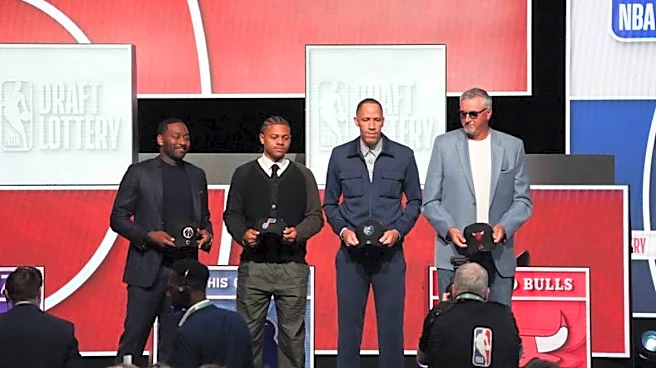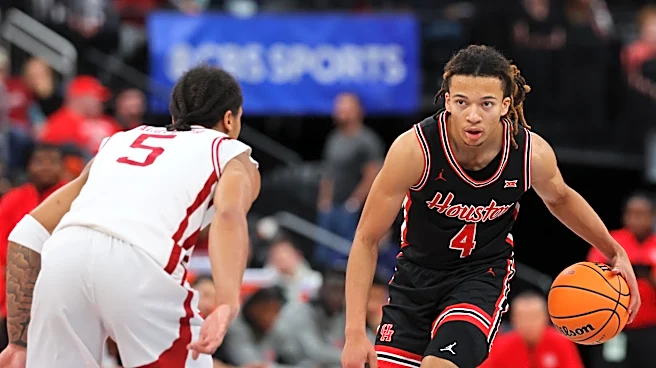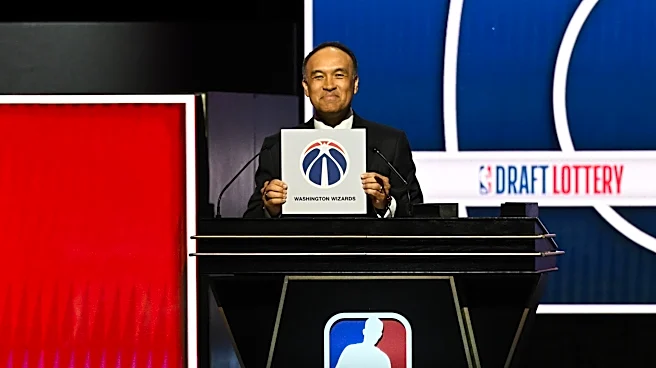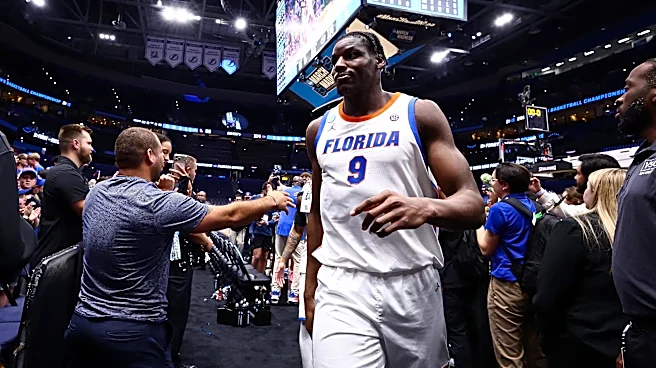




With the Mavericks officially settling into the number nine and thirtieth overall picks of the 2026 NBA Draft, it’s time to start familiarizing yourself with a list of names who could potentially be Mavs. This is a deep class, and many fans may feel already attached to a name, or distraught that a certain player might not fall to where they are. The draft process is a marathon, and we aren’t even close to the point where decisions are made. With that in mind, let’s dive into the mock draft tour.
The top three
Before we go through the Mavericks options, let’s think about what could’ve been. At the top, per our good friends at the Fanduel Sportsbook, AJ Dybantsa (-425) is the favorite to go number one. Darryn Peterson (+360), would’ve been my favorite Mav pick at the top, but he is the second favorite as per the odds. Cam Boozer (+1600) is the distant third favorite. Dybantsa and Boozer are favored for the second and third overall picks, respectively. These odds are not overwhelming, as it is clear there is no real consensus as of yet. Odds are not yet out on where the Mavericks will go. Speaking of…
Mock drafts of note
SB Nation (Ricky O’Donnell)

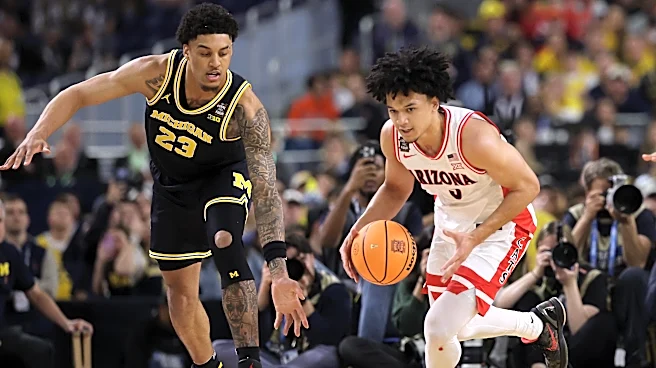
9th) Brayden Burries (G, Arizona)
Burries is a well-rounded shooting guard without an elite skill to fall back on. He fits the definition of a ‘two-way player’ as a strong 6’5 guard who can play through contact on both ends while also offering floor spacing with a 39 percent three-point shot. He’s a good transition player with a deep bag of scoring moves in the open floor, including pull-up threes. He can lock up at the point of attack on the defensive end, and his rebounding is better than most two guards with his offensive gifts. Two things appear to limit his upside right now: he lacks elite burst as a ball handler, and he’s not yet a good enough playmaker to demand super high usage. Burries is a one-and-one, but he’ll also be a 21-year-old rookie with a September 2005 birthday, making him a couple months older than junior wing Dailyn Swain out of Texas. Burries should be rock solid, but it’s fair to question his upside.
30) Meleek Thomas (G, Arkansas)
Thomas is a walking bucket who also makes good decisions with the ball. The 6’5” guard is at his best as a microwave scorer, but unlike many in that archetype, his shot selection and turnovers aren’t a cause for concern.
The Athletic (Sam Vecenie)
9th) Brayden Burries
Burries was the leading scorer on one of the top three teams in the country, despite a slow start that saw him average just 7.8 points in his first five games. From that point, he averaged 17.3 points while shooting 51 percent from the field, 41 percent from 3 and 81 percent from the foul line in his final 34 games. He’s also an aggressive rebounder who grabbed 5.5 boards per game in that time, while averaging 2.4 assists as a solid ball mover who didn’t take many bad shots.
The question is about separating from his man consistently, as he’s more of a power guard who uses the threat of his shot to keep defenders off-balance. Burries turned into a really good defender by the end of the year and averaged 1.5 steals. For Dallas, Burries would be a terrific complement to Cooper Flagg and Kyrie Irving as they look to make a jump next year.
30th) Tounde Yessoufou (G/F, Baylor)

From a scoring perspective, Yessoufou was one of the most productive freshmen in the country. He averaged 17.8 points per game while grabbing 5.9 rebounds per night. He’s all sorts of physical and plays with an insatiable motor that never seems to stop running, and he averaged two steals per game as a physical point-of-attack defender who jumped passing lanes well.
Teams, however, are concerned about his style of play and how it will translate. Yessoufou is largely a power-based player and has gotten a lot of recent points through mismatches against smaller players, posting them or attacking out of the midpost. That’s not a style that works in the NBA. Additionally, while Yessoufou sports a remarkably high steal rate, his overall defensive quickness and awareness are not that strong. He regularly gets beat off the bounce by quicker players. Still, there’s some excitement about his game from scouts, purely because he’s been consistently productive at every level.
ESPN (Jeremy Woo)
9th) Brayden Burries
Dallas is entering a new era with top executives Masai Ujiri and Mike Schmitz signing on to build out the team around 19-year-old Cooper Flagg. This pick represents the Mavericks’ best opportunity to pair him with another young talent, as they won’t control their own first-rounder again until 2031. Although the pick didn’t jump — instead dropping back one spot — this is an opportunity to add another long-term building block. Burries has the versatility to slot in immediately as the Mavericks gauge how quickly to accelerate toward competing with Flagg.
Burries endeared himself to teams over the course of the season as a steady two-way contributor with room to grow as a scorer. Scouts see an intriguing upside as he continues to improve as an on-ball playmaker, but he is a solid enough shooter to play the 2, giving him appealing versatility. He is older than other freshman guards in the lottery and not as toolsy or flashy, but he might be closer to directly impacting winning.
30th) Joshua Jefferson (F, Iowa State)

An untimely ankle injury in the Big 12 tournament ended Jefferson’s season prematurely, but he played his way into the late first-round mix as a steady all-around player. He is skilled for his size with good vision and an unselfish approach that should help blend lineups and hold plug-and-play appeal. Jefferson shot a career-best 34.5% from 3 this season but still needs to become a more reliable floor spacer to tie his skill set together.
The Mavs should be angling to kick start toward winning next season, with Cooper Flagg on the rise and Dallas not controlling its own pick until 2031. While still rebuilding, adding a more NBA-ready player with this second first-round selection makes sense.
Yahoo! (Kevin O’Connor)
9) Mikel Brown Jr. (G, Louisville)

The Mavericks didn’t get lucky in the lottery once again, but they still could find the perfect point guard running mate for Cooper Flagg with this selection. When Brown is in the zone, he has an unstoppable pull-up jumper, an ambidextrous finishing ability, and the quick reads to rifle passes before the defense has time to react. He had a 45-point breakout performance in February after a back injury dogged him all freshman year and then ended his year later in the month. The absences muddy the evaluation and leave real questions about his consistency that may not get answered until he’s fully healthy. If it weren’t for that time missed though, he might not even be available at this pick. And if he lands with Dallas, it’s hard to imagine a better situation. Kyrie Irving could serve as a mentor, and Brown could grow alongside a future MVP candidate in Flagg.
30th) Isaiah Evans (G, Duke)

After selecting Brown in the lottery, the Mavericks could still use more shooters around Flagg. Evans is the kind of shooter that defenses guard and think they’ve got him contained, then he uses a screen and catches it off a full sprint, moving away from the rim, and he somehow manages to rise into a perfect 3-pointer. He’s a legitimate sharpshooter with the off-ball chops to thrive without even running any offense for himself, and he also has a developing handle that could unlock more creation chances.
The Ringer (J Kyle Mann)
9th) Keaton Wagler (G, Illinois)
Many have Wagler higher on their boards than this (I’m one of them), but if the guard order shakes out this way, Dallas could be a good fit. The idea of pairing his fantastic positional size, elite shooting, and versatility with Cooper Flagg is something that I’ve been thinking about for quite some time. There aren’t many (if any) players in this class who can provide the shooting gravity that Wagler can while also being able to take the reins as a facilitator. I think he’d make Cooper’s life easier by supporting him when they share the court and also spelling him.
See our profile of the Illinois guard here.
30th) Meleek Thomas
Lately, on Group Chat (it’s a podcast!), I’ve taken to shouting out players who are great “spacklers”: guys who patch offensive lulls by accruing points in bunches. Thomas is one of the spackliest spacklers in this draft, and he profiles as someone who could be a dynamic floor spacer and transition target for Cooper Flagg and whatever talent the Mavs add with their lottery pick. Thomas’s odd but effective middle game and unwavering confidence from beyond the arc are the kinds of headaches that teams don’t typically put at the top of the scouting report, but at the end of the night, they wring their hands and say, “If this dude hadn’t somehow gotten 22 points on 55 percent shooting, we would’ve won this one.”
CBS Sports (Gary Parrish)
9) Brayden Burries
Koa Peat was the talk of Arizona’s freshman class early — especially after he got 30 points in that season-opening win over Florida. But it was Burries, also a first-year player, who emerged as the leading scorer for a team that won the Big 12’s regular-season title and advanced to the Final Four of the NCAA Tournament. He’s a physical guard who can shoot and rebound. He’d fit nicely in Dallas next to franchise centerpiece Cooper Flagg.
30) Ebuka Okorie (G, Stanford)

Kyrie Irving remains under contract in Dallas for at least another year — but that doesn’t mean the Mavericks shouldn’t explore lead-guard options. Okorie should be among them if he’s still available here. The 19 year-old led the ACC in scoring and tallied at least 33 points five different times this season, including a career-high 40 in a win over Georgia Tech.