
Six days remain until Opening Day. As things stand now, playoff odds at both FanGraphs and Baseball Prospectus give a pretty good chance that all three AL wild cards will come out of the AL East. There is also a decent chance that things go outside of this conventional wisdom and that the Orioles, if they find themselves in a wild card race, will be fighting for space with teams from one of the other divisions in the AL.
Essentially, every team except for the White Sox has at least a little bit of
a chance, according to these models. The Angels have a modest 5% postseason chance on FG, though PECOTA puts them under 1%. Even the Athletics who play in Sacramento but do not officially use its name get an 11.8% at PECOTA and as high as 24.2% at FG. There have been a lot of seasons in my life where the Orioles having a one in four chance of making the postseason before it began would have seemed good. This is not one of those seasons.
When I wrote a version of this article one year ago, the wild card seemed like a fallback if the Orioles couldn’t compete for the division. As things played out, they didn’t even compete for the wild card. If things go better this year – but not radically better – here’s who the Orioles might be contending with to make it back into the postseason.
Detroit Tigers
- Last season: 87-75, 2nd place, 1 GB in Central (Wild Card 3)
- Projected wins: 87 (FanGraphs) / 83 (PECOTA)
- Key subtractions: Pretty much nobody who was good last year
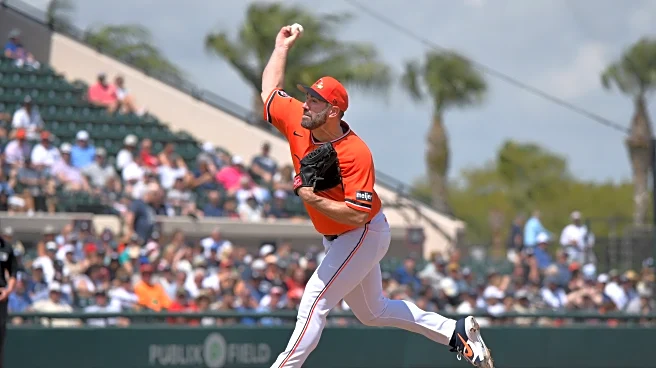
- Key additions: Kenley Jansen (free agent), Framber Valdez (free agent), Justin Verlander (free agent)
I wrote a year ago that the Tigers were largely trying to run it back from a disappointing 2024 and now they’re trying to run it back from a better 2025. That is, run it back plus adding Valdez to a rotation that includes the record-setting-salary two-time Cy Young winner Tarik Skubal at the top of it. They even managed to hold on to guys who became free agents, since Gleyber Torres accepted the qualifying offer and they re-signed their midseason trade rental Kyle Finnegan. There’s even a Verlander reunion in here, though whether that proves to be good for the team is less certain.
One part of Detroit’s revival of fortunes in 2025 was an improved offense, with a number of guys who’d struggled, including the former 1-1 Spencer Torkelson, getting better to help get the Tigers to at least a league average offense. If your pitching staff is good enough, a league average offense will do. Other than Skubal, it wasn’t exactly, but now they’ve got Skubal and Valdez and whatever’s left of Verlander, so that could be another story this year.
Kansas City Royals
- Last season: 82-80, 3rd place, 6 GB in Central
- Projected wins: 81 (FG) / 85 (PECOTA)
- Key subtractions: Mike Yastrzemski (free agent), Hunter Harvey (free agent), Adam Frazier (free agent), Angel Zerpa (traded to Brewers)
- Key additions: Isaac Collins and Nick Mears (trade with Brewers), Matt Strahm (trade with Phillies), Starling Marte (free agent)
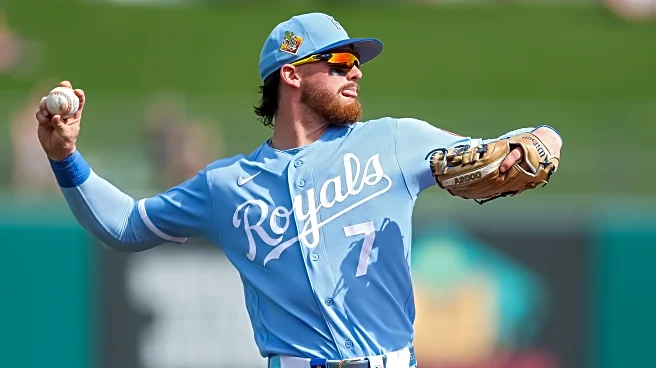
Kansas City may not be doing a “run it back” to the same degree that Detroit is, but there is a whole lot of continuity here, including five of the six starting pitchers who made at least 10 starts last year. The one guy they didn’t bring back is the guy who had the worst ERA out of those six. There was some bullpen shuffling for what was largely a disappointing group.
Among the position players, they’ve got to rely on continuing to get star-level performance from Bobby Witt Jr. The Royals bet big on infielder Maikel Garcia this offseason, giving him a five-year contract extension. What they really need to improve is a bad-hitting outfield. Collins, acquired from Milwaukee, is part of that. KC could also use better hitting from Kyle Isbel (.654 OPS) and, more crucially, recent #6 overall pick Jac Caglianone (.532 OPS in 62 games).
Minnesota Twins
- Last season: 70-92, 4th place, 18 GB in Central
- Projected wins: 78 (FG) / 79 (PECOTA)
- Key subtractions: Pablo López (Tommy John surgery)
- Key additions: Josh Bell (free agent), Victor Caratini (free agent), Taylor Rogers (free agent)
A lot of analyst commentary spent this offseason assuming that the Twins would be making salary-slashing trades that they never actually made. Perhaps, in the case of López, they ought to have done this, but they didn’t. They kept him, they kept Joe Ryan, they kept the oft-injured Byron Buxton. Minnesota did its salary cutting at last year’s trade deadline, notably getting rid of Carlos Correa, so they will be bringing something of a different look into 2026 compared to Opening Day 2025.
The Twins plan for 2026 contention probably involves Buxton staying healthy and getting a lot of improvement from the arms in their rotation behind Ryan. That includes their home-grown guy Bailey Ober (5.10 ERA in 2025) and July 2025 acquisitions Taj Bradley and Mick Abel. I will be interested to see as 2026 plays out whether the Orioles might have been better off trying to trade for Ryan than signing Zach Eflin and Chris Bassitt.
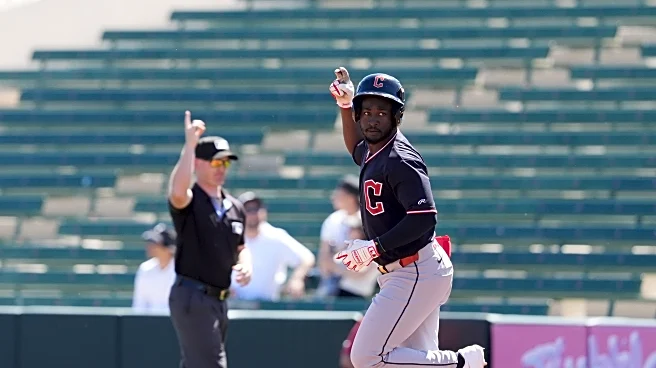
Cleveland Guardians
- Last season: 88-74, 1st place in Central
- Projected wins: 76 (FG) / 76 (PECOTA)
- Key subtractions: Emmanuel Clase (gambling scandal)
- Key additions: Pretty much nobody
The most substantial move these Guardians did this offseason was reach another contract extension with their career-long star, José Ramírez. He also happens to be the only good hitter on this team. Cleveland won the division last year while getting a .670 OPS from its offense. They overperformed their Pythagorean expected record by eight wins last year and kept nearly everything the same. It is not a surprise to see the projection systems not being high on this strategy. It might work out anyway. Cleveland has won this division six times in the last ten years.
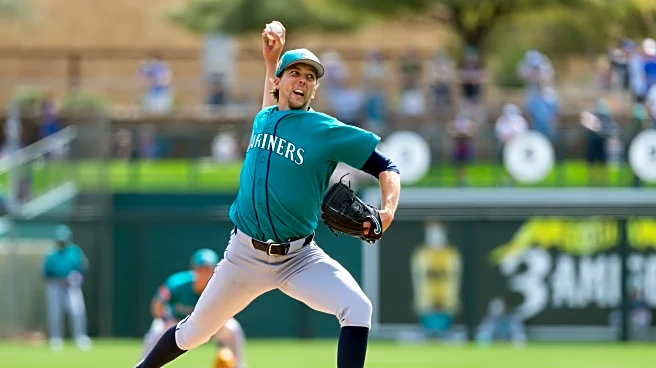
Seattle Mariners
- Last season: 90-72, 1st place in West
- Projected wins: 88 (FG) / 94 (PECOTA)
- Key subtractions: Cal Raleigh’s likeability (WBC shenanigans), Jorge Polanco (free agent)
- Key additions: Jose A. Ferrer (trade with Nationals), Brendan Donovan (three-way trade from Cardinals)
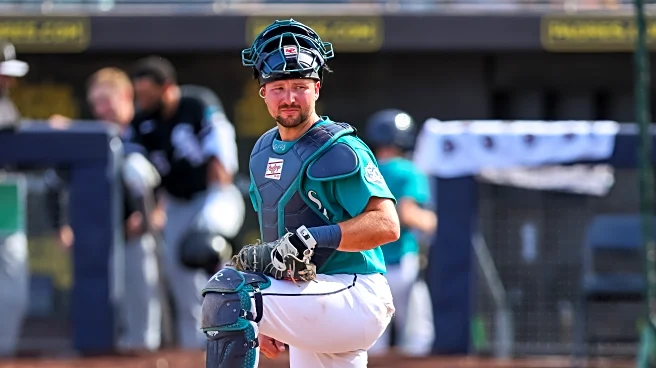
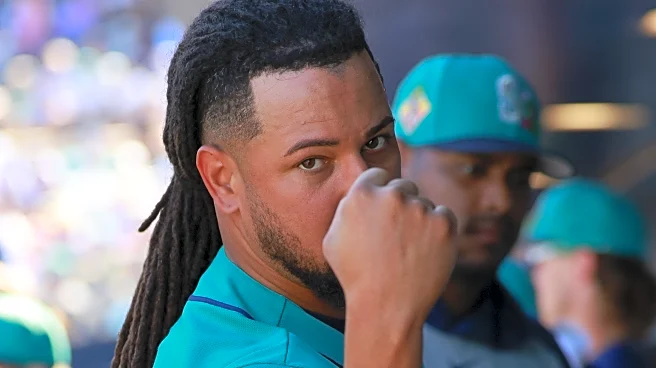
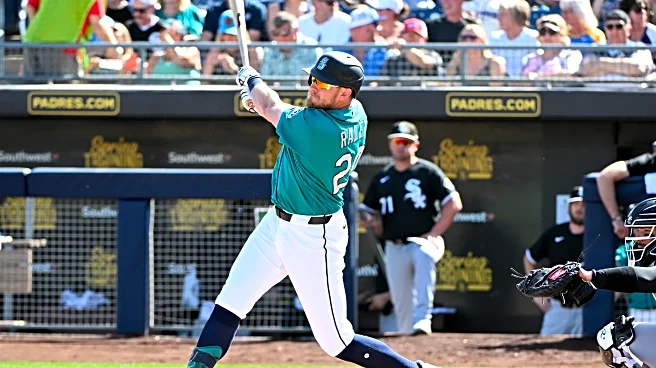
This was a pretty good offense last year, with Raleigh’s star breakout powering a lot along with a revival of fortunes for Julio Rodríguez. It was a good hitting group almost from top-to-bottom, though, with only two real weaknesses. One of those was third base, which they shored up substantially – at least on paper – with the acquisition of Donovan. The Mariners big offseason move was re-signing their own guy, Josh Naylor, who they’d acquired from the Diamondbacks in July.
Add in a starting rotation that should have three or four league average-or-better guys and an elite closer in Andrés Muñoz and that’s a good recipe to try to repeat a division title and maybe win Game 7 to go to the World Series rather than lose it.
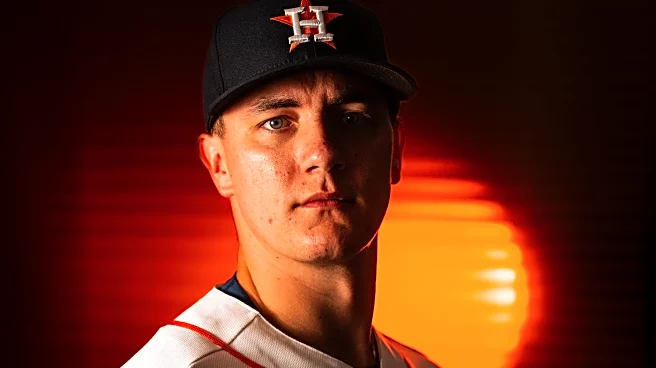
Houston Astros
- Last season: 87-75, 2nd place, 3 GB in West
- Projected wins: 81 (FG) / 85 (PECOTA)
- Key subtractions: Framber Valdez (free agent), Victor Caratini (free agent)
- Key additions: Joey Loperfido (trade with Blue Jays), Tatsuya Imai (posted international free agent)
Houston had been on a run of making the postseason every year from 2017 until they missed out last year. They didn’t miss out by much, but still. That team lost Valdez to free agency, perhaps choosing not to retain their own player because he was looking for an ace payday while not even being the Astros ace in 2025.
Replacing Valdez in the rotation is Japanese pitcher Tatsuya Imai, whose profile ultimately left MLB teams uncertain about him. Imai secured a contract that will allow him to opt out for a bigger payday if he pitches as well as he believes he can. If that’s the case, the Astros will benefit for this year. If it doesn’t work out, $18 million per year is an expense they can absorb.
Texas Rangers
- Last season: 81-81, 3rd place, 9 GB in West
- Projected wins: 81 (FG) / 83 (PECOTA)
- Key subtractions: Marcus Semien (trade with Mets)
- Key additions: Brandon Nimmo (trade with Mets), Danny Jansen (free agent), MacKenzie Gore (trade with Nationals)
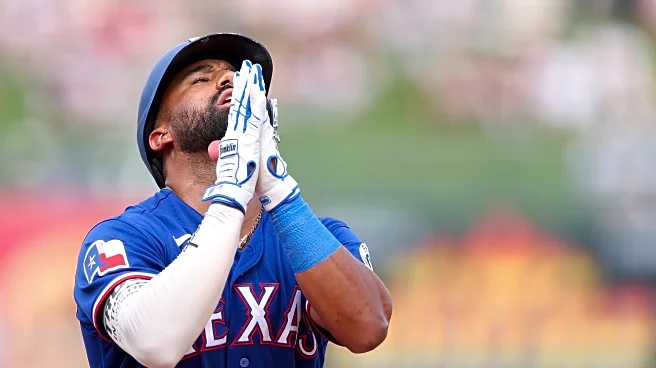
The 2023 World Series from Texas, following 60- and 68-win seasons and succeeded by 78- and 81-win seasons, looks more like a fluke the more time that passes. The flag will, as they say, fly forever. They’ve swapped old, expensive guys in the Semien-for-Nimmo deal, shored up a weakness at catcher with the Jansen free agent deal, and made a big swing on Gore by trading a prospect package as if he’s the top-end starting rotation that he’s never actually been yet.
The projection systems are not high on this all working out for them. That doesn’t mean that it can’t happen. As we know from past eras of Orioles success, if two or three things go right beyond what any projection system envisioned, it’s not that hard to go from that to blowing past your projected win total by ten or more. Texas’s upside relative to the projections is probably in its rotation: Gore finally blossoming, Jacob deGrom staying in good health, Nathan Eovaldi carrying forward his 1.73 ERA in 22 starts into a full season.
**
Will I look stupid at season’s end for not including the Athletics, Angels, or White Sox in this article? It is up to them to do that to me. Sitting here in mid-March, I will not be bothered.
Which of these other teams concerns you the most as possible wild card contenders for the Orioles?