
You need not dig too deeply through the annals of Major League Baseball history to discover a time when the Cincinnati Reds sported one of the finest collections of starting pitching in the land. In fact, you need only turn back the clock to last year to find the Reds, with 15.6 collective fWAR, ranking as the 2nd best starting pitching unit in the sport.
Oh, how times change!
Despite Chase Burns emerging as a legitimate ace prior to having his innings curtailed, Cincinnati’s starters sit with a meager
8.0 fWAR combined so far this season. That ranks 22nd overall, and given the rate at which they’ve been getting shelled lately there’s reason to believe that number could even shrink before season’s end.
(Where have you gone, Hunter Greene’s elbow? Reds nation turns their lonely eyes to you.)
As Cincinnati slumps its way towards game 162, it’s worth pointing out the meteoric fall of two starters in particular.
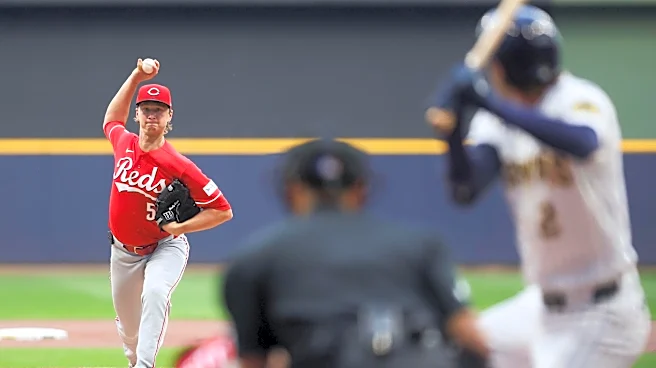
As of the morning of September 17th, there have been 52 big league pitchers to log 150 innings so far this season, and not a single one has a higher FIP (5.40) than Brady Singer, who’ll start this afternoon in the series finale against the Los Angeles Dodgers. That’s the guy that the front office hinted might get a $23 million qualifying offer at season’s end after they didn’t deal him away at the trade deadline.
Meanwhile, you need not look far down that bad-news leaderboard to find a fellow Reds starter, as Andrew Abbott (4.90) ranks 3rd worst. So, Cincinnati has had a bit of durability from these arms – as I mentioned, fewer than two starters per club have reached 150 IP so far this season, on average – but the ones the Reds have had clear that mark rank as the guys who more likely than not shouldn’t be pitching that much after all.
It’s almost like they lost their pitching coach mysteriously in the middle of the season and couldn’t remember how to throw anymore.
With just over two weeks remaining in the 2026 season, it’s unlikely that either of these two finds a new gear, a new pitch, a new approach that rights their respective ships enough for it to matter in the larger sample. That’s work that will be reserved for the long, cold offseason when Cincinnati once again gets to lick its wounds while other clubs play meaningful postseason ball. Whether or not it’ll be a long enough winter for them to fix all the problems remains to be seen.