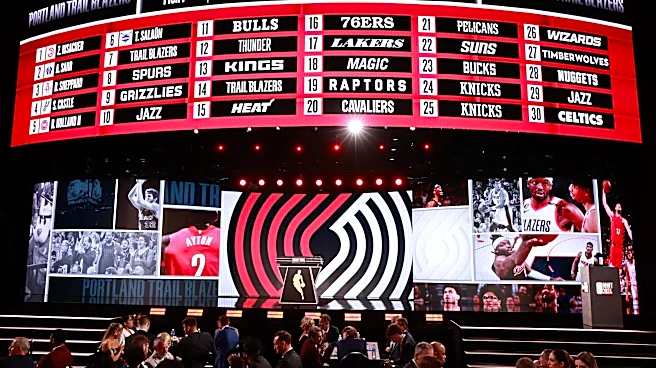





One of the strongly-stated priorities of the NBA during the 2025-26 season has been to combat tanking, intentional losing to gain more favorable odds in the annual NBA Draft Lottery. Once considered a minor annoyance participated in by 2-3 teams every year, tanking has swept the league, with more than a third of the NBA’s 30 franchises being credibly accused of jockeying for lottery position by collecting losses.
Earlier in the year, NBA media leaked three potential solutions to the tanking issue,
all of which created their own set of problems. Now Shams Charania of ESPN is reporting that the league is pivoting to another solution: weighting the odds away from the worst teams in the league towards the middle of the lottery order.
The proposal is called the 3-2-1 system, so named because of the number of ping-pong balls participants would receive based on their finish in the lottery order. Here is the proposal in a nutshell:
Number of Teams
16 teams qualify for the lottery instead of 14. These are the 10 teams that do not qualify for the NBA Playoffs or Play-In Tournament, plus the 4 total teams that finish in the 9th and 10th spots of the Play-In Tournament in each conference, plus the 2 total teams that lose the 7th vs. 8th Play-In Tournament games in each conference. (Basically if you finish 9th or below in the conference standings you’re in the lottery. Add to that whichever teams lose the 7-8 matchup in the Play-In Tournament.)
Lottery Odds
Instead of granular percentages, teams will receive either 1, 2, or 3 balls in the lottery drawing hopper.
- The losers of the 7-8 matchup in the Play-In Tournament will get 1 ball each.
- The 9th and 10th-place teams in each conference get 2 balls each.
- The teams finishing in the 4th-10th-worst positions in the overall NBA standings will get 3 balls each.
- The bottom three teams in the overall NBA standings will get 2 balls each.
Obviously the odds change drastically here. Mostly it’s smoothed out. The seven teams in the middle of the lottery (the teams finishing 4th-10th-worst in the overall NBA standings) all have an equal number of balls: 3 each.
That smoothness is differentiated at the ends of the spectrum. Teams good enough to make the Play-In Tournament have reduced chances. The 9th- and 10th-place teams in the conference standings get only 2/3 of the chances that those middle teams got: 2 balls each. The losers of the 7th-8th games—the teams with the best records among lottery participants—have only 1/3 the chance of a middle team: 1 ball each.
BUT…and here’s the kicker…the three teams finishing with the worst overall records also get only 2/3 the chances of the middle teams, 2 balls each. If you tank too far, you risk losing lottery chances rather than gaining them. This is called the relegation area.
Here’s a visual of the odds:

*Indicates this team has a chance to make the NBA Playoffs
Positions Drawn and Boundaries
Unlike the current system, where only the top four draft positions are drawn for and all other are seeded in reverse order of regular-season record, this new system would draw for all 16 lottery positions. This takes away the assurance for teams with poor records of obtaining at least a mid-lottery pick because of their losing. A team with a bad record could plummet multiple spots down the order since all positions are determined randomly and record does not matter outside of the initial number of lottery balls granted.
The system does include protection for the bottom three “relegation area” teams. They can fall no farther than 12th in the overall order.
Other Limitations
The new proposal contains three other safeguards:
- No team can win the top overall pick in consecutive years (the Orlando Magic rule)
- No team can win top-five picks in three consecutive years (the San Antonio Spurs rule)
- No team can protect picks for selections between 12-15 in trades
Other Addenda
The article continues:
The proposal includes a sunset provision so that the new system would expire following the 2029 draft and allow the board of governors to continue the system or transition to a new one. The NBA’s current collective bargaining agreement runs through the 2029-2030 season.
The league would also have expanded disciplinary authority to regulate tanking and have the option to reduce teams’ lottery odds and/or modify teams’ draft positions under the proposal.
Further Discussion
Believe it or not, Blazer’s Edge has discussed versions of this plan twice. You can find the rationale behind the system in this initial discussion and further ruminations on relegation.
The proposed system would start with the 2027 lottery drawing. The league’s Board of Governors is scheduled to take up the matter in a May 28th meeting.