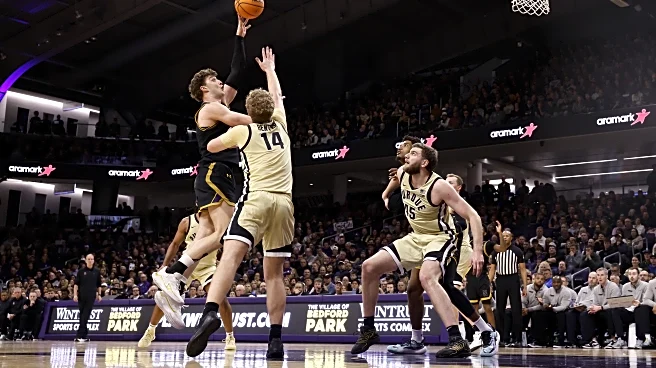

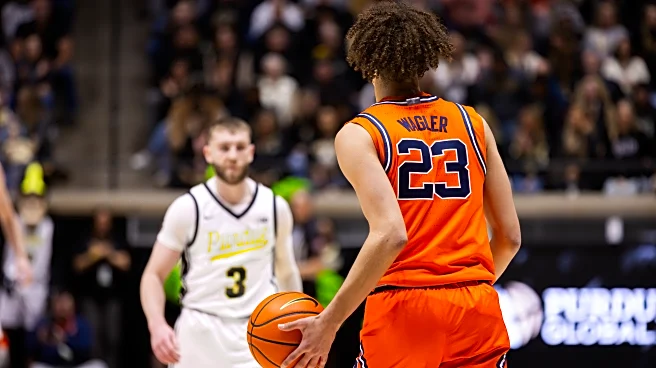
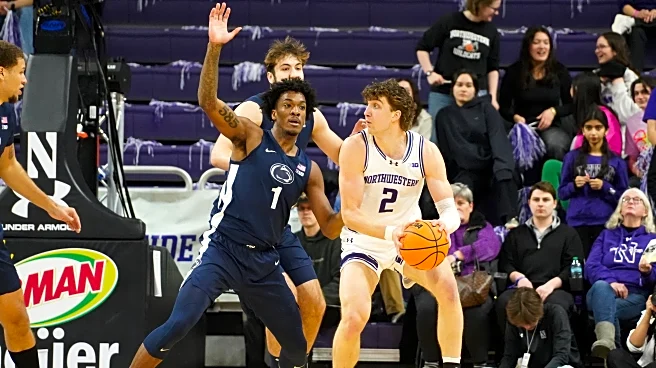
It was a confusing week and a half of Northwestern basketball. The Wildcats knocked off Oregon on a Nick Martinelli game winner after trailing by double digits. A week later, they trailed by double figures against Minnesota and Martinelli had a look for a game winner. It was deja vù right up until Northwestern’s two-time single season points record holder had his shot clang off the back iron. In between, the ‘Cats looked like they were going to upset Purdue at home for the third straight time for 39
minutes before a catastrophic final 60 seconds cost them an opportunity for their first ranked win of the season.
Instead of a typical offense/defense split for clips, I am going to do a section on the Purdue game (which was the most interesting schematically and the most important of the games) and then a section breaking down the game winning attempts against Minnesota and Oregon, respectively.
Purdue
Chris Collins appeared to have one mission in this game: don’t let Braden Smith beat him. There was a lot of blitzing ball screens, doubling Smith and forcing him away from the basket or to make a pass to someone on the perimeter.
This was one of the best. Reid picked up Smith full court for most of the game, and on this possession he gave the ball up and didn’t get it back until 18 seconds left, giving Purdue less time to work with. Smith comes around a stagger screen but instead of switching like usual, Angelo Ciaravino doubled Smith with Tyler Kropp and forced him as far away from the basket as possible.
On the backside, the rotations are crisp and smart. Clayton does an amazing job fronting Daniel Jacobsen in the post, which is where CJ Cox wants to throw the ball. Jayden Reid doesn’t allow anything easy for Cox and Martinelli stays attached to Fletcher Loyer. Look at Jack Benter on the weak wing though. Cox doesn’t see him, but he’s wide open.
The problem with Benter being wide open? Cox may not have seen it but Matt Painter certainly did. In the second half, that became Cox and it became a problem very quickly.
Smith gets the ball and works around a Trey Kaufman-Renn screen. Instead of a deep roll, Kaufman-Renn rolls to the high post and Cluff stays deep. That keeps Martinelli nailed to the floor and pulls Tre Singleton up from the weak side since Justin Mullins isn’t leaving Loyer. Even double teamed, Smith whips a pinpoint pass over everyone into Cox’s hands, and he drills a triple. This is an absolutely gorgeous counter by Painter, but it also became foreshadow for the brutal end.
Now that you know what you’re looking for, Singleton’s help makes a bit more sense. The set looked like it was going to be a handoff and a double team on Smith. Singleton was going to be responsible for the Kaufman-Renn short roll. If you look pre-fake, Singleton is already pretty far off Cox. Process wise, Singleton was in the right mindset.
The problem is that Kaufman-Renn never handed the ball off. When he made his move, Arrinten Page was in phenomenal position. There was no real driving lane for TKR, especially with Martinelli in good position on the weak side. Singleton needed to recover to Cox. Instead, he crashed towards the elbow to cut off Kaufman-Renn, leaving Cox wide open. He couldn’t miss in this game (first clip here notwithstanding) and buried the shot that put Purdue up for good.
There are two offensive sets I absolutely loved when watching the game from the student section, and they both live up to what I initially saw on replay. This was my favorite.
The play is a wheel design, which is designed to get Reid moving at high speed and open up a shooter on the back side. It doesn’t really work, but the design is quite fun. Credit Oscar Cluff and Gicarri Harris for defending it well. However, it does allow Page to get deep post position as a result of the switching and hedging. Smith comes for a baseline double, and Martinelli times a cut well that gets Loyer disconnected from Reid. Clayton gets left wide open in the corner as a result.
This set is a very cool one to get Martinelli a look at the rim. Page comes to set a screen after a dribble handoff and then slips, leaving his man a half step behind. Ciaravino puts the pass on him. What’s key to getting Martinelli so open is the back side. Watch Martinelli and Mullins switch places on the far wing and corner. Neither of them are getting a touch at the wing, so they could just stay still and have Mullins cutting backdoor. But the relocation moves the Purdue defenders. Loyer was in good help defense position on the baseline, but rotates up while Benter rotates down. If you watch Benter, he is a bit unsure of his position and has to glance back to find Martinelli. Help-side defenders are taught to keep one eye on your man and one on the ball, but Benter fully faces one way, then the other and then back towards the play. When Page makes the catch, Benter has his full attention on the immediate threat and comes to double, leaving Martinelli alone for an easy dunk.
Game Winning Looks
Before exploring the looks themselves, it’s important to note the similarities and differences and how that affected the decision making. In both cases, Northwestern was down by one point, meaning a two would put them in the lead but they don’t necessarily want to hold until the buzzer. Getting a shot up with a few seconds left gives you the chance to hit the offensive glass.
On the differences side, the Oregon look had two more seconds. It doesn’t feel like a lot, but it makes a world of difference. If you want to get a shot on the rim with about three seconds left, that gives you twice as much time to actually create an initial look. Second and perhaps more importantly, the Oregon look came on a baseline-out-of-bounds (BLOB) set, while Minnesota was a sideline-out-of-bounds (SLOB) situation. BLOBs are much higher danger plays as a general rule, because the pass right to the rim is closer and easier, so it has to be the major focus defensively.
The Oregon play sees Martinelli get open via a Page screen. He’s sprinting on the curl so even though he catches in a spot to shoot it, he chooses to pivot back and put it on the floor. Kwame Evans defends him well, but leaves his feet on the final pump fake, allowing Martinelli to step through and get the ball up. His Charmin ultra-soft touch leaves the ball on the rim for a heart-stopping three seconds before dropping in.
The Minnesota play sees an easy inbound to Singleton, an immediate swing to Martinelli and a trigger three from the forward, which was on line but clanged off back rim. West can’t find the ball for a miracle heave and Northwestern leaves Minneapolis empty-handed after a big time comeback
Watching the game live, I was frustrated by the look in Minnesota. It felt like a cop out shot and a lazy play design from Chris Collins and assistant Brian James, the big play specialist, especially after the winner over the Ducks. But the more I break it down, the less I can feel that way.
The shot against Oregon wasn’t a good one. Oregon pinched the lane and forced the pass to Martinelli on the outside. Martinelli got himself into a tough spot against a premier defender and nearly traveled. It took all his effort to loft it onto the rim, which luckily dropped. It’s certainly possible that either he or Page could have tipped it home if it fell off (they were in prime position), but there are no guarantees in a situation like that.
Collins said after the Minnesota game that his play was to get the ball to Martinelli and let him work. Assuming that parameter, and the idea that the ball should leave Martinelli’s hand within 3.5 seconds to allow for an offensive rebound opportunity, the options are limited. Minnesota was in a zone, so trying to run a screen-heavy set to get a switch was not going to work. If the play design was to post up Martinelli, you run the risk of a difficult post entry and he has no time to operate. Essentially the only thing I may have done differently was to throw the ball directly to Martinelli instead of Singleton first, but that puts him in a worse spot on the floor to operate, where going left doesn’t put him in the middle of the floor, which he prefers.
I don’t think, given what he’s done over the last two years, that give the ball to Martinelli is a bad strategy in and of itself. Given the inbound spot, Minnesota’s defense and the time remaining, there weren’t a ton of options to put Martinelli in an optimal position. There are certainly quibbles with Martinelli’s decision to shoot the three and not back down his defender, but at the end of the day your best player and a 42% three point shooter got a decently open look for the win. All things considered, Northwestern fans should be able to live with that.
Coach Collins Clip of the Week
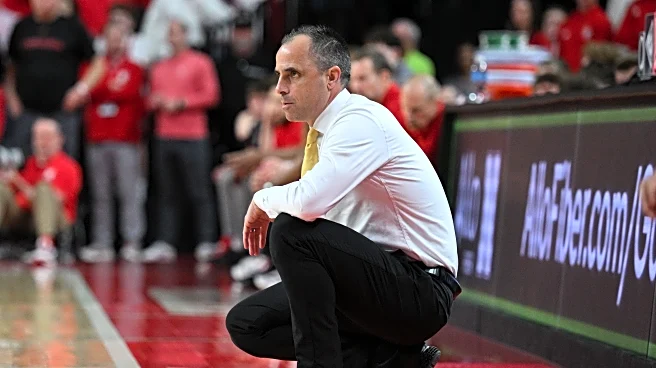
Nothing major here, just Collins getting upset with the ref. I love the camera angle here, with Collins on the elevated Williams Arena floor and the cameraman shooting him at an upwards angle. It results in a fun shot that just shows a larger-than-life looking Collins on a background of Golden Gopher fans, with no purple in sight. Very cinematic shot for Chris “protagonist” Collins.