




It’s hard to think of a bleaker week of Detroit Tigers baseball in recent memory. During the whole length of a seven year rebuild there were no hopes and dreams to be crushed. The 2024 stretch drive came out of nowhere, while the collapse late in 2025 came with such a huge margin of error already built up, that it was only in the final few games where it really looked like the club wouldn’t even land a wild card spot. The Tigers entered the 2026 season for the first time really acting like a team
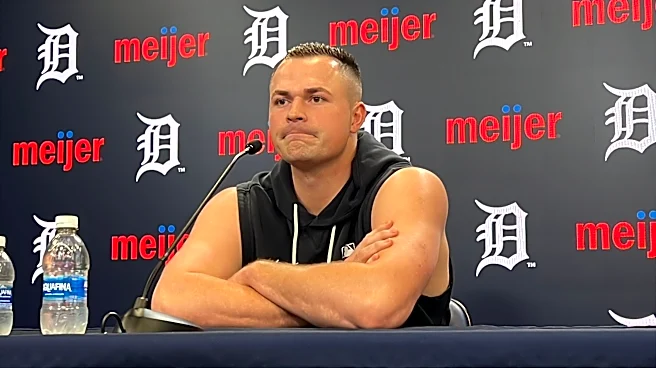
with expectations and goals. Now those goals stand directly in harm’s way, and in last night’s debacle in Detroit, it was left-hander Framber Valdez, the key offseason signifier that the Tigers were finally really serious about winning, who was at the center of things in all the wrong ways.
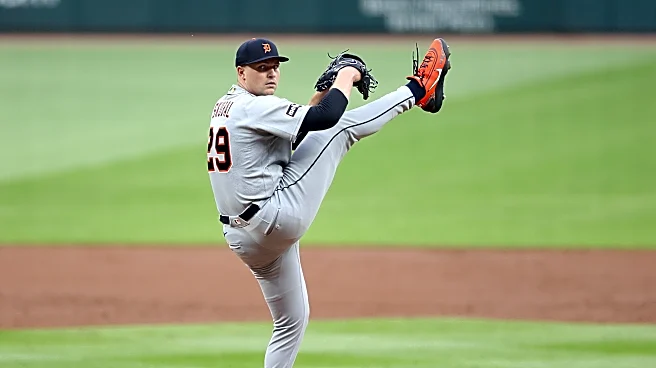
Right from the first inning in Tuesday night’s matchup against the Red Sox, the 32-year-old left-hander was on tilt as hitters signaled in pitches and/or pitch locations from second base. Were the Red Sox actually seeing his grips in the glove from second base? Was he tipping pitches in some other way? Were they simply going on pitch location based on where Dillon Dingler was setting up? Hard to say. It’s even possible that they were simply cold signaling without any idea what was coming, knowing Valdez’s reputation for losing his cool at times and trying to get under his skin. Still, considering how consistently he was hit around in this one, odds are they were picking something up.
With two outs in the first, Wilyer Abreu singled and stole second base, and could be seen holding a hand to his helmet right before Valdez went into his motion, indicating to Trevor Story in the batter’s box. Story reached on a one-hopper that Zach McKinstry couldn’t handle, and he promptly had Valdez timed up and stole second base. Ceddane Rafaela followed with a three-run homer.
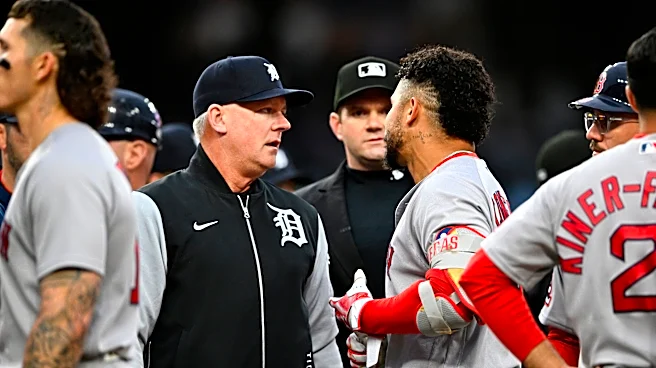
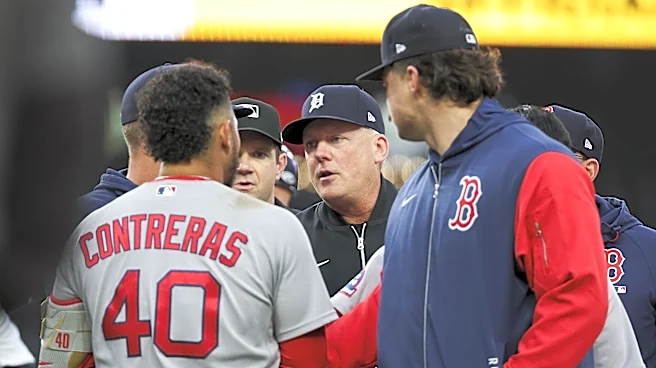
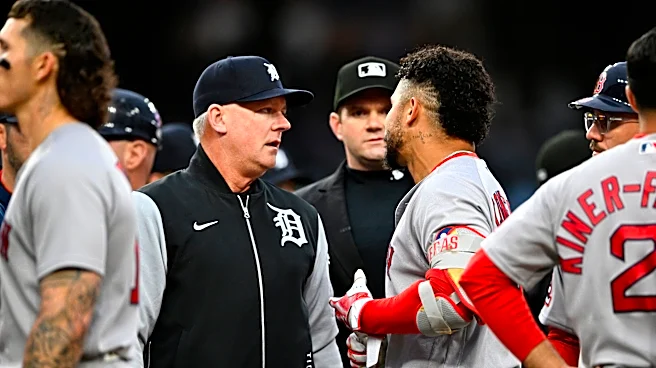
This continued in the third inning as the Red Sox seemed to know what was coming, and a parade of singles had baserunners behind Valdez at second base throughout the inning. Valdez certainly seemed preoccupied with staring down those runners at points during the inning. By the time he gave up back-to-back solo shots in the fourth inning, with no one on second base for any of those, he was on red and pumped a fastball into Story’s upper back. Story took umbrage, as they say, and there were some choice words with the benches clearing, but Valdez stoically made no move or response, and no real fracus developed. Things actually seemed entirely calmed down when lobbying from the Red Sox finally convinced the umpiring crew to toss Valdez from the game and then warn both benches.
First things first, this is on Framber Valdez, though possibly with a bit of Dillon Dingler mixed in. There’s nothing illegal about signaling from second base whether they were picking up his grip in the glove, as Eric Hosmer and several other former MLB players were speculating on social media, or whether Dillon Dingler was signaling pitch position too early, or whether they had nothing at all and simply know that Valdez is a hot-head who will sometimes go to pieces if you give him some extra things to worry about.
When a very good and generally very consistent pitcher starts giving up a parade of solid singles, and then the home runs start flying, experienced hands at baseball watching will always suspect tipping. But it’s crucial to remember that it’s on the pitcher or occasionally the catcher, who are tipping said pitches, to adapt. Plenty of coaching work goes into making sure in bullpens that their pitchers hold their glove and take their grips the same way everytime. Pedro Martinez famously worked on his grips extensively enough that he could change his grip precisely to a different pitch as he was already into his delivery. Catchers know they have to be careful with their glove to not give anything away before their pitcher goes into his motion. Plenty of work goes into that as well, sometimes flashing a false location as they get set for the pitch when there’s a runner on second base in view of the hitter.
The Pitch Com system has made illegal electronic sign stealing of the sort the Houston Astros infamously practiced, a thing of the past. However, pitchers still have physical cues for what they’re about to throw, and a savvy team of experienced major league hitters have the vision and knowledge to know what to look for, and to spot it if a pitcher is giving something away. This is a team of players managed until last week by Alex Cora, let’s remember. Getting pitches is a part of the game that Cora clearly focuses heavily on.
Wrist position of the hand in the glove can indicate a breaking ball or changeup just by the slight twist of the forearm required to get a grip around the side of the ball. Some pitchers will visibly tense their upper body and even their face when they’re determined to throw a fastball past a hitter. Even a subtle flexing of the forearm for a spread out grip on a splitter can cue the very best in the game, who by definition have outstanding vision, that a splitter is coming. You may have noticed that Casey Mize always takes his splitter grip first as he looks in at his catcher with his arm hanging down, then adjusts in the glove whether he’s actually changing from a splitter to another pitch or not, just to make it harder to pick any of this up.
Point being, this is all part of the game. An experienced pitcher like Framber Valdez has to know better. If there’s a runner on second, you have to keep your glove closed and hooded from the man on second as you take your grip and until you’re ready to go into your motion. You have to do everything exactly the same way every time, and if you don’t, it has to be your own move to try and send a false signal to the many eyes watching. An experienced pitcher like Framber Valdez, should he suspect the runner on second is signaling home, should be crafty enough to use this against his opponents by showing them one grip and changing to another right as their motion begins. This is a cat and mouse game that works both ways.
Part of the reason analysts who’ve done deep dives into the Houston Astros electronic sign signaling scandal generally come away doubting the schemes effectiveness for most hitters, is that they often got the signals wrong. Hitting a good major league fastball is hard even when you know it’s coming. When you’re signaled via trash can that a breaking ball is coming, and then you get a fastball, well you have no chance of barrelling it up.
What you don’t get to do anymore, is throw at a guy to get them to stop or pay them back. True, that was how things worked for much of the game’s history, but these are different times.
As AJ Hinch would say, this is all part of the competition. More simply, it’s all in the game, baby. On Tuesday night, Framber Valdez failed to compete. He didn’t adjust once he began to suspect he was giving something away, he didn’t act oblivious and then try to use it against them by flashing false signals. Instead, he just lost his focus. The two home runs that proceeded Story getting plunked, came with no one on second base. By then, Valdez was a mess, and you can see catcher Dillon Dingler drop his head the instant Valdez released the pitch into Story’s back. Maybe I’m reading too much into body language, but I don’t think so. Dingler knew the score, and he knew what had happened immediately.
In the old days, drilling Story was absolutely a common response. But for over a decade, Major League Baseball has made it very clear that they want these kinds of retaliatory beanballs out of the game. The risk of a fastball to the head is just too dangerous. And it’s a mentally weak response, when, had he just stayed composed and tried to use the signaling back against the Red Sox, he might have stopped the bleeding or at very least, given the Tigers some much needed innings. Even just keeping your cool and pitching like normal is a professional response. Losing your cool and potentially hurting your already hurt team even more, is not the professional response here, obviously.
The only thing Valdez did about the entire situation to help the team was to lie about his intent afterwards. Had he admitted it, we’re talking about a guaranteed suspension for the Tigers’ best pitcher currently healthy, at a time when they desperately needed him to help hold things together until the injury list starts to clear up towards the end of the month. No one is buying that it was accidental, though the way Valdez was booted from the game after the Red Sox spent a few minutes complaining to the umpires, who then apparently gave in, was bizarre, but there’s nothing to be gained by admitting it either. Everyone within the contest knew the score there, and it wouldn’t be surprising if Valdez ends up suspended for a start anyway, right when the Detroit Tigers can least afford it.
None of this is to personally attack Framber Valdez. He’s never had any off the field incidents or given reason to think he’s a terrible human, but he was certainly selfish and immature in his response to a bad night on the mound. He came to Detroit with a reputation tainted by the occasional bout of hot-headed foolishness on the mound, and we got a good example on Tuesday night. The hope, was that AJ Hinch, as Valdez’s former manager in 2018-2019, knew him well enought to polish some of his rough edges, and would be able to get through to him and into a place of better maturity on the mound. This incident will be the test of it.
The Tigers need Valdez to do what he’s here to do, pitch well. Not to get distracted and hurt the team out of some old school sense of “sending a message” when it’s his own responsibility to keep collected, watch his hand and glovework, and not give anything away. His actions were self-absorbed, and the very opposite of team focused. Other than maybe a teammate or two, the only person who can potentially get this through his head is Hinch, and there needs to be a very serious conversation had about this penchant for losing his cool and doing something stupid in a game.
Astros fans have seen this show before. Typically, Valdez goes right back to being Valdez, pitching well and showing no effects. More than likely this isn’t going to carry over into future performances. Still, the spector of Valdez melting down can only make fans fear further foolishness in a high pressure spot later in the season or in the postseason.
Framber Valdez came to Detroit talking about wanting to learn from Tarik Skubal and Chris Fetter, and take the next step in his career toward becoming a Cy Young caliber pitcher in his own right. He has the talent to be that good, but the key to becoming a truly elite pitcher lies between his ears. Dusty Baker and Joe Espada managed to get really good seasons out of him. AJ Hinch is now challenged to do the same, and get through to Valdez that nothing about the way he responded on Tuesday night is good for himself, or more importantly good for the Tigers.