

These articles are a part of a series and are designed to be consumed as an entire series, but I know we get new readers every day. So, we will reset the conversation to the beginning. This series is about looking at specific underlying numbers to get a handle on what hitters might do in the coming season. The idea is to avoid magical thinking whenever possible. Magical thinking is simply taking the most positive outlook on a player, team, or situation and assuming that is the likely result.
Could
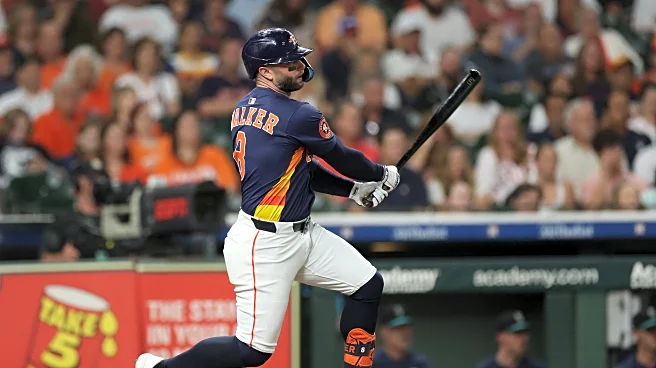
Christian Walker bounce back and have a year close to what he produced in Arizona? Sure, it’s possible. Could Isaac Paredes do what he did last year, but do it over 150 games? Sure, it’s possible. However, what we want to do is look at is most likely. When we look at the underlying numbers, we get an explanation for why things turned out the way they did. We also get a sneak peek at what categories players could target improvement in. Before we get to that though, we need a quick tutorial on the numbers we will use.
- Chase rate: This is the percentage of balls a player swings at outside of the zone. The league average normally lives between 30 and 32 percent, but we will be looking at three year intervals and we should notice trends more than where a player is in relationship to the league average.
- Hard hit percentage: This is simply the percentage of balls that a player hits hard. Hard hit balls become hits and extra base hits more often than softer contact. Typically 35 percent is around the league average in this category.
- BABIP: This is batting average on balls in play. Home runs are obviously excluded since they are not in play. The league average tends to hover around .300 but it will largely depend on hard hit percentages and breakdowns between groundballs, flyballs, and line drives.
- Contact percentage: This is the percentage of swings that turn into contact. Typically 70-75 percent is around league average.
- HR/FB percentage: This is the percentage of flyballs that result in home runs. Ten percent is typically around the league average.
Christian Walker
I hate to oversimplify everything, but there are essentially three tools at play here. The first tool is the plate discipline tool. It is simply the ability to distinguish between balls and strikes. Walker is above average in that category, but showed some slippage last season. He seemed to have slower bat speed last season, but came into camp this year ten pounds lighter. Does that help him up that bat speed? If so, he might have that extra split second to lay off of pitches outside the zone like he did in 2023 and 2024.
The second tool is the ability to hit for power. You do that through your hard hit rate and home runs per flyball rate. Walker is close to elite in this category. He generates more power and hits more home runs per flyball than most of the hitters in baseball. There are isolated guys better in the hard hit category and home run category, but he is really strong there.
The last category is the ability to make contact consistently which scouts call the hit tool. This is where we saw major slippage. The scouting report says he struggled to catch up to heat on a consistent basis. However, Walker was never gifted in this department. He has always had swing and miss in his game. If he could return to career norms in both contact rates and chase rates he could elevate himself back to where he was in Arizona. However, given that he is entering his mid thirties that might prove harder than it sounds.
Isaac Paredes
What’s interesting about Paredes is that he plays up in certain ballparks. The lack of hard hit contact limits his effectiveness unless he has that short porch to left field. In 2024 he went to the Cubs and practically disappeared. Like Walker, he is good at two of the three tools. He recognizes balls and strikes and is also elite at putting the bat on the ball. Unfortunately, he doesn’t hit the ball hard, so he will always struggle to hit for average even with those contact rates.
Of course, the difficulty and difference between the scouting world and the analytical world is that the scouting world treats all tools equally. He has the plate discipline tool and a portion of the hit tool (the contact portion), He has the power portion in certain ballparks. Yet, that plate discipline is an elite tool and creates value maybe more than his inability to make hard contact hurts him.
There are fewer and fewer dunces in MLB, so general managers know all of this. So, this presented Dana Brown with a challenge because it meant finding a team that needed a third baseman/first baseman who also had a home ballpark that would suit Paredes. Ironically, the same could be said for Walker as well because he plays up in ballparks with short left field porches. Generally, it is a good thing to have players that are more valuable to you than other teams, but that always presents a problem when you try to move them. So, what do you think? Can we expect a bounce back season from Walker? Will Paredes stay healthy and productive?