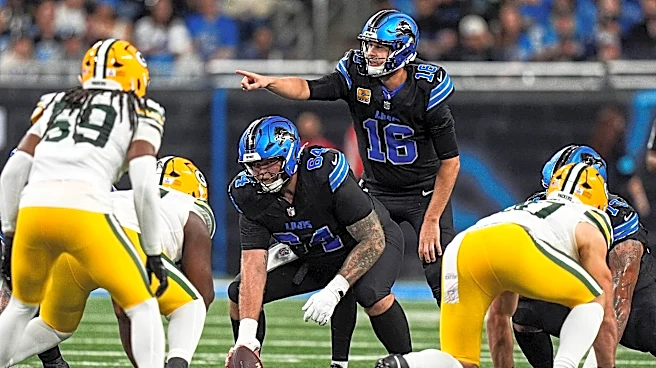




The Green Bay Packers’ defense made plenty of plays against the Detroit Lions on Sunday in Week 7. The unit recovered fumbles, stopped a fourth down in the red zone and had two interceptions in its hands. They still lost the game, however, because over and over they were looking at the wrong thing.
The game turned on a stretch of the first half in which the Lions produced big plays on five consecutive snaps (four on one drive, then the first play of the next drive). Each one hit the same weakness:
Packers defenders reacting to what they expected instead of what was in front of them.
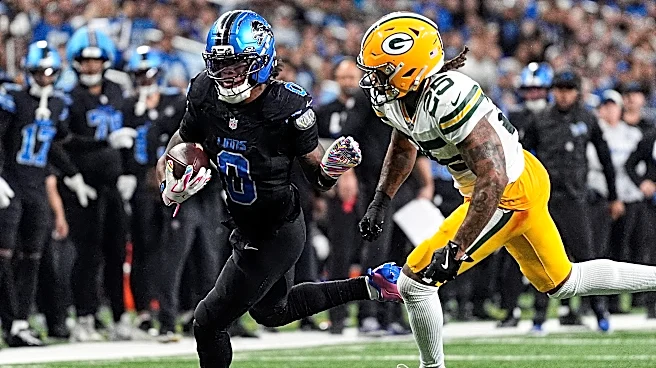
It started on the perimeter. Jahmyr Gibbs had just picked up a third down on an outside run. The Packers defense barely budged with the motion of the receiver across the formation.
By the time Goff accepted the shotgun snap, the Lions had a 6-on-5 blocking advantage on the toss play to the perimeter where it took Xavier McKinney coming from a net distance 20 yards away from where Gibbs took the toss.
On the next play, Goff targeted Amon-Ra St. Brown deep down the right sideline. St. Brown lined up tight and broke outside on a double move out and up. Keisean Nixon was the defender in coverage and jumped the out cut on a bit of subtle movement by Goff just before he threw the ball.
Because of that subtle shift by the quarterback, Nixon assumed a short throw to the sticks was coming and jumped it prematurely. St. Brown turned up the sideline instead. The corner had been playing close with no cushion, so once he committed he couldn’t really recover. Only a throw that pulled St. Brown back toward the defender kept the play from being a touchdown.
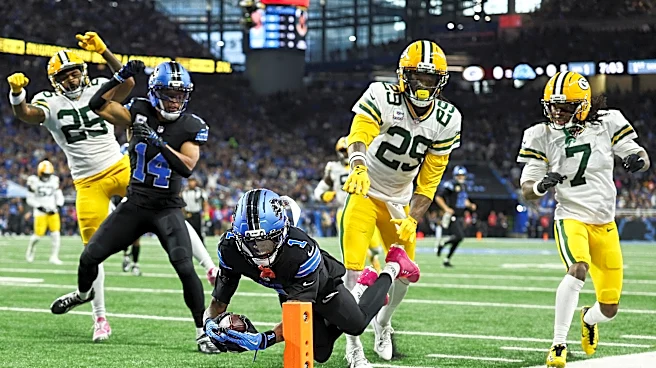
On the very next play, Jameson Williams found open space as Green Bay’s zone cleared out underneath him. The Lions caught the Packers in a nickel blitz off the edge on play action, giving Goff time to survey the coverage and deliver a pass.
Gibbs picked up the Javon Bullard rush off the edge and gave Jared Goff all the time he needed. One clean protection rep was enough to expose the coverage. The Packers were playing a two-deep/four-under coverage behind a 5-man blitz. Williams found the open space and Goff put it on him with Nixon racing back to sink under the throw but he was too late.
Then the play-action pitch. Williams caught a short throw in the flat after a run fake, and nearly the entire Packers defense, nine of eleven by the film, flowed toward the backfield.
When Williams went in motion, Keisean Nixon seemed to expect help from Javon Bullard or Xavier McKinney. Both had already bitten on the fake, so nobody stayed with the fastest player on the field.
On the first snap of the next drive, Detroit motioned St. Brown into the backfield behind the tight ends, and the Packers’ second level forgot about him entirely.
The linebackers, safeties and the nickel all locked onto the play fake while one of the league’s most productive receivers slipped out uncovered. Gibbs followed that play with a run straight into the crowd Green Bay had built in the middle of the field, and still gained 14 yards.
Green Bay doesn’t lack talent on defense, but the problem they displayed against Detroit is processing. Every defense falls for a good play fake now and then, but this unit reacts so late that its athleticism doesn’t matter. Motion and misdirection have troubled it all season, and Detroit’s staff clearly studied that. The Lions didn’t need anything exotic, just standard motion and run action, while running often enough to keep Green Bay’s eyes in the backfield.
The same weakness showed when the play broke down. On a scramble, Goff rolled right and Green Bay’s coverage went with him, drawn partly by Penei Sewell wandering downfield. Goff threw back across the field to Williams, who had read the blitz and settled into the open area it left.
Coverage usually does flow with a rolling quarterback, but a disciplined defense keeps someone home on the backside. Green Bay didn’t. Why they thought Sewell would be a viable target is a mystery. But three defenders worked their zones to him and left the receiver wide open.
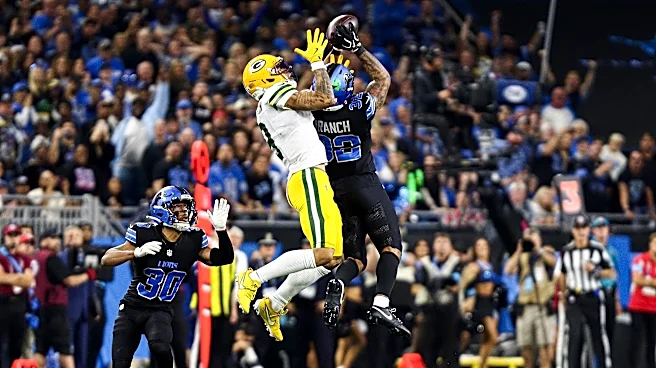
What should hurt most in the Packers’ film room is that the defense had chances to win the game anyway. After Brian Branch picked off Jordan Love early in the fourth quarter, Goff gave the ball right back with a floating throw into tight coverage.
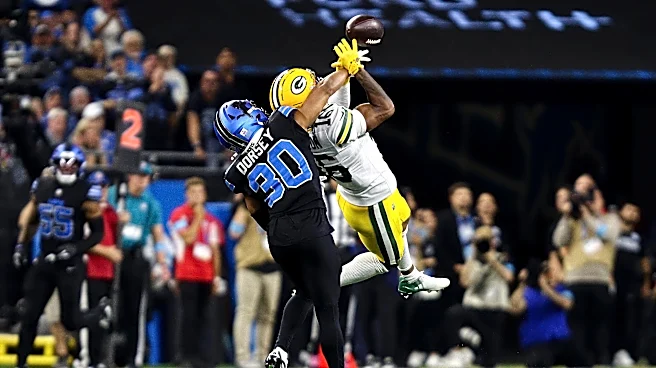
Safety Evan Williams dropped it.
Two plays later, Goff threw another catchable pass his way, and Williams dropped that one too.
Two interceptions in a close fourth quarter, and Green Bay held onto neither. Those were the most important plays of the game for both teams, and the Packers’ secondary failed both times.
To be fair, the second half was better. Green Bay held on a fourth-and-5 deep in the red zone. They also stopped Detroit deep in its own territory late with a fourth down run stuff for a two yard loss.
Nixon came on a cornerback blitz, crashing unblocked into the backfield on a poorly designed run.
But the offense missed a field goal, and the defense had to go back out. With the game on the line, Green Bay let Gibbs run the Lions into field-goal range.
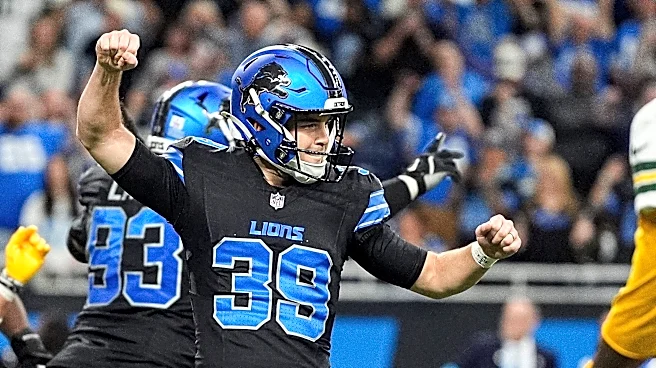
And Goff completed his one pass of the drive between three defenders while under pressure getting hit as he released the ball. Detroit kicked the winner as time expired.
This wasn’t a defense that got overpowered. It got out-thought, mostly by motion and play action it should have seen coming after the first few snaps. Add two dropped interceptions and a final drive it couldn’t stop, and Green Bay lost a game the Lions spent the second half trying to give away.
Until the second level learns to trust its keys over the backfield action, any competent play caller will keep beating it the same way.