
The 2026 season is going to be a crucial one for the Baltimore Orioles. This team is supposed to be in the midst of their competitive “window.” Their homegrown core of position players are multiple years
into their major league careers, and things should be clicking by now. But it is well-documented that the 2025 campaign was a disaster. The team won just 75 games, fired their manager in May, and finished at the bottom of the AL East. The pressure is on for them to bounce back this year. But with just a month left in the offseason, it’s interesting to think about who, exactly, is under the most pressure.
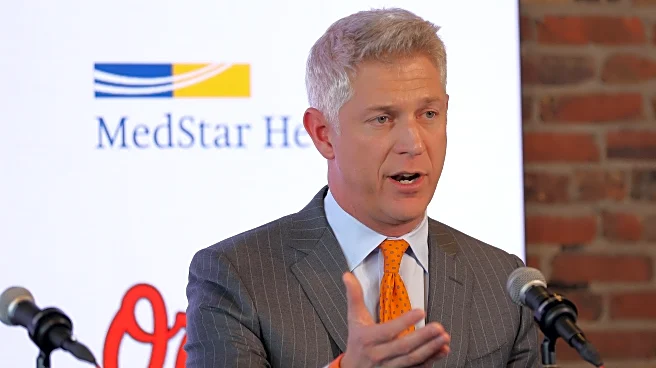
Mike Elias came into the offseason with the weight of the baseball world on his shoulders. Although he had just received a secret promotion a year earlier, there was an expectation from ownership to quickly turn around the major league squad. David Rubenstein explained at the introductory press conference for new manager Craig Albernaz that the team did not have “particular constraints” when it came to adding players, and he referenced the Blue Jays improvement from 2024 to ‘25 as something of a model. That was a lot for Elias to live up to.
The result so far has been a reinvented version of Elias. He acted quickly, getting his new manager and pulling off a trade for a major league reliever (Andrew Kittredge) just days after the World Series ended. He was bold, dealing away the high-ceiling of Grayson Rodriguez for a single year of Taylor Ward. He struck early to add the veteran closer he needed in Ryan Helsley. He gave out a free agent big contract, to a slugging first baseman no less—often a no-no of savvy analytics types. And he coughed up both prospects and a draft pick for a starting pitcher with years of control.
These are the actions of someone that either felt like their job was on the line, or at the very least had the self-awareness to alter the (0verly) conservative approach they had taken into previous offseasons. While anyone can nitpick the moves to a degree (does Shane Baz really qualify as a “frontline” starter?), most portions of the fan base seem energized by the series of moves and feel like it sets the Orioles up for success in 2026.
Right now, it’s fair to say that the 2026 Orioles are a more talented bunch than the 2025 Orioles. The starting rotation, in particular, has a better feel to it. A fully healthy Kyle Bradish and the reinvention of Trevor Rogers have transformed the unit. Those are two players that Elias sought out in trades during his tenure, by the way. And the lineup now has some teeth to it with the addition of two veteran power bats that last year’s rendition lacked.
If you are talking about process for team-building, it certain seems like—speaking in early January—that Elias has largely nailed it. The roster is a mix of young and old, homegrown and external, power and finesse. It has it all. There are holes, or course. They could probably use one more upgrade in the rotation, the bullpen is light, and a base-stealing utility option on the bench would be nice. But in general, this is a club that should compete for the division crown, and certainly be in the conversation for a playoff spot.
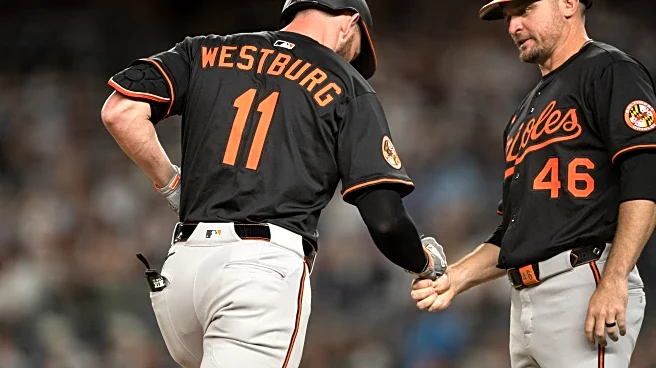
If you dig below the major league level, you find even more good stuff that Elias has done since 2018. The team has established itself in Latin America, efforts that have already produced a big-time talent in Samuel Basallo. In fact, they have another big class of international signings coming later this month. The organization’s pitching development staff has overseen the blossoming of guys like Bradish and Rogers, just recently they turned undrafted Trey Gibson into a Top 100 prospect. And while the number of high draft picks the team had in Elias’ early years certainly helped turn the farm system into his long-desired “pipeline,” they had to scout and develop a little harder in order to craft the likes of Gunnar Henderson, Jordan Westburg, or Coby Mayo into the highly-touted talents they became.
The point of all of this is to say that Elias has the Orioles running as a competent, functional organization. Even seemingly small things like leaks to the media about player moves, or the openness about personnel contracts is kept close to the vest. He runs a tight ship. That cannot be said for all 30 clubs in Major League Baseball, and it hasn’t always been a guarantee in Baltimore either.
On top of that, Elias has shown an ability to adapt this offseason. As Jon Meoli outlined in the Baltimore Banner recently, 2025 was a hard lesson to learn, but it seems like Elias got the message. He needed to change his approach. He needed to take some risks. And he needed to stop hoping that his prized homegrown players would all pan out. In short, he had to admit that he was wrong. That’s not always easy for someone, especially those in powerful, high-paying roles, to do.
All that said, there is still baseball to be played. And while we can all congratulate Elias on an offseason well-run, this team will need to win games in order for any of this to truly matter.
So let’s flash forward to a fictionalized version of the 2026 season, say a month or two into the schedule. What happens if the Orioles limp out of the gate again? It feels unlikely they fire a first-year manager so quickly. You can’t trade away the entire roster. Would Elias, despite evolving over the winter and seeming to fulfill all of the logical objectives, be on the chopping block?
Obviously, there are so many potential variables to consider. It would depend on what the losing looks like, if anyone significant got injured, if the homegrown position players were continuing to stall in their development, etc. But the possibility of another sub-standard season is not out of the conversation. In that event, Orioles ownership would need to have some difficult conversations.
That doesn’t necessarily mean Elias would be given the boot. After all, many of us seem to agree that his process is sound. Perhaps it would put more focus on the players and the clubhouse heading into 2026. After all, their GM got them all (or at least most) of the pieces they needed. How much more could you ask for?
If this core can’t win games in the season ahead, then perhaps a major overhaul is due. Would Rubenstein want Elias to lead such an endeavor? If the team is in such a predicament it is likely to be due to underperformance from the young talent he prioritized, drafted, and development.
Then again, the baseball industry has universally praised the Orioles under Elias for the way in which he has reinvigorated the organization. Should we really be throwing a guy like that out on the street due to a bad season, and maybe even some bad luck?
There is no right answer at the moment. Hopefully the offseason gives us an deep playoff run for the Orioles, and this scenario stays hypothetical.