





If Sunny Mehta and the New Jersey Devils are serious about contending in the 2025-26 season, one thing they will need to do is get creative and add more offensive firepower upfront.
The Devils have been trending in the wrong direction in terms of offensive production over the last few seasons. They averaged 3.52 goals per game in 2022-23 when this iteration of the Devils peaked with a second round appearance in the Stanley Cup playoffs. That number has dipped to 3.22, 2.93, and 2.76 the last three
seasons, and this previous season might be misleading in the sense that it took a strong finish to the season to make that number look somewhat respectable. Even with a post-Olympic break surge that saw them score 3.36 goals per game, the Devils ultimately finished 27th in the league. Regardless, they have to do a better job of putting the puck in the back of the net.
Part of that is, hopefully, getting full healthy seasons from Jack Hughes and other key players up front. And part of that is the Devils needing guys like Timo Meier, just to name a name, to be more productive than they have been. But the easiest way for the Devils to get more offense is to bring in more players capable of scoring and raise the floor of the group.
This week, I’m going to take a look at the forwards who may be available on the trading block, and if they may or may not wind up being a potential fit for the Devils. We’ll also dive into some forwards who may be available that I’d stay away from entirely unless a certain set of parameters existed where I’d change my mind on the matter.
The Longer-Term, Buy Low Candidates
Mason McTavish
McTavish is an interesting candidate for a variety of reasons. The former 3rd overall pick in 2021 is still just 23 years old. He has 181 points in 304 career games with the Ducks. If you believe he has additional levels to gain, he’s signed for a reasonable $7M AAV for the next five seasons.
It would also be fair to believe the Ducks and McTavish have a contentious relationship. They did agree to a long-term deal prior to this past season but it wasn’t exactly the smoothest negotiation. McTavish has also found himself in Joel Quenneville’s doghouse at various points by earning a healthy scratch, including in the postseason. The fact that the Ducks are comfortable moving McTavish in and out of the lineup in some of their most important games of the season gives me some pause. Add in the fact that Cutter Gauthier and Leo Carlsson are due new deals this summer and would it be all that surprising if they moved McTavish to free up the cap space to pay them instead?
McTavish is an average finisher. He’s not a great skater. But when he’s going well, he uses his big frame to get in tight and clean up the dirty work in front of the net. He’s capable of tipping and redirecting the puck in, and he has a good enough shot where when he gets in tight, he can create enough space to make a play. One thing the Devils lack is players who can clean up the garbage in front of the net.
Watching how he plays, I would guess that McTavish is more of a Tom Fitzgerald kind of player than he is a Sunny Mehta player. But Mehta has also been good at identifying players who may have more to give. I don’t know if there’s anything in the underlyings that would suggest McTavish is the next Sam Reinhart, but if he winds up becoming available, it might be worth kicking the tires.
Shane Wright
It’s hard to believe Wright still has one year remaining on his ELC, but that’s what happens when your contract tolls twice.
Wright, a right-handed center, hasn’t really exploded yet through his first two full seasons in the NHL. He has 36 goals and 42 assists in 169 career games. That said, he is still developing, he’s a good skater, and he’s capable of making plays in transition and making plays tight in space. He certainly has been inconsistent to this point of his NHL career, but I think its premature to label him as a draft bust.
Wright would be due a new contract in a year, and if I were him, I’d be looking to bridge and bet on myself rather than sign long-term now. I don’t think Seattle has been the best environment for his development. I also don’t think Seattle is just looking to give him away.
Matvei Michkov
I think its unlikely the Devils and Flyers would hook up on a trade of this magnitude. But with Michkov seemingly in the doghouse in Philadelphia yet again, its worth discussing.
Michkov, who has one year remaining on his ELC, is undeniably talented. He has 46 goals and 68 assists through 161 games and he hasn’t even turned 22 yet. But like McTavish, Michkov also found himself a healthy scratch at points this postseason and its tough to say that the benching wasn’t warranted given his level of play in the postseason. His play off of the puck certainly needs improvement, and there were reports out of Philadelphia that they weren’t happy with his conditioning this season.
Flyers GM Danny Briere poured cold water on the idea that Michkov is available, and that’s probably the end of that discussion. I’d imagine they’d only cut bait on Michkov if they were receiving a massive upgrade, and the Devils aren’t the team in a position to accommodate.
The “They’re Probably Not Really Available but Here Are Some Younger, Long-Term Candidates”
Matthew Knies
I’m not entirely sure what to make of the Knies situation in Toronto, nor do I know what to make of whether winning the rights to Gavin McKenna makes it more or less likely the Leafs flip Knies for help elsewhere in the lineup. But his name was out there at the deadline and was soft-linked to the Devils, so let’s talk about him.
Knies, who is signed through 2031 at $7.75M AAV, is one of the few attractive trade assets Toronto has to try to improve their roster immediately. He’s a big body, physical scoring winger with 67 goals and 93 assists in 240 career games and is entering his age 24 season. He uses his big frame to set up in front of the net and bury any loose pucks. I don’t think he’s the greatest skater, but he does make up for it with his ability to bully his way to where he wants to go and get position on defenders. I question how much he could drive play, but I do think if you paired him with someone like Jack Hughes or Jesper Bratt who can make passes in tight windows, he’s more than capable of beating a goaltender clean and being productive.
If I were Toronto, I would be looking to keep Knies. But I also look at a roster that doesn’t really have much in terms of attractive trade assets outside of Knies and the #1 pick and not a lot of obvious paths to making improvements elsewhere on the roster. I also see a situation where the Devils probably have pieces, such as Dawson Mercer, Simon Nemec, and/or Anton Silayev, that the Leafs might find attractive given their roster needs. I don’t know that its likely, but if Toronto was serious on moving Knies, I could see the Devils matching up well in a potential deal.
Jason Robertson
If you’re looking for a no-doubt about it, proven goal scorer, proven point producer, Jason Robertson is that guy.
Robertson is already a three-time 40 goal scorer and has 444 points over his last 402 NHL games. He’s an elite level finisher and elite level winger who has consistently put the puck in the back of the net.
He’s also due a new contract that could reset the market entirely.
In a world where Kirill Kaprizov, who had 386 points in 319 career games at a similar age, got the Wild to pay him $17M AAV beginning next season, Robertson would be well within his right to ask for something similar given his level of production over the last half decade. And keep in mind, there has already been one contentious contract negotiation between Robertson’s camp and GM Jim Nill. There’s a reason why Robertson is on a bridge deal that is now expiring in the first place.
I still expect that the Stars find a number that works for Robertson long-term and keep him. I’d also expect the Stars to exhaust every last option before moving on from Robertson, whether its burying Tyler Seguin on LTIR, trading anything that isn’t locked down, or buying somebody out to keep Robertson. He’s that important a piece to them going forward.
Pavel Dorofeyev
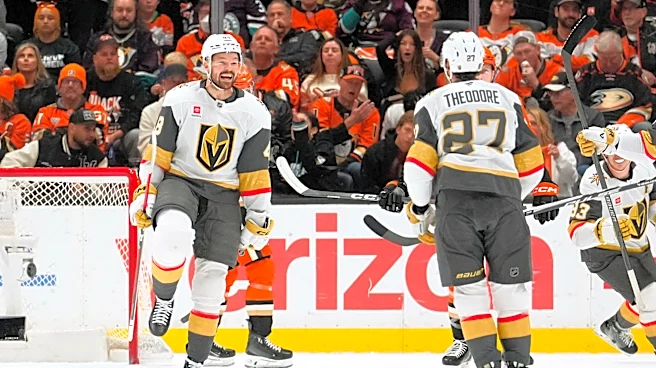
Dorofeyev, who is entering his age 26 season, is due a new contract. He has also developed into an elite level sniper on the power play with back-to-back 35+ goal seasons, while also being one of Vegas’s key contributors this postseason.
Is Vegas tight against the salary cap? You bet they are, as they have $4.65M in cap space available next season. But is Vegas in the business of trading away one of their leading goal scorers just because they lack cap space? Of course not.
We know how cutthroat Vegas operates. They’re also not stupid.
What’s more likely? They trade 30+ year old players with limited trade protection like Tomas Hertl, William Karlsson, or Ivan Barbashev to make room for Dorofeyev? Or they let him get away?
What’s more likely? They bury the oft-injured Mark Stone and/or Alex Pietrangelo on LTIR to create the space they need to pay Dorofeyev? Or they let him get away?
We all know the answer to that question.
It’s not that the Devils couldn’t use a player like Dorofeyev. He’s a good skater who can pick corners and rip it with the best of them. Never say never, but I doubt he goes anywhere.
The Potential Cap Casualties that Could Make Sense
Jack Quinn
I use the term ‘cap casualties’ loosely as with the salary cap exploding, are there really teams that tight up against the salary cap? There’s a handful that we can dive into here.
On the surface, suggesting Jack Quinn as a potential cap casualty doesn’t make a ton of sense. He’s only making $3.375M AAV and that number is locked in for next season. Not to mention he’s coming off of a career year with 20 goals and 31 assists in his age 24 season.
That said, Buffalo doesn’t have a ton of wiggle room next season, particularly if they plan on paying whatever it will cost to retain the services of pending UFA Alex Tuch. Tuch remains unsigned, and perhaps Buffalo has no intention of paying him, making this entire conversation moot, but looking at this from the outside, I’m going to assume Tuch is a big part of the Sabres going forward until he’s not.
Peyton Krebs and Zach Benson are due new deals this summer as well. Plus, they’re already short on defensemen for next season, and Bowen Byram is due a new deal after next season with him slated for UFA.
Buffalo will likely look to reduce or move off of the salaries of Jason Zucker and Jordan Greenway to free up some money. But they also have plenty of younger forwards coming up through their system with Noah Ostlund, Jiri Kulich, Konsta Helenius and others……not to mention they’ve already committed to Josh Doan…..where maybe it means someone like Quinn, who I wouldn’t consider to be a core piece for Buffalo, is expendable.
Keep in mind, Quinn isn’t too far removed from a ruptured Achilles injury, but the further away from it we get, we’re seeing a talented offensive player who isn’t afraid to get his shot off. He’s always had a good shot and good offensive instincts. I do have concerns about his play off of the puck and his streakiness, but he wouldn’t be the first goal scorer to have stretches where he doesn’t score for 10 games here and there and then put up goals in bunches.
I wrote around the deadline of how I thought a Jonas Siegenthaler trade to Buffalo makes all the sense in the world and I still feel that way. Both players have similar cap hits for next season, so building a deal around Siegenthaler for Quinn would be one way of getting two teams to make a proverbial hockey trade to address a specific need.
Ross Colton / Artturi Lehkonen
It seems like every year there’s a Ross Colton might be traded rumor and it never happens. But he is entering the final year of his contract making $4M AAV, the Avs are tight against the cap, and their roster is so deep where Colton might be more of a luxury than a necessity at this point.
Colton, the Robbinsville NJ native, will be turning 30 next season so he’s a little older than most of the players we’ll discuss here. He’s always been a physical forward who can contribute secondary offense further down the lineup, but that offense dried up a bit this past season with just 9 goals and 15 assists in 73 games, averaging 12:31 of ice time. He did deal with an upper body injury later in the regular season and was generally unproductive after that.
Lehkonen is also entering the final year of his contract (and it should be noted, both he and Colton have 12-team no-trade lists). He’ll be entering his age 31 season next year. Lehkonen has been a consistent source of secondary scoring with three 20+ goal seasons in the last four years, and he’s also been a big-time playoff performer as well.
I’m not suggesting Colorado is looking to give either player away, but they are a team with just under $3M in cap space for next season with several holes on their blueline and down the lineup to fill. Both players have relatively light trade protection, and Colorado shouldn’t have too much trouble finding a trade partner if that’s the direction they choose to go in.
The “We Stink, So Our Players Are Very Much Available At the Right Price” Tier
Vancouver Canucks
The Canucks are entering a rebuild, so let’s talk about their three “big ticket” forwards who theoretically are very much available despite all having no-move clauses in Elias Pettersson, Brock Boeser, and Jake DeBrusk.
There are reasons why Pettersson’s production has fallen off of a cliff over the last two seasons. Knee injuries, Vancouver’s regression as an organization, and personal issues have hampered his production. Looking at his production over the first six years of his career though, you understand why the Canucks were willing to pay him $11.6M AAV through 2032. Entering his age 28 season, Pettersson should be entering the prime of his career. But he’s not, as his level of play has dipped. He probably needs a fresh start altogether in an entirely new market as far away from Vancouver as possible, but his $11.6M AAV is a non-starter unless Vancouver is paying down quite a bit of that.
Boeser re-signed in Vancouver before last season when he could’ve gone anywhere as a pending UFA, only for Vancouver to pivot a few months into the season towards rebuilding when it became apparent that Quinn Hughes was not going to re-sign there. Boeser, who has six years remaining on his deal at $7.25M AAV, will be entering his age 29 season.
Boeser has been a consistent 25-ish goal per season player throughout his career, with him peaking at 40 two seasons ago. Teams are always looking for goal scoring, and while Vancouver doesn’t need to move him right now, they’ve shown a willingness to move on from long-term commitments with the Conor Garland trade midseason. They’re building for the future, so if someone made an offer they can’t refuse for Boeser, it’s probably something they’d consider.
DeBrusk has the most reasonable contract of the three, with him ‘only’ making $5.5M AAV through 2031, but he’s also probably the lowest upside player of the three. That’s not to say he’s bad, as he’s been a consistent secondary scorer throughout his career and he’s a solid two-way player in general. He’s scored at least 20 goals in four of the last five seasons.
None of these long-term deals are really hurting the Canucks since they’re not in a competitive window anyways. It’s a rising cap environment and teams still need to reach the floor at the end of the day. That said, Vancouver is in a position where they can be patient and wait to try to sell high as they transition to a new era.
St. Louis Blues
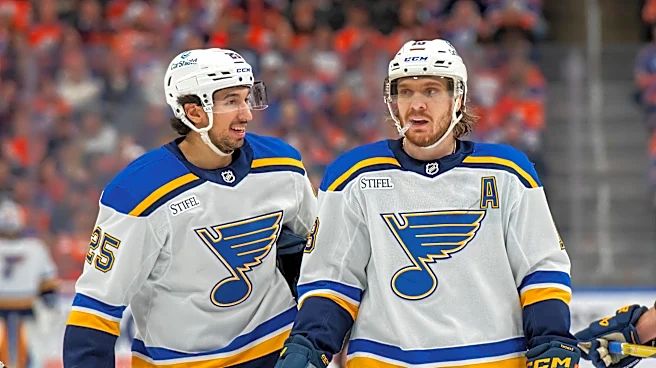
The two names that were consistently on the market for the Blues last year that wound up not moving were Jordan Kyrou and Robert Thomas. Expect their names to be out there a lot again this summer.
Kyrou, who is signed through 2031 at $8.125M, has a full NTC, and will be 28 this season, is coming off of his worst season since becoming an NHL regular. He did have one of the worst shooting years of his career, and was surrounded by one of the worst Blues rosters in his career, so that might be a contributing factor. But in the four years prior to that, he topped 30 goals three times and never had fewer than 67 points in a season. Kyrou is probably one of the best play drivers of anyone I’ve mentioned to this point in this article, and while he’s been criticized for his defense in the past, he’s improved in that area of his game the last few years. Since Kyrou has a full no-trade clause, he does have say over the situation, but the Blues aren’t just going to give him away either despite the down year.
Thomas, who has a contract matching Kyrou’s in terms of AAV, no trade clauses, and expiration date, is a good two-way top six center and would make for a strong contingency plan in the event that the Devils can not get Nico Hischier to extend. That’s not to say that they’re the same player, but they’re both defensively sound, they play in all situations, they win more faceoffs than they lose, and they can score. Given his age and position, I would expect the trade return to be even greater for Thomas than Kyrou.
Kyrou and Thomas are the two best remaining trade assets on the Blues, and St. Louis isn’t in the business of just giving them away.
The “Hey, We Can Dream….But Don’t Count on It” Tier
Brady Tkachuk
Despite Brady Tkachuk repeatedly telling anyone who will listen that he’s committed to Ottawa, his name remains out there in trade rumors. Probably because nobody believes that when the time comes for him to sign another long-term deal with the Senators that he’ll actually go ahead and do it. So let’s talk about it.
I get why people want Brady Tkachuk on their hockey team. They feel that that’s the archetype of a player that you simply HAVE to have if you want to win in the playoffs. He’s big. He’s physical. He hits people. He scores. I get all that. And sure, Brady was good in the playoffs last year, but he also managed to do something that Jack Hughes, Nico Hischier, and Jesper Bratt have never done…..go pointless in a four game sweep to the Carolina Hurricanes earlier this postseason.
Of course, it would be unfair to pin the Sens playoff loss entirely on Tkachuk. He might not be his brother Matthew in terms of consistency year in and year out, but he’s an excellent player who’d be a welcome addition on any team.
Tkachuk has a full NMC and two years remaining on his deal at $8.205M AAV, so he has total say over where he winds up IF he wants to be traded. IF being the key word.
Auston Matthews
Much has been written about Auston Matthews and the situation in Toronto in general with a new GM and new coach coming in.
I don’t think anyone can blame Matthews if he’s fed up with the situation in Toronto. I also don’t think the Leafs getting the #1 pick will do much to sway his opinion one way or the other in regards to wanting to stay there. Matthews makes a whopping $13.25M AAV the next two seasons and has a full NMC, but he’s also at the stage of his career where if he wants out, he wants out. He’s been in Toronto under that microscope for a decade, there’s a ton of noise in that market, and I don’t think Toronto’s unacceptable response to Radko Gudas injuring him helped matters all that much.
I could see the Devils being interested for a few reasons. Matthews had some of his best seasons in Toronto under Sheldon Keefe, including two 60+ goal seasons and his Hart Trophy campaign in 2021-22. He’s topped 40 goals six times in his career. He also got a strong endorsement for his leadership from Jack Hughes during the Olympics.
Trading away Matthews would be akin to Toronto starting a rebuild, so the return would need to be big, but we’re also talking about one of the best players in the league. Matthews will dictate where he wants to go, as is his right, and while its unlikely Toronto ever wins a Matthews trade, it doesn’t mean that the team paying up for him is getting off easy in terms of ponying up assets.
Connor McDavid
Speaking of high-profile, productive players in big markets in a period of turmoil, I’d be remiss without mentioning Connor McDavid.
I don’t think Connor McDavid is getting traded (and even if he were, I doubt its to the Devils). But when you sign a brief two-year contract extension with the Oilers with the understanding that you need to be all-in to try to win a Cup now, and the best they can do is Tristan Jarry in net and a first round exit, I don’t blame McDavid for being annoyed about the situation.
McDavid referred to this year’s Oilers as an ‘average team’, which should sound alarm bells throughout the greater Edmonton area.
Final Thoughts
I acknowledge that there are probably some forwards that I’m not thinking about, and this feels like last offseason where there’s not really a ton of sellers, but I don’t see a lot of great options that realistically are going to be available at a decent price.
Of the players I mentioned that I think are realistic, I’d probably be most interested in McTavish or Knies, followed by the Blues forwards, and then maybe Quinn or maybe I could be talked into Boeser or DeBrusk with retention. But you also have to give in order to get in a trade, prices will understandably be high, and I think its more likely Mehta will try to find players who are undervalued in their current situation than pay top assets to take on a player with a bloated contract.