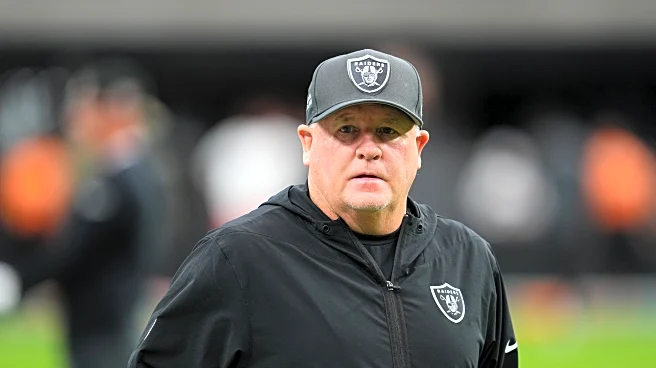

Regarding football, the past 30 days have been nothing short of jubilant for ‘Cats faithful. A resounding bowl game victory over Central Michigan, followed by four outstanding coaching hires by athletic
director Mark Jackson and head coach David Braun: quarterback coach and former UCLA offensive play caller Jerry Neuheisel, offensive line coach Tim Drevno, tight ends coach Bob Bicknell and, most notably, former Las Vegas Raiders offensive coordinator Chip Kelly, who had a major hand in Ohio State’s 2024 national championship run.
If you asked any Northwestern fan what they’re most excited for in 2026, you’ll probably get two answers: the experience of the new Ryan Field, and Kelly’s play calling for a run-heavy ‘Cats offense that featured a deep running back room this past season. Having coached some of the best running backs to have ever graced the FBS, including Trevyon Henderson and Ashton Jeanty, Kelly and Northwestern seem like a match made in heaven — especially when factoring in dynamic players like Ryan Boe and Chase Farrell, both of whom have the potential to expand the ‘Cats run game in the next couple of years.
A dive into the intricacies of this hire, and what it means to Northwestern, is obligatory as we head towards a new era of ‘Cats football.
The history of the Chip Kelly experience
The legend of Chip Kelly begins in 2009, when he took the head coaching position for a then Pac-10 powerhouse in the Oregon Ducks.
After back-to-back nine-plus win seasons (which he was part of as offensive coordinator), expectations were high for Kelly’s offense, which sought to “break the glass ceiling” and contend for its first national championship. Oregon did just that in his inaugural season, finishing 10-3 with dominant wins over No. 6 Cal and No. 4 USC.
A major part of Kelly’s early success was redshirt freshman LaMichael James, who posted one of the greatest rushing seasons in Oregon history. The future 49er rushed for a freshman conference record 1.546 yards en route to a second team All-Pac-10 nod as well as the conference’s Freshman of the Year award.
The year after, James upped his dominance and put himself head-and-shoulders above any other back in the nation, finishing third in Heisman voting behind runner-up Andrew Luck and eventual winner Cam Newton — who he may have edged out in the end, had Oregon won the BCS National Championship over top-ranked Auburn.
In 2011, James was named a finalist for the Doak Walker and Paul Hourning awards, as he led Oregon to a 12-2 record and a Rose Bowl championship.
Even with his star running back departing for the NFL in 2012, Kelly continued to win at a high level, going 12-1 and winning the Fiesta Bowl.
The common denominator across Kelly’s first four seasons is, of course, dominance on the ground. The Ducks led the Pac-10 in rushing yards per game in each season, and outrushed the conference’s second-best running team by about 70 yards from 2010-2012 — and doing so against schedules that ranked in the nation’s top three, in terms of difficulty by SOS.
When Kelly returned to college football in 2018 and orchestrated a fantastic UCLA turnaround, the Bruins were the ones atop the Pac-12 in rushing yardage per game in each of his final three seasons. Zach Charbonnet was the leader of the offense, but 2023 was a mixed bag in the backfield, with the legs of quarterback Collin Schlee being a major help in expanding the run game alongside Carson Steele and T.J. Harden.
The Chip Kelly experience can be defined as “old school” in a sense, but with new-school elements. His best seasons at the FBS level have been with shifty, explosive running backs that have versatility — the ability to push their way between the tackles and the skill to create separation in the open field. In short, Kelly designs his squads to grind out games on the ground, playing smashmouth football for 60 straight minutes.
‘Cats trends and schemes: what worked and what didn’t in 2025
Northwestern exceeded expectations this past season, and although a 7-6 record doesn’t pique the interests of many Power Four connoisseurs, that near .500 record could’ve became 10-3 had the ‘Cats completed potential upsets of Michigan, USC, and Illinois — all games that were very winnable for NU for a substantial amount of time.
Heading into the season, Preston Stone was expected to bear the brunt of the load as a grad transfer with a storied career at SMU, which included a 2023 season that saw him rated the third best college quarterback in the country, per PFF. Instead, eyes went to Cam Porter after game one, as he showed an extremely high ceiling as RB1 while Stone struggled against Tulane.
Then, Porter suffered a season-ending injury in the second half of NU’s home opener against FCS Western Illinois, turning all heads towards Caleb Komolafe — a back that hadn’t seen much playing time in years previous, set to have his first couple of meaningful reps with conference play around the corner. He showed himself to be “the guy”, finishing as the ‘Cats leading rusher and ending his conference season in the Big Ten’s top 10 in rushing yardage.
Behind him was Joe Himon II, who was just as efficient out of the backfield, averaging just under five yards per carry.
Even Robby Preckel saw success as a RB, getting all but one carry against Illinois to end the year.
For Northwestern, the math was simple: run game = win, pass game = loss. At one point, Stone was the lowest qualified QB in all of college football by QBR, and finished with the third lowest completion rate in the conference.
It took Zach Lujan far too long to figure out this trend. Northwestern’s losses to Nebraska and Illinois could be attributed to questionable play calling late in both contests, putting Stone in positions to pass, eventually leading to bad decision-making and turnovers.
Many of Northwestern’s wins against conference opponents came when running between the tackles, allowing Komolafe and Himon to break free at times. In three of Northwestern’s four Big Ten wins, it rushed for 150+ yards on the ground, running the ball 39 times or more in each contest.
With the potential of having Komolafe and Himon back for the foreseeable future, it seems that the ‘Cats success will continue to trend upwards, as long as they keep the ball on the ground.
Minding (and bridging) the coaching gap
It cannot be overlooked that Kelly’s stint with the Raiders was a disaster, to be blunt, but the Vegas blunder cannot fall completely on the veteran coach. PFF ranks Las Vegas second- to-last in offensive line grades — a place where they’d been for the majority of the 2025-26 season. They currently lead the NFL in sacks allowed with 61, while being inside the league’s bottom 10 in rushing yards.
Northwestern is far from terrible when looking at its offensive line — its actually quite solid, entering the PFF top five at various points throughout last season
Jumping back to the college level won’t be a big ask of Kelly, only being a year removed from Big Ten play. In fact, NU is the place to be for the former Raiders’ OC: a great running back room with a supportive offensive line to pair with it, and two dual-threat quarterbacks currently in development and ready to make an impact when called upon.
The tools are all there for Kelly. Now, it’s time to sit back, and watch him work his magic.