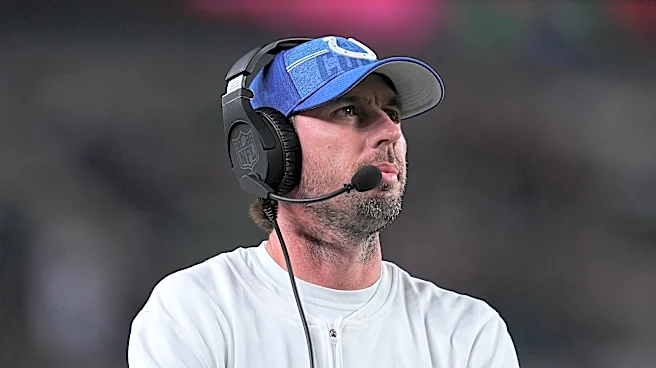


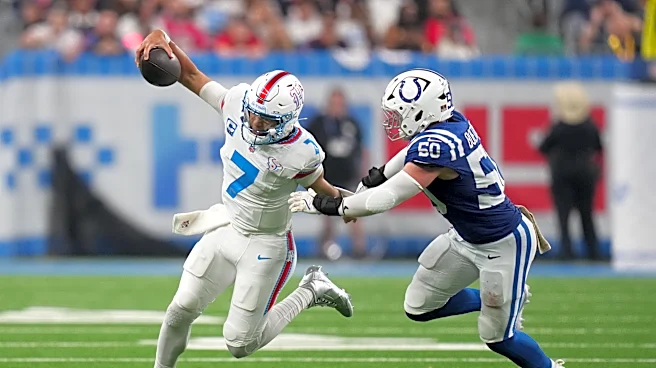
The Eagles have been so bad this season that they’ve forced me to change what I write about. I really enjoy studying opposing teams for the weekly previews, but I’m already more interested in what the Eagles might look like next year. So, over the remaining weeks of the season, I’m going to examine potential coaching candidates and some offenses and defenses that interest me. Obviously, this depends on the Eagles making changes, and in this particular case, the Colts letting Shane Steichen go. Neither
is guaranteed. However, I thought it would be interesting to look beyond the record and examine whether Steichen is still someone Eagles fans should want back.
All statistics are courtesy of Fantasy Points Data Suite and cover Weeks 1–9 of the 2026 season unless otherwise stated. If you want to see a detailed video review of Steichen’s offense, please check it out here.
UPDATE: I had just finished writing this when the Colts released Daniel Jones. I guess they agree with me that the quarterback was the problem!
Pass Game
My overriding feeling watching the Colts was that this looks like an offense Jalen Hurts would enjoy playing in. There are plenty of flood concepts, dagger variations, and opportunities outside the numbers. Steichen still likes to give his quarterback a defined picture and create space through route combinations. The Colts use 2×2 formations on 50.1% of their plays, the third-highest rate in the league, and you regularly see different concepts on either side of the formation. Eagles fans will recognize that immediately. Sometimes that familiarity is reassuring, and sometimes it brings back a few frustrating memories of the past couple of years. I think Steichen’s 2×2 concepts are a lot better than what the Eagles currently run, though.
The flood concepts were particularly noticeable because Steichen gets to them in several different ways. Sometimes the running back initially shows protection before releasing into the flat. Sometimes a tight end chips before getting into his route, changing the timing of the combination. Elsewhere, a switch release changes how the defense has to distribute the receivers. These are small details, but they matter because the defense doesn’t get exactly the same picture every time. Steichen can attack the same area of the field while changing the release, the personnel involved, or the route that occupies the underneath defender. Even in a disastrous season, you can still see examples of him understanding how to overload zone coverage and manufacture an available throw. And we know how good Hurts is at throwing this intermediate deep out.
One of my favorite combinations is a smash variation with a short route underneath and a deep corner route behind it. The Colts repeatedly attack Cover 3 with this, putting the underneath defender in conflict while finding space outside the deep coverage. Sometimes the short route is more of a hitch, sometimes the release changes, and sometimes the Colts adjust the combination based on the coverage. I kept watching these plays and thinking that Hurts could make these throws. You aren’t asking him to live on tight-window throws over the middle. There are opportunities to work outside the numbers, throw vertically, and get the ball to a receiver whose separation the concept created.
That was an important part of my evaluation. I’m obviously selecting successful examples here, but these aren’t all plays where an elite receiver destroys someone one-on-one. The Colts don’t have much receiving talent available, yet there are still plays every week where someone is wide open because the design works. After watching the Eagles this season, that stood out! I’m not claiming every call is brilliant, but I saw enough to push back against the idea that Steichen has suddenly forgotten how to coach an offense. Even with limited personnel, he can still create opportunities that don’t require the quarterback or receiver to do something extraordinary. I watched every single offensive play with a positive EPA above 1, and I can’t recall seeing one play where the quarterback made something out of nothing. Everything good was about the scheme and not about talent.
The screen game is another area where I still like his work. The Colts do more than catch the snap and immediately throw the ball outside, hoping the receiver beats a defender. They use misdirection, movement from the offensive line, and a clear effort to turn defensive aggression against itself. This example shows a clever answer to a linebacker blitzing through the B-gap. Elsewhere, I saw a bubble screen in one direction before bringing the ball back the other way, giving the defense something to react to before the actual screen develops. It doesn’t work every time, but there is thought behind how they get the ball to someone in space. Their screens have averaged 8.13 yards per play compared with 5.16 for the rest of the league, which supports what I saw. That is only 31 plays, but the screen game has been a relative strength within an otherwise awful passing offense. This is an area the Eagles could do with improving.
The RPO game is recognizable, too. There are quick slants and throws to the flat that Eagles fans have seen before, but I especially like how Steichen incorporates pulling linemen into some of these plays. If a linebacker sees a center or guard pull, he has a strong reason to react downhill, especially when the offense has already established that movement in the running game. Steichen can then throw into the space that reaction creates. That is why I think the variety in the running game matters beyond the runs themselves. There are good examples of Steichen giving Jones an accessible answer and putting a defender in conflict from this year.
The obvious response to all of this is to ask why the offense has been so bad. That is fair, and my biggest takeaway is that the receiving talent and quarterback play have made this extremely difficult. Alec Pierce’s absence has removed a significant vertical threat; Michael Pittman Jr. is gone, and Josh Downs has now departed as well. Some of the players in the clips I studied aren’t even there anymore. Steichen’s offense still needs receivers who can threaten the defense outside. The Colts have completed just 4 of their 28 targets traveling at least 20 yards downfield. They still send players vertically, but they aren’t getting enough production from those opportunities, and defenses have less reason to concede space underneath. I do think this offense requires receivers who can win outside and get vertical.
I also watched the interceptions and a lot of the sacks, because you can’t evaluate a playcaller by watching only his successful calls. Plenty of negative plays made it hard to blame Steichen. Jones misses open receivers and hesitates when the ball should come out. This third-down example sums it up. Late motion and a switch release help create an easy short completion to Downs, who is sitting there waiting for the ball. What more do you want the coach to create in that situation? There are calls where I can question the design, but there are also too many examples where the quarterback simply fails to execute a perfectly reasonable answer.
That doesn’t mean Jones is responsible for everything. The Colts faced pressure within 2.5 seconds on 23.6% of their dropbacks, the second-highest rate in the league, and the recent disruption along the offensive line has made an already difficult situation worse. There are also plays where the route combinations don’t create enough. The reliance on 2×2 can become frustrating when a defense takes away the quarterback’s preferred side and the offense doesn’t provide a convincing alternative. I think those defined reads can suit Hurts, but Eagles fans have also seen good defenses squeeze this type of passing game. There were negative plays where I didn’t think Jones received particularly attractive options, and it would be dishonest to pretend otherwise. I still put more of the overall decline on the quarterback and personnel, but Steichen has to take responsibility for the offense he is putting on the field.
Some of his familiar answers also appear less dependable than they once were. The RPO throw into the flat is a good example because we’ve seen it work for Steichen, but there are plays this year where the defense anticipates it and blows it up immediately. That leaves a nagging concern about how much the offense has developed. Has he built enough counters to the things defenses now expect? The same applies to the under-center passing game. The Colts can run effectively from under center, but that hasn’t consistently translated into passing success, and there are examples where the linebackers barely react to the play-action fake. I don’t think the offense is completely figured out, but parts of it look familiar in a less encouraging way. Have defenses caught up to Steichen? Or is it because of poor talent? It’s a hard question to fully answer.
The other concern is how often Steichen still needs someone to win outside. There are plenty of well-designed combinations, but there is also an element of throwing a go route on third-and-long and expecting the receiver to make a play. That is much less appealing when the target is Laquon Treadwell, and the Eagles no longer have A.J. Brown to rescue those situations. Steichen can scheme receivers open, but his offense still benefits enormously from a credible outside presence. Any reunion would need to account for that. I can see why the offense could suit Hurts, but I wouldn’t assume bringing Steichen back automatically solves every problem the Eagles currently have.
Run Game
The running game was more interesting than I expected, particularly after watching the Eagles’ current offense. Outside zone is the foundation, but there is a broader menu around it, including trap, counter, pin-pull, and different ways to get centers and guards moving. You see tight ends crossing the formation to block interior defenders, motion drawing attention in one direction before the run goes elsewhere, and pullers arriving from different positions. I particularly enjoyed the pulling-center plays because they immediately brought back memories of Jason Kelce. Steichen still understands how to get an athletic lineman into space!
The Colts can stretch the defense horizontally with outside zone, trap a defender who is attacking upfield, or bring pullers through to create a different point of attack. That gives the offense more ways to respond to what the defense is doing. It also gives Steichen actions he can return to in the passing game. The overall rushing results have been better than the league average and there is more creativity here than I’ve seen from the Eagles.
The offense I watched was generally more spread out than some of the league’s heavily condensed systems, and although the Colts use plenty of 12 personnel, I didn’t see the same emphasis on receivers inserting into the box. Some people might view that as a little outdated. Others might look at the Eagles and think that giving Hurts more space while asking less of the receivers as run blockers would be a good thing. If you consider that the Eagles will likely go into next year hoping Devonta Smith and Makai Lemon are their top two receivers, do you want a modern offensive system that asks receivers to make important blocks? Steichen’s offense isn’t built around constantly presenting under-center outside zone and boot action like the Shanahan or McVay systems, but that doesn’t mean it lacks useful connections between the run and pass.
There is still a concern that the offense can feel divided between under-center running and shotgun passing. The alignment tendencies themselves are broadly similar to the league’s, so I wouldn’t call the Colts unusually predictable simply because they run more from under center and pass more from shotgun. The bigger issue is that Steichen hasn’t consistently turned the success of one phase into opportunities in the other this year. Some of that is execution, some is personnel, and some belongs to the coach.
2025
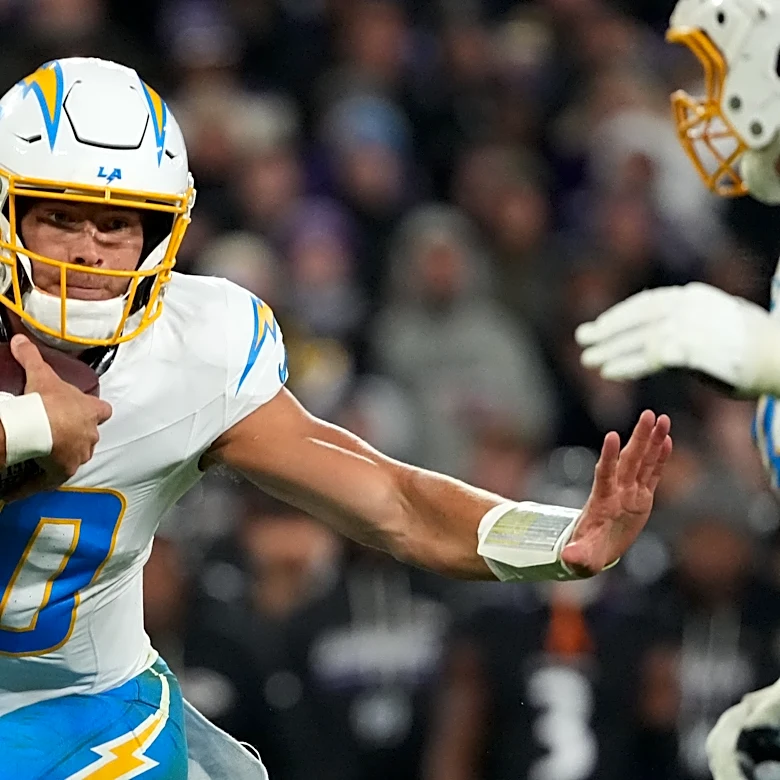
I went back to the Colts’ 2025 game against the Chargers to compare the offense. I deliberately picked an outstanding offensive performance to see the successful version and understand what looked different. The sequencing was excellent. I get into a lot of plays in the Patreon video. Early trap action established the movement of a pulling lineman, and Steichen then returned to a similar picture with play action to create space behind the defenders reacting to it. Elsewhere, motion and pulling action helped sell a run before an easy throw into the flat. The passing concepts developed throughout the game, too. The Colts attacked with the short-route/deep-corner combination, then adjusted the route distribution as the coverage changed. You could see Steichen understanding the defensive response and using it to build his next answer.
Even the handoffs contained useful details. A fake shovel pass to Tyler Warren gave defenders another action to process while the ball went to Jonathan Taylor. Those little movements created hesitation without requiring anyone to make a spectacular play. The receiving talent was better, and Pierce provided the vertical presence this year’s offense has missed. I came away from that game thinking Steichen still understands how to construct and sequence an offense. It is much harder to establish those complementary calls when the quarterback misses the available throw or the receiver can’t threaten the defense, which is part of why this season has become such a mess.
Final Thoughts
I still feel pretty good about Steichen as an offensive playcaller. This season has been bad, and there are legitimate concerns about how bad it has gotten. However, I didn’t come away from this study believing the league has simply figured him out. I saw a coach still creating open receivers, designing effective screens, using motion purposefully, and building a varied running game. I also saw a quarterback and a depleted receiving group failing to execute enough of the opportunities available. The lack of talent is evident.
My answer on whether I would like Steichen back here depends heavily on the Eagles’ plans for Hurts. If they are committed to him as next year’s quarterback, Steichen would appeal to me a lot. The formations, defined reads, outside throws, and potential to expand the quarterback running game all make sense. I can imagine DeVonta Smith threatening defenses vertically, Makai Lemon handling some of the opportunities created for Downs, and Dontayvion Wicks competing for the bigger outside receiver role that Pittman occupied last year. Those aren’t exact player comparisons, but I can picture how the pieces might fit. If the Eagles want a broader reset with a new young quarterback, I’m less certain he would be my first choice, and I want to examine some other candidates before reaching that conclusion.
This is an evaluation of Steichen’s offense. His suitability to run the entire team as a Head Coach requires a separate discussion about leadership, staffing, and player development, and he would have to become available first. But as an offensive architect working with Hurts, I still think there is a lot to like. The Colts’ season has fallen apart, yet I can see enough functional ideas underneath it to believe Steichen could build a productive Eagles offense again. After watching what we’ve watched this year, I would be interested in that.