






Well… it’s essentially here.
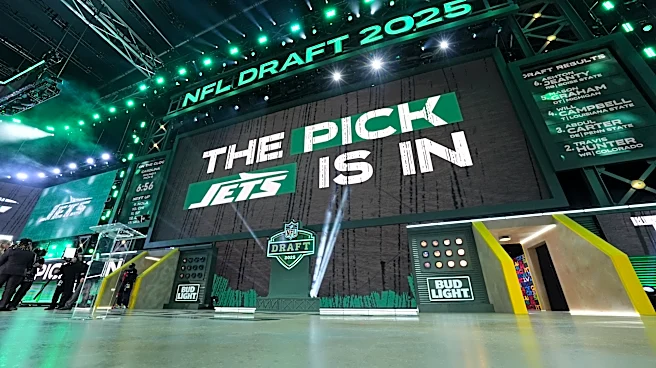
After months of waiting, we are just days away from the 2026 NFL Draft. For the New York Jets, this has the potential to be a foundational moment.
Although you can argue it was not the original plan, much of the Jets’ positioning over the last several months has been intentional. This front office has clearly committed to a full-scale rebuild, with the plan centered around these next two drafts. This is the first swing. And make no mistake: the Jets are armed. They have
more draft capital than anyone. Not just this year, but next year as well.
Thursday has the potential to be remembered as the true beginning of a new era. Not just a reset, but a sustainable one. Something this fanbase has been chasing for over a decade.
So with that in mind, here are some final thoughts on what the Jets absolutely cannot lose sight of.
Thought #1: Do Not Trade Up
Let me start with this….trading up is not always bad.
There are real, valid reasons to do it. If you’re going after a franchise quarterback, that’s one. If you’re a contender trying to grab a final-piece, blue-chip player, that’s another.
But here’s the reality: more often than not, the team trading down wins the deal. Statistical studies show this, and NFL teams are catching up. Over the last 2-3 years for example, we have seen fewer and fewer draft-night trades.
In the Jets’ case, let’s face it: this is not a team that’s one player away. This is not a team that should be operating with urgency to “go get their guy.” This is a roster that has been stripped down and reshaped over the last 15 months. It’s still very much in the early-to-middle stages of a full rebuild.
The goal over these next two drafts and offseasons is simple:
Build an entirely new core… and continue to prioritize depth.
The best way to do that is by trading down, not up. I get the argument that the Jets have so much draft capital that they can afford to move up for a premium talent. But just because you can doesn’t mean you should. I get how enticing trading up for a player who I personally love like Carnell Tate may be, but the risk is just too high.
If the mission is to replenish talent across the board, then volume matters a ton. I’d much rather walk out of a draft with 10 swings than 7. This team needs hits everywhere, not just at the top.
Which takes me to my second thought.
Thought 2: Learning From the Previous Regime
This goes hand in hand with the previous point. The good thing here is you don’t even have to take my word for it, you have already seen what happens first hand when you don’t follow that approach.
The Joe Douglas / Robert Saleh era had a clear draft philosophy… and it was flawed.
They consistently identified a small group of players they had to get — and then made sure they got them, “no matter what”.
And it wasn’t just Malachi Corley. The list of players Douglas and Saleh aggressively targeted and traded up for runs deeper than that. A few of the notable Day 1 and Day 2 trade-ups include:
- Breece Hall
- Jermaine Johnson
- Alijah Vera-Tucker
Did the Jets really get great value across those moves?
Jermaine Johnson flashed, but realistically gave you about a season and a half of high-level play throughout his rookie deal. Alijah Vera-Tucker was good when healthy, but injuries cost him roughly half of his rookie contract. Breece Hall is the only one still on the roster, and even his long-term future isn’t exactly locked in.
Fast forward four years, and you’re looking at a group where the majority are on different teams, and most of the return on investment just didn’t line up with what was spent to acquire them. And more importantly, this approach hurt the roster as a whole.
They may have had an intriguing young core at one point, but the depth almost always left a lot to be desired, especially on offense. The back half of the roster wasn’t strong enough. There weren’t enough playable options. And when starters went down, the drop-off was steep.
That doesn’t happen by accident.
It happens when you continuously sacrifice picks to go get “your guys” instead of stacking talent across the board.
Thought 3: Do Not Think You’re The Smartest Team In The Room
This is something we already saw the Jets’ new regime flirt with in last year’s draft.
There’s a well-documented concept — both statistically and philosophically — called the Wisdom of the Crowd. The idea is simple: the collective opinion of a large group tends to produce better outcomes than isolated individual decisions.
And in the context of the NFL Draft this has proven to be the case as well. And it makes sense.
There are hundreds of prospects every year. No single team is going to have perfect information on all of them. But when you’re pulling from thousands of evaluations: scouts, analysts, data models, etc., you start to get a much clearer picture of where players should realistically fall.
That doesn’t mean the consensus is always right. But it usually isn’t wildly wrong either. In the Jets case, they need to stop operating like they’re the smartest team in the room.
Let’s take a look at a recent example. I hate to pile on the kid, but last year’s selection of Arian Smith encapsulates this very well. Smith was taken at pick 110 in the 4th round. On the surface, maybe that doesn’t seem like a big deal. But looking into the pick further, you’ll notice the issue.
Smith entered the draft as the consensus 274th-ranked player and was almost exclusively projected as a 7th-round pick or UDFA in the lead up to last year’s draft. Despite that, the Jets ignored that entirely and took him early.
And so far, the results haven’t been good — which, honestly, shouldn’t be surprising.
This is exactly the kind of process that gets teams in trouble.
No one is saying you need to blindly follow a consensus board. But straying significantly from it, over and over again, is not a winning strategy. Stick to the board. Accumulate talent. Trust the volume of information available.
If a player unexpectedly falls and you can’t identify a real reason why, that’s when you take your shot. That’s where value lives. Many of the best steals in draft history come from letting the board fall to you… not forcing picks against it.
The Bottom Line
The Jets are not one move away, they’re many moves away. But Thursday night can drastically affect the timeline of how far away they are.
This draft isn’t about hitting a home run with one pick. It’s about stacking smart decisions, building depth, and creating a sustainable foundation.
Trading up might feel exciting. And let me preface again by saying none of these thoughts are bulletproof, there are always exceptions fans can point to. Teams can trade up and win. Teams can aggressively target players and hit. Teams can go against the board and find gems.
But when you operate that way consistently, the margin for error becomes razor thin. And that’s not a place the Jets should operate in especially right now. It’s a large reason why they’ve struggled extensively over the last several years.
Stay patient. Stay disciplined. Keep all your lottery tickets.
If this regime sticks to that approach, there might actually be some light at the end of the tunnel.