
It’s the start of a new week here at BCB After Dark: the hippest spot for night owls, early risers, new parents and Cubs fans abroad. Come on in out of the cold. We’ve got a fire going in here. We can
take your coat. We still have a few tables available. Bring your own beverage.
BCB After Dark is the place for you to talk baseball, music, movies, or anything else you need to get off your chest, as long as it is within the rules of the site. The late-nighters are encouraged to get the party started, but everyone else is invited to join in as you wake up the next morning and into the afternoon.
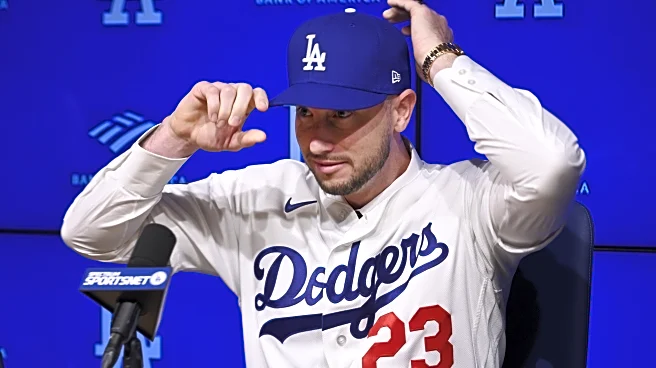
Last week, I asked you about a possible reunion with free agent outfielder Cody Bellinger. You are generally pretty cool on the idea, with 44 percent of you thinking the Cubs should move on from Bellinger. Another 26 percent of you liked the idea for the terms in the article.
Here’s the part where we listen to music and talk movies. We’re into the home stretch of the first round of the BCB Winter Science Fiction Classic, but there’s still time to join. But you’re free to skip these parts. You won’t hurt my feelings.
Tonight we’re featuring pianist David Benoit and the David Benoit Trio. They’re joined by guest vocalist Jane Monheit and they perform a very jazzy version of “Santa Claus is Coming to Town.”
You voted in the first round of the BCB Winter Science Fiction Classic and to no one’s surprise, Blade Runner moved on to the second round. I don’t disagree with the vote. but like I said last time, I did poor Stalker wrong by putting it up against Blade Runner. Both of these films are great, but only one of them could move on.
Now we’re moving into the “Modern” section of the tournament, which encompasses the years 1984 to 1999. Science fiction films were changing in this era. We’ve got three comedies in here. None of the movies takes place in outer space and only one of them features aliens. Those aliens never even leave the trunk of a Chevy Malibu.
But the films do deal with a lot of concerns of the time, including artificial intelligence, virtual reality, the surveillance state and genetic manipulation. There are also several time travel movies, including a matchup of two of them tonight—12 Monkeys (1995) and Back to the Future (1985).
4. 12 Monkeys (1995). Directed by Terry Gilliam. Starring Bruce Willis, Madeleine Stowe and Brad Pitt.
12 Monkeys is a remake of an earlier film in the tournament, director Chris Marker’s La Jetée, which I said that some of you wouldn’t consider to even be a movie. It’s a short “photo novel” that has about three seconds of moving pictures. It’s narrated, but there’s no dialog. 12 Monkeys, on the other hand, is definitely a movie. It’s two hours long, there are big stars in it and despite the non-linear structure that goes along with time travel movies, it has a traditional film structure.
The premise of 12 Monkeys and La Jetée is basically the same. An apocalyptic event sweeps the globe shortly after the current time. In La Jetée is was nuclear war, but “time traveling after a nuclear apocalypse” was already done by the Terminator films in 1995, so 12 Monkeys went with a biological plague. The remaining population in both films live underground and know they are dying out, so they send someone back in time not to prevent it (which is deemed impossible) but to look for a solution for their current troubles. In 12 Monkeys, convict James Cole (Willis) is sent back to get a sample of the original virus before it mutated, in hopes that scientists in the future can use it to devise a cure or vaccine. Both films find a love interest in the present for the person from the future. Both films play homage to Vertigo, although the reference is more direct in 12 Monkeys. Finally, both films have the same opening and closing scene which deals with a death that the person being sent back in time remembers from their childhood.
Beyond that, 12 Monkeys fills out the plot out of necessity. The characters in La Jetée don’t even have names. In contrast, James Cole is a convict in the future who agrees to go on this dangerous time-travel in exchange for parole. The virus itself is released by an eco-terrorist group called the Army of the 12 Monkeys, but James is sent back too early (1990), six years before the virus was created. James is arrested and sent to a mental institution for his rantings that he’s from the future and that a plague is going to destroy the world.
While in the hospital, he is seen by a psychiatrist, Dr. Kathryn Reilly (Stowe) and he befriends a truly crazy man, Jeffrey Goins (Pitt). When his masters in the future pull him out in 1990 and return him to the correct year of 1996, Kathryn realizes that James is telling the truth and James concludes that Jeffrey is the mastermind behind the Army of the 12 Monkeys, probably from something he told him in his earlier visit. Meanwhile, James starts to wonder if his life in the 2030s was real or whether he really is a man of the 1990s who imagined all this because he’s crazy.
So yes, the experimental La Jetée had a very straightforward plot whereas 12 Monkeys takes all kinds of twists and turns to fill out its two-hour run runtime. Most of this is well-done, but I do feel it gets unnecessarily complicated at times and there’s a major twist near the end that I don’t think the film earns. Still, the plot moves along quickly in a non-linear way and the way it’s padded out definitely isn’t an insult to the masterpiece it is based on. It’s a dark and dour film that resists the temptation to brighten it up for an audience that may want a more upbeat ending.
Along with Brazil, which we’ll get to later in the tournament, 12 Monkeys is directed by Monty Python alum Terry Gilliam. Gilliam has a certain distinctive grotesque visual style in his films. He loves distorted faces, pipes that seemingly go nowhere and weird looking doohickeys that appear everywhere. Those touches are limited to the 2030s in 12 Monkeys. The 1990s look run down but mostly normal.
Willis got the lead in this film because he was a bankable actor star at the time. It probably helped that he had the reputation of being a little bit crazy. Stowe gets the all-too-common role in the nineties, the female lead with little motivation beyond advancing the needs of the male leads. Both of them are solid in the roles. Willis is at his best when he’s playing “confused” and Stowe is at her best when she goes into crusader mode, even if it is to protect Wills’ character.
But Brad Pitt nearly steals the show as the unhinged Jeffrey. The producers got lucky that they got Pitt under contract to play a supporting role just before he became a big star after Interview with a Vampire, Legends of the Fall and Seven. I don’t think the part of Jeffrey is as difficult as that of Willis’ part as James, but Pitt dominates the screen every time his crazy pharmaceutical heir comes on the screen. Pitt got an Best Supporting Actor Oscar nomination for 12 Monkeys and he won a Golden Globe for the part. The Jeffrey character doesn’t exist in La Jetée, but it plays a big role in the film’s theme of fate and predestination.
12 Monkeys is a much more serious time travel film with a strong cast, a solid creative vision and it honors the film it’s based on. I may prefer the simplicity and artistic beauty of the French original, but this is a solid introduction to concepts of that film.
Here’s the trailer for 12 Monkeys.
5. Back to the Future (1985). Directed by Robert Zemeckis. Starring Michael J. Fox, Christopher Lloyd and Lea Thompson.
I want to make it clear that I like Back to the Future. I feel I have to say that after what I wrote below. On the Roger Ebert rule of “Never judge a movie for what it’s not,” Back to the Future is a summer comedy with few pretensions other than to entertain people for a couple hours. On that front, it succeeds. My wife, who is a bigger science fiction nerd than I am, is astounded that the way people think time travel would work comes almost completely from the Back to the Future trilogy. I don’t know if that’s true, but I do find the lasting power of these three films to be somewhat amazing.
Back to the Future is included in this tournament because so many of you asked it to be included. I re-watched the film this weekend and now I can’t get Huey Lewis and the News out of my head. For those of you who urged me to include Back to the Future, I want you to know that this, this I do not forgive.
Back to the Future was a huge hit in 1985 and still remains a popular film today. I don’t think I have to explain it to any of you. It’s basically a time-traveling farce. Marty McFly (Fox) travels 30 years back in time and accidentally breaks up his parents before they can even get together. Much of the humor is incest-related, as Marty’s mother Loraine (Thompson) falls in love with him instead of his father George (Crispin Glover). Marty has to figure out how to get his parents back together before he has to return to 1985. If he doesn’t, he’ll never exist. Of course, if he never exists, then he couldn’t go back in time to break up his parents. Just go along for the ride.
Back to the Future is a very eighties movie. Beyond the music of Huey Lewis, there are a lot of jokes revolving around people in the fifties not understanding eighties slang or eighties fashion. Then there are several Ronald Reagan jokes. The film very much reflects much of the popularity of Reagan, a man who came to the presidency by saying that America could return to a simpler and supposedly better time. Hill Valley, California, the fictional town in the Back to The Future films, is portrayed as a run-down place in 1985. It’s basically Pottersville in 1985 and the idyllic Bedford Falls in 1955. For example, the downtown movie theater shows adult movies in 1985 and a wholesome Barbara Stanwyck and Ronald Reagan picture in 1955. (Although it should be said that Hill Valley was a bit backwards in 1955. The film they’re showing was released over a year earlier and wasn’t the kind of hit that would have it still in a theater a year later. But again, “It ain’t that kind of movie, kid.”)
The racial issues of the fifties are glossed over. They are briefly raised and quickly forgotten. Perhaps the worst-aged joke of the film is the tone-deaf gag where Chuck Berry stole “Johnny B. Goode” from Marty McFly. Zemeckis claimed later that he wanted to cut the joke, but it tested too well in audience previews. That sounds like the 1980s.
Other eighties references are that the “bad guys” are Libyan terrorists, a issue that was in the news at the time but hasn’t been since. The time machine itself is a DeLorean, an eighties car that is remembered today more for being a time machine than an automobile.
The saving graces of the film are the performances of Fox and, especially, Lloyd as the crazy genius Doc Brown. You can find a lot of stuff written on the internet about the decision to fire Eric Stoltz and replace him with Fox, even though they had already finished about half of the shooting schedule by the time the switch was made. It was clearly the right decision, as Fox is more in tune with the film’s light farce. I don’t mean this negatively, but the film clearly needed a sitcom actor, which Fox was. Not everyone can make the “my mom wants to make out with me” joke seem innocuous, but Fox can.
I know that Back to the Future has a lot of warm memories for many of you, but watching it 40 years later, it seemed to be a film very much stuck in a time. Maybe that’s why it brings forth warm memories. It actually reminded me of a Huey Lewis and the News album. It’s well-made by some very talented craftsmen. It’s fun and very appealing in spots. There are very few missteps. But it is not very ambitious and there isn’t much to remember it by 40 years later. Don’t get me wrong, it’s a good comedy and a pleasant way to spend an Saturday afternoon in 1985. But I think about it today about as much as I think about Huey Lewis and the News.
Here’s the trailer for 40th anniversary of Back to the Future. The original trailer is so bad, I don’t dare show it.
After everything I wrote about it, I find it ironic that they call it a “timeless classic.”
Now it’s time to vote.
You have until Wednesday to vote.
Back to the Future can be seen for free on Pluto with ads. 12 Monkeys can be rented. It was on Turner Classic Movies last month. I hope you watched it then like I did.
Coming up next, we have one of the biggest box office blockbusters of all time, Terminator 2: Judgment Day (1991) taking on a little indie cult film, Repo Man (1994). T2 is on Netflix and Paramount Plus through the end of the month. Repo Man is available for rent. Or you can stop by my house and see my 4k UHD Blu-Ray.
Welcome back to everyone who skips the music and movies.
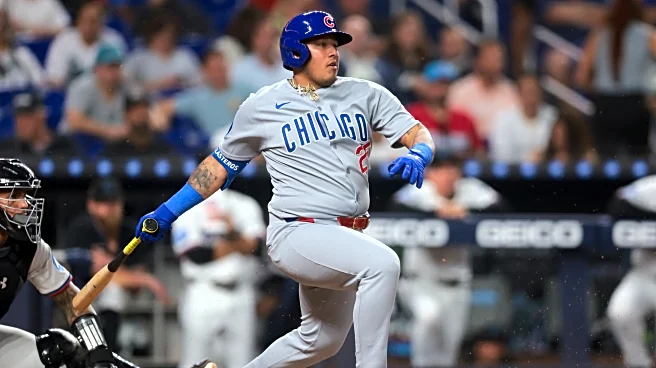
There’s little doubt that the Cubs still want to add to their bullpen, even after adding Phil Maton and Hoby Milner through free agency. And while the big free agent closers are all off the board by now, the Cubs never seemed all that interested. Whether that’s because they’re cheap or whether they believe in Daniel Palencia is probably up to you to decide. But whether it’s real baseball or fantasy baseball, there is a guideline of “never pay for saves.” There are, of course, exceptions to that rule, but it is true that the majority of multi-year deals for closers don’t turn out well. You probably remember the Cubs and Craig Kimbrel, for example.
So David Adler has a list of five relievers the Cubs could target. Of course, he acknowledges that bringing back Brad Keller or Drew Pomeranz is always an option. But these are five free agent pitchers who didn’t pitch for the Cubs in 2025.
The five that Adler suggested are:
- Seranthony Domínguez
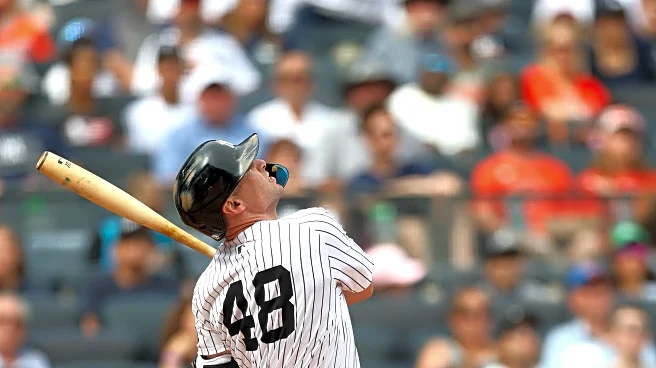
- Luke Weaver
- Pete Fairbanks
- Ryne Stanek
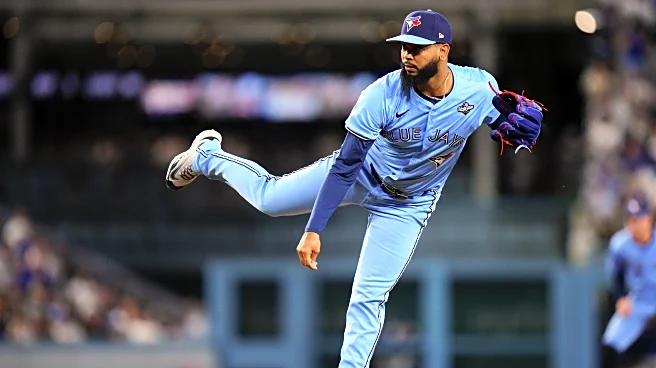
- Michael Kopech
You can read the article to get the full pros and cons of each of these five. But briefly
Domínguez:
Pros: Strikes out a lot of batters. Has the velocity (97.6 mph average four-seamer) that other Cubs lack.
Cons: Walks a ton of batters.
Weaver:
Pros: Also strikes out a lot of batters. Good velocity (95.1 mph). Keeps walk totals reasonable. Was excellent for the Yankees in 2024.
Cons: Struggled badly in the second half of 2025. Some injury concerns after a hamstring strain last year.
Fairbanks:
Pros: Closing experience with the Rays. Throws hard (97.3 mph fastball). Gets lots of weak contact on the ground.
Cons: Strikeout numbers are going in the wrong direction. While he still throws “hard,” he’s lost two miles per hour on his fastball recently and has become more hittable.
Stanek:
Pros: Big fastball averages 98.6 miles per hour. Wipeout slider. Whiff rate and chase rate are high.
Cons: Results the past two seasons have been poor. Walks way too many hitters.
Kopech:
Pros: High velocity fastball that averaged 98.6 mph in 2024. Was an outstanding setup man for the Dodgers in 2024 and missed a lot of bats with an excellent whiff rate. Great cutter. Lots of upside
Cons: Dealt with multiple injuries in 2025 and managed to pitch just 11 innings all year. Would be a reclamation project with a high injury risk.
So which of these relievers would you most like the Cubs to sign?
Thank you so much for stopping by. It’s always good to see a friendly face. Please get home safely. Stay warm. Tell your friends about us. Recycle any cans and bottles. Tip your waitstaff. And join us again tomorrow evening for more BCB After Dark.