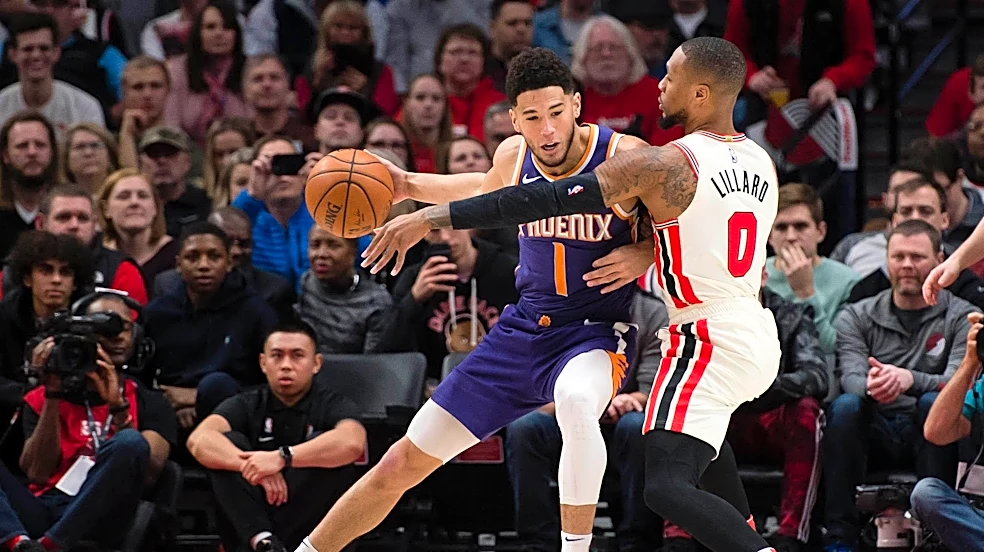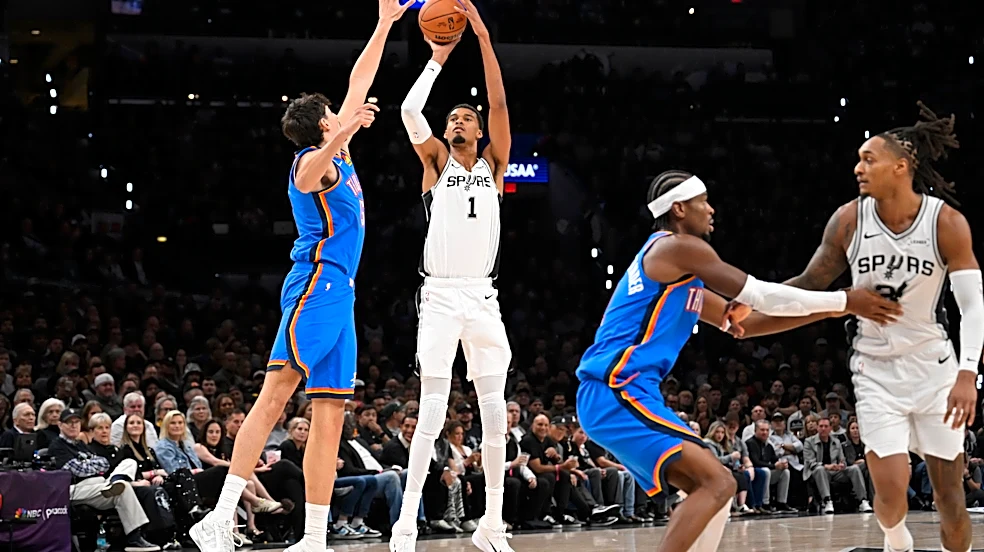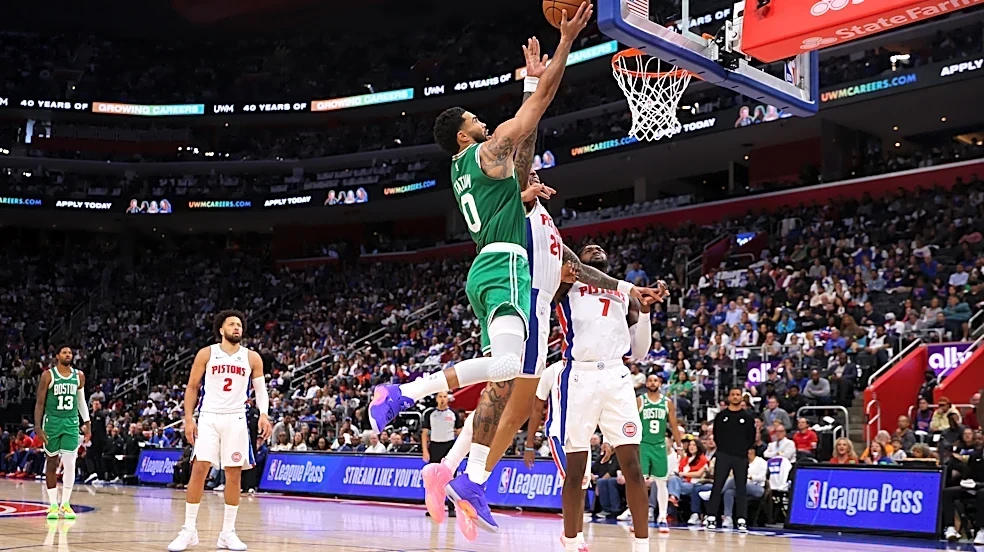


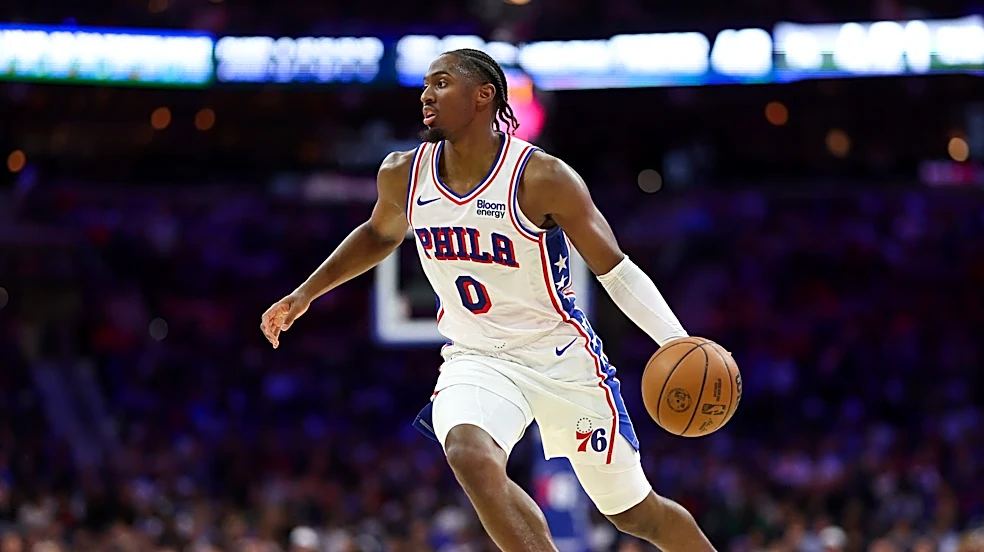

All you have to do is put a ball through a hoop more times than the other team and you win the game. Simple, right?
The answer of course, is “no”. Professional basketball keeps getting more and more complicated the further it evolves from its humble peach basket origins into a modern version where a formula analyzes every aspect of the game.
Efficiency is king and it rules today’s NBA. Tactical decisions are mapped by math.
The catalyst for the league’s adoption of a numbers-driven approach was the early
2000s analytics movement, which introduced us to the four factors that determine victory: shooting, rebounding, getting to the free throw line, and taking care of the ball.
The strategies teams use to vie for control of those four factors make up the metagame, the game beyond the game. Here we’re going to take a look at leaguewide trends, highlight the teams that are taking advantage of them, and see where the Portland Trail Blazers fit into it all.
Welcome, my friends, to the first ever Blazer’s Edge NBA Meta Report.
Shooting
NBA League Average eFG%
10-year: .534
5-year: .543
2025-26: .546
The math fueling the increase in effective field goal percentage (eFG%) is about as basic as it gets: three is greater than two. It may not seem revelatory to anyone with a math education, but it somehow remained a well-kept secret in NBA circles for decades, that is until the Golden State Warriors unlocked the power of the three-point shot to win four championships between 2014-2022.
Since then, three-point attempts (3PA) have skyrocketed leaguewide. Last season, NBA teams averaged 37.0 3PA per game, more than double the 18.4 averaged in 2011-12. Looking forward, one thing to monitor this upcoming season is whether that number continues to surge or if we’ve hit a plateau. Three-point attempts actually peaked at 37.6 per game in 2024-25 before a slight decrease this past season.
Team to Watch: The Charlotte Hornets
Last year, the Hornets led the NBA with an average of 45.5 3PA per 100 possessions and converted at a 37.8% clip, good for third in the league. Not a huge surprise then that they were one of the top offenses in the league, finishing fifth in offensive rating (ORtg) at 119.4.
NBA Rookie of the Year runner-up Kon Knueppel was a huge contributor to Charlotte’s impressive numbers. He was about as efficient as they come: his .601 eFG% ranked 13th in the league and he did it on volume, averaging the 11th-most 3PA per game at 7.9 and hitting them at a 9th-best rate of 42.5%.
The biggest mystery the Hornets have to solve this upcoming season is if they can keep the party going after trading away former All-Star point guard LaMelo Ball to the Minnesota Timberwolves. Last year, Charlotte was an offensive juggernaut with Ball on the floor, producing an incredible 125.0 ORtg during his minutes. Those are some Big Baller Brand shoes to fill.
Meanwhile in Rip City
Last season, the Blazers performed a parody of modern offense. They knew enough to take a bunch of threes, but they forgot that the point is to make them, too. Portland averaged the third-most 3PA per game at 42.2, but converted at the 4th-worst percentage of 34.3%.
On media day, possibly the only time of the year when he can get away with voicing over-the-top optimism unquestioned, General Manager Joe Cronin said that he didn’t expect outside shooting to be a strength this upcoming season.
Alrighty then, Joe. Me neither, I guess.
To examine one reason why the Blazers struggled from three, let’s take a look at Deni Avdija, who is without a doubt the best player on the Blazers. He has an incredibly well-rounded game, but he had a tough time shooting it from outside last year, 31.8% on 6.0 3PA. It was a disappointment after Deni had finished 36.5% and 37.4% from three the previous two seasons.
Two main things sank Deni’s conversion rate from three in 2025–26: his post-All-Star shooting splits (23.5%) and his struggles off the bounce (24.0% on pull-ups). Avdija’s late-season slump from distance can be attributed to his back injury, which after an offseason of rest, is said to be healed. Additionally, today’s Blazers feature more players who can relieve Deni of some ballhandling duties, providing him with extra catch-and-shoot looks to replace many of the pull-ups in his diet.
I anticipate a bounce-back year of distance shooting from Avdija.
Turnovers
NBA League Average TOV%
20-year: 13.0
10-year: 12.6
2025-26: 12.7
Ever since the NBA first started to officially track turnovers, the leaguewide number of them has shrunk, a trend lasting decades. In general, teams take better care of the ball than they ever have, but there has been a two-year uptick in turnovers as aggressive defenses who force them have found recent success.
Last season, the Detroit Pistons and Oklahoma City Thunder were paragons of this strategy, finishing first and second in defensive rating (DRtg) while leading the league in forcing turnovers by finishing top-two in opponent TOV%. It’s not just them, though; overall, the NBA has averaged more steals in each of the last two seasons than at any other time this century.
One thing we here at the Meta Report are going to track is if this is just a two-year blip, or if the NBA is entering a new era defined by opportunistic defense.
Team to Watch: The Boston Celtics
The Celtics are just plain stingy with the ball. The past three seasons, Boston has finished top-two in TOV%. They just don’t make many mistakes. One thing I find fascinating, especially given the way the offseason played out, is that while the Celtics had the fewest total turnovers in the league last year (1014), they rostered the player who had the most turnovers individually.
In 2025-26 Jaylen Brown accounted for 25.5% of the Celtics total turnovers. Wild! He wasn’t even that bad efficiency-wise, finishing with a league-average 12.7 TOV%. Maybe league-average just isn’t good enough when the goal is to be the best.
I’m really curious to see if the Celtics are able to improve upon their league-leading turnover rate with Brown out of the picture. Even if they do, I wonder if it will be worth the cost of everything else Jaylen Brown brings to the table. There’s lots of fun numbers to watch in Boston.
Meanwhile in Rip City
In case you missed it, I wrote a piece about the Blazers’ historic turnover problem last season. No amount of hyperbole can overstate how bad they were at taking care of the ball. The analysis pretty much boils down to “they’re going to be better this season because they can’t be any worse.”
Since I’ve already covered that ground on offense, I’m going to talk about the Blazers and their ability to force turnovers on defense, where they ranked seventh, forcing opponents into a 13.5 TOV%, despite only finishing 19th in steals per 100 possessions with 8.2. They did it by drawing a bunch of offensive fouls and there’s no one better at drawing them than Toumani Camara.
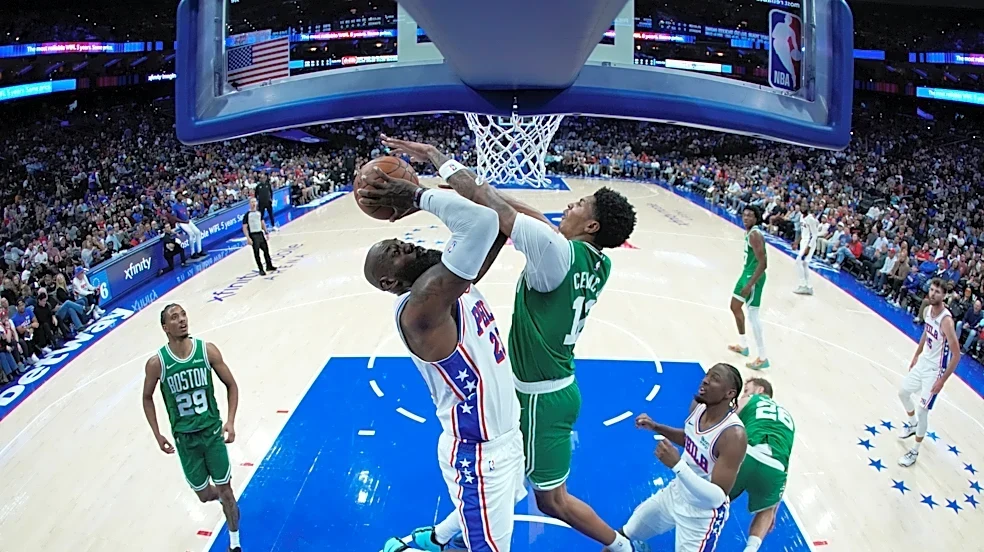
Camara led the NBA with 105 offensive fouls drawn. Second was Jamal Shead with 66. Tou is having so much success as an outlier, and because the NBA is such a copycat league, I believe coaches will try to broadly replicate what’s working for Camara by teaching it to their own players.
The test case for whether that skillset is transferable is Sidy Cissoko, who finished sixth in the league in offensive fouls drawn with 50, despite his limited minutes. It doesn’t take a huge stretch of imagination to believe that Toumani Camara has had an influence.
Free Throws
NBA League Average FT/FGA
20-year: .210
10-year: .198
2025-26: .206
No grandpa, too many free throws aren’t ruining the game these days. Over the last ten years, the rate at which free throws are made versus field goals attempted has never been lower. That .198 rate is bonkers when you consider the average was .239 during the ’90s, back before “the league got all sawft.”
I’ll never understand the nostalgia for an era when professional basketball looked like Greco-Roman wrestling interrupted by leisurely strolls to the free throw line. No thanks. I’m a Gen-Xer with memories (I was there, man) and I much prefer the current product the league puts out. Tons of skill, tons of action, and never less reliant on trips to the line.
There was a big uptick in free throws last season, but we’ve seen this before, most recently in 2022-23 when it turned out to just be a one-year outlier. If that uptick turns into a trend, I’ll be right next to gramps, shaking my fist.
Team to Watch: N/A
Free throws are a necessary evil that don’t add a whole lot of fun to the game. The good news is that, of the four factors, they are the least impactful, only affecting the margins. I just can’t find any correlations that I find interesting, or really any correlations at all.
There are teams who foul a lot who are good at defense, like the Pistons. There are teams who foul a lot and are bad at defense, like the Wizards. There are teams who don’t foul much and are good on defense, like the Spurs. There are teams who don’t foul much and are bad at defense, like the Mavs.
You can find the same scattershot results on offense.
Lots of free throws, bad at offense: Magic. Lots of free throws, good at offense: Nuggets. Not many free throws, good at offense: Celtics. Not many free throws, bad at offense: Bucks.
I don’t know what to make of it other than I’m unbothered that there doesn’t seem to be a league-wide meta strategy that translates free throw shooting into wins. I think the NBA is healthier for it.
Meanwhile in Rip City
Last year the Blazers were top-ten in free throw rate (FTr) at .280, but were bad at converting them, finishing 24th in the league at 76.5%. Say it with me, Blazers fans, “You’ve got… to make… your free throws.”
Deni Avdija led the Blazers’ parade to the line in 2025–26 with an incredible FTr of .573, producing a lot of his offense by drawing contact. He ranked second in the NBA in free throw attempts per 100 possessions (FTA/100) with 13.2, sandwiched right between number-one Luka Doncic and number-three Shai Gilgeous-Alexander. That seems like decent company to keep.
Rebounding
NBA League Average ORB%
20-year: 24.8
10-year: 23.6
2025-26: 26.0
Long gone are the days when a man named Moses parted the painted area like the Red Sea, claiming offensive rebounds as bodies crashed in his wake. In the 1980s, the NBA league average offensive rebound percentage (ORB%) regularly hit the thirties, peaking in the 1980-81 season at 33.5%. The low point was 2020-21, when the league average for teams was 22.2%, a mark nearly matched by Moses Malone’s individual ORB% of 19.6% in 1979-80, a biblical effort befitting his name.
After hitting that anemic low six years ago, offensive rebounding has seen a resurgence of late, steadily increasing year over year. Last year’s league average of 26.0% was led by the Houston Rockets, whose mark of 34.8% last season is the highest any team has achieved in over twenty years.
As NBA teams work to fabricate extra possessions, they’ve rediscovered the ancient tool of offensive rebounding, honing it to sharpen their competitive edge.
Teams to Watch: The Finalists
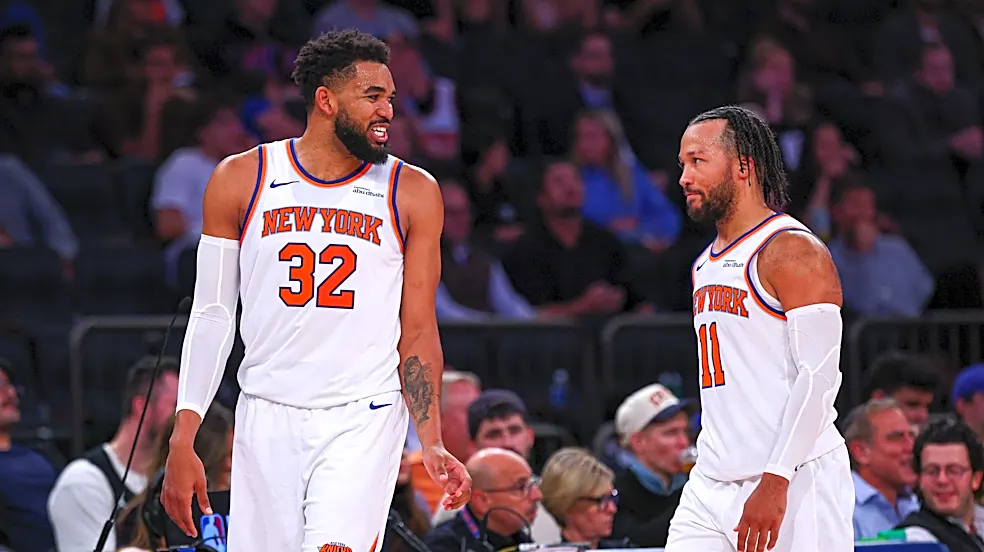
Prior to meeting in the 2025-26 NBA Finals, the San Antonio Spurs and New York Knicks finished the regular season ranked first and second, respectively, in defensive rebound percentage (DRB%). Earlier, we touched on the defensive success of teams who excel at forcing turnovers, but there’s another competing meta force that focuses on the defensive glass.
I’m curious to see how that tug-of-war plays out this upcoming season. If offensive rebounding keeps up its steady resurgence, it stands to reason that limiting those opportunities will also become more relevant. Was it a coincidence that the NBA Finals featured the two teams who were best at defensive rebounding? Is it a more sustainable strategy in the post season than forcing turnovers?
While a large part of the offensive meta has been solved, particularly shot diet and pace, defense remains a mystery. As offensive output continues to grow, it creates room for experimentation on the defensive end to try to figure out how to stanch this exponential rise in efficiency. Statistically, DRB% and opponents’ TOV% will mark the shifts in the meta.
Meanwhile in Rip City
Last season, the Blazers were bipolar on the glass. They had no trouble rebounding on the offensive end, finishing second in the NBA with an ORB% of 31.3%, but for whatever reason, they couldn’t translate it on defense, finishing 25th with a DRB% of 72.7%.
The dichotomy hasn’t gone unnoticed by new Blazers head coach Micah Nori, who has made improving the defensive rebounding and limiting turnovers his main points of emphasis during training camp. Looking at last year’s numbers, it’s easy to see why.
When you’re a team able to corral nearly a third of your misses, your shooting percentage isn’t nearly as important as your ability to take care of the ball. A three-pointer that caroms off the rim is just a Kobe assist waiting to happen, while turnovers just end the possession entirely, letting the defense off the hook. The Blazers coughed the ball up at a historic rate last season and coupled that with bad shooting, the only thing that kept their offense “below average” instead of “incredibly awful” was their ability to keep possessions alive with rebounds.
Portland’s dominance on the offensive glass was spearheaded by Donovan Clingan, who led the league in ORB% by collecting them at a rate of 17.7%, not quite Moses Malone, but not too far off, either. He’s not too shabby when it comes to defensive rebounding either, finishing fifth in DRB% at 28.6%. Clingan has already developed a reputation as a defensive stopper. His offensive rebounding makes him a weapon on that side of the floor, too.
On the Road Again
Before the Meta Report concludes, we’re gonna take a little detour through the Blazers’ upcoming road destinations and explore the local culture beyond basketball. What better way than through the art of music?
10/23 Sacramento: “Mexico” by Cake
A forlorn song about connecting with someone who is so far out of your league, you know it’s doomed, so you just preemptively find an excuse to let the relationship die. The premise is set up in the first nine words with a clever piece of equivoque, “I had a match/but she had a lighter”. It only gets better from there.
10/27 Los Angeles: “Fade Into You” by Mazzy Star
Mazzy Star was the go-to indie rock soundtrack for Gen-X teenagers fumbling their way through awkward make-out sessions in the 90s. Another forlorn song about the distance between you and someone you want to be close to. Music has a way of transporting you back in time and every time I hear this melody, I swear I can smell the clove cigarettes and see the bad Manic Panic dye-jobs.
10/31 Utah: “I’ll Always Let You Down” by Choir Boy
After going six years without recording any music, Choir Boy released this absolute banger in April. These guys have a very retro 80s synth pop vibe that somehow manages to still sound modern. Their music always makes me cry through my guyliner, but this new track has such a great backbeat that I dance while I do it, too.
On the Next Installment…
In the next Meta Report, we’re gonna have fun making sweeping declarations based on small sample sizes and check in to see how the Blazers are doing on their early season goals of limiting turnovers and improving their defensive rebounding.
Until then, have fun in the comments, respect one another, and let’s make each other smarter.