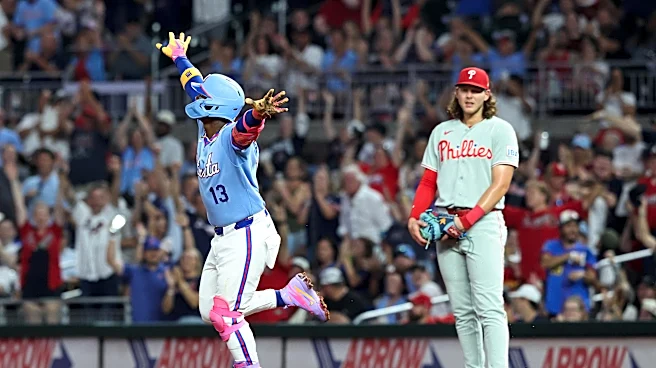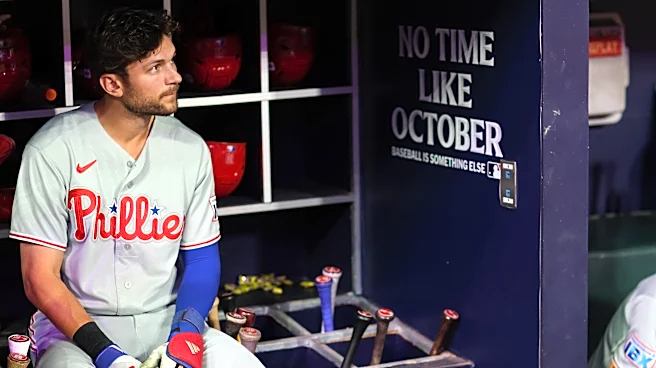

It’s always interesting to think about a team in the aftermath of a postseason loss. The immediate reaction is visceral – “Change is needed!”, “Fire the manager!”, “Trade X, Y and Z!” are common refrains that reverberate around the fanbase. No one wants to see the same team back the following season when that team was the one that gave us the freshly minted loss.
With the Phillies though, a lot of this sentiment is valid. Three years have passed since the team lost in heartbreaking fashion in the 2023
NLCS to the Diamondbacks. At that point, there was reason to believe that there was another run in the core of players that got them that far. Many, if not all, were still in the prime of their careers and the front office had been given a green light to do whatever it took to get the pieces that would put them over the top and back into a World Series. However, there seemed to be a limit to that amount of transactional freedom. The final luxury tax threshold had always been something the team looked to avoid, thereby stunting their quest for more free agents, better trade targets, etc. It meant that a lot of what the team already had in place, they were somewhat stuck with. The personnel they had was good enough to make it to the playoffs, but having luck become a factor was looking more and more like a strategy to advance rather than a random outcome.
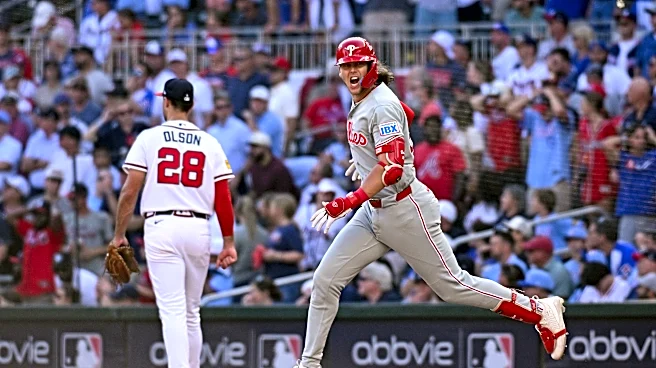
Flash forward to now. The 2026 Phillies farted around in the final week when they had a chance to clinch a postseason spot, a clinch that would have let them set up their rotation in a better way. They have exited to the postseason with a lineup that was feeble when it was time to step into the spotlight. They were forced to use their closer early on in Game 1, a decision that still remains the correct one to have done, but was done because the other options at the manager’s disposal were untrustworthy at best, below replacement level at worst. The lineup that had been chasing and chasing and chasing in each postseason loss had finally gotten to the point where the hometown announcer NBC had chosen to cover the Phillies wondered aloud if any baseball had been hit hard. All of this means the same thing, that the problems with the roster are legion. They had been taking on water for a few years now and it has finally caught up to them. When ready to look back at the season in the entirety, one can and probably should come to same conclusion:
The biggest reason for the team’s struggles and postseason loss rests solely at the feet of Dave Dombrowski and Preston Mattingly and how they have constructed the roster and put the player development operation in place. If the team wants to advance any closer to a World Series championship and subsequent parade down Broad Street, one or both of them needs to be replaced.
Dombrowski has abided by the same core principle as a general manager/president of baseball operations for a few years: the stars will carry a team as far as it can go. The role players can play, ahem, a role on the team, but if the stars that have been courted, signed and extended are not doing what is expected, that team is going to have troubles. Minor league systems are in place to supplement the major league roster and to an extent, that has proven true. The team has rarely been caught on the losing end of a deal during the Dombrowski reign as the players he has dealt away generally haven’t performed well in their new locations. You can point to a few exceptions (Ben Brown, Hao Yu Lee) as ones the team could have used by now, but for the most part, they haven’t been burned yet in a deal.
What they have been burned by with trading these minor leaguers away is the inability to create sufficient and talented depth should a need arise at the major league level. A stroll through memory lane of the 2026 season and you will see the roster littered with names of players that really had no business playing at any point in Philadelphia for any reason. Felix Reyes, Nolan Hoffman, Zach Pop, Dylan Moore, these are players that could have been replaced with more talented minor leaguers had they existed at the place where the Phillies could have used them. One could argue that keeping all the minor leaguers creates logjams, which is fine, but consider the Rays. Each season, they are forced to move useful players off of their 40 man roster because they have other, better players that need to go on.
Personally, I’d rather have the problem of having too many good players than not enough.
Because of all this, Dombrowski has been forced to bottom feed for enough players to populate the roster. And because of this, the roster has begun to suffer. Having a good top 12, 13 players is great to help craft a roster capable of getting to the postseason. It’s entirely different than having a good 24th, 25th and 26th player, which is what separates the good from the great teams. Dombrowski has just not given the manager enough good players to balance out the entire roster and has suffered early round exits from the playoffs because of it.
Shifting to Preston Mattingly, his role in the demise of this team cannot be forgotten. While he may have been the final say in which players are shuffled to and from Philadelphia, his building of the player development system beginning with his hire in 2021 has only produced disappointment. There have been few players the team has been able to promote from within because of the lack of quality prospects and falls on the person in charge of it all. Mattingly may have been promoted in 2023, but those two years still loom large over the current roster. Players that were drafted by the team (yet another place to cast a large share of blame) have not lived up to expectations set for them, which means there can’t be players moving up the organizational pecking order that are desirable enough to actually place on the roster.
The blame for that has to fall on Mattingly. He was in charge of that part of the organization in the years when players could have been developed that would have helped them at this point. Instead, we’re left with nothing.
And now, with the 2026 season completed and the future of the game hazy, the Phillies have reached a crossroads. In one direction, there is Dombrowski, gaslighting the people that follow this team into thinking that the roster they currently have is capable of not only making the playoffs, but outrunning the randomness they likely believe plays the largest role in their being bounced yet again with nary a ring to show for it. That road involves little change to the roster, maybe a few tinkers around the edges, but for the most part, the same players will return whenever baseball does get started again in 2027.
In another direction, there is finally a realization that whatever they have tried has not worked and something has to change. Yes they have created a roster that is quite inflexible as far as 40 man roster decisions and contracts few teams would actually want, but it’s not impossible. There would have to be creativity on the part of the front office, creativity they have sorely lacked but will need in spades.
At the very least, it will start with the manager. Don Mattingly is no longer qualified to be a major league manager and should (and probably will be) dismissed from the organization. The rumors of Alex Cora joining the team will be hot and heavy, but he will have to have some autonomy here when it comes to decisions to be made. If he feels that the current crop of coaches is not who he wants to work with, there will have to be some compromise made. It’s difficult to imagine Caleb Cotham going anywhere, but there are real numbers out there that suggest Kevin Long is no longer the answer as hitting coach.
This season was about survival with the Phillies. They survived long enough to make it into the postseason and, after a 9-19 start to the year, they should truly be commended for that. Making the playoffs is something that happened very rarely in these parts prior to 2022 and we should truly relish the fact that the team has been a contender each year the past five years. Yet that can only go so far. At some point, results have to happen or else change needs to occur. The leash has been long enough now that the team needs to see that something fundamental needs to be different whenever baseball begins in 2027.
They may not like it, but it is time.
It is time for change.