





Oh, how seductive it must have been.
You buy a basketball team. Months later, you are standing at midcourt in Minnesota holding the Western Conference Finals trophy. Confetti rains down. Cameras catch your face. For one dangerous second you cannot help but think: is this what owning a sports franchise is like?
It is not.
A few days later, the confetti is falling in Boston, and it belongs to someone else. Even worse, you are months away from being hoodwinked into believing that being on the business
end of the NBA version of the Babe Ruth trade is a good idea. Soon, boos will serenade you in your home arena as even marginally adept lip readers will notice you ask your associate, “Are they booing…me?” Oh, they were.
That has been the painful, expensive education of Patrick Dumont. Buying a basketball team and understanding the NBA are not mutually inclusive, a line I wrote in November when Nico Harrison was finally fired. The new Mavericks governor inherited Mark Cuban’s human Rolodex hire and trusted the man’s confidence over the man’s competence. By the time Dumont understood the magnitude of what he had been bamboozled into signing off on by Harrison, the trade had already happened, and the booing had already started. A few rocky months later, an 18-year-old SMU freshman in a Luka Lakers jersey was sitting four rows behind him at the American Airlines Center, waiting to apologize.
What Dumont did at that game, on November 10 of last year, was admit he had been wrong. To a kid named Nicholas Dickason, who had flipped him off on opening night and come back to make it right. “Sometimes you have good intentions and you make mistakes. We all do it.” Dumont also told Dickason, according to The Athletic, that he “feels horrible for the trade” and “wants to make it up to us.”
Nico Harrison was fired the next morning.
The brakes-on crowd
I’m tired of writing about Nico Harrison.
Nobody at this site has taken him apart more often, with more long-winded metaphors, than I have. Fifteen months of column work spent litigating a single trade and a single regime, and I’d like to be done.
I have not been part of the move-on crowd. I have been part of the driving-with-the-brakes-on crowd. The people who understood that the Adelson-Dumont ownership group is not selling the team, that some of the faces tied to the trade were going to remain, and that the reset many fans wanted was not coming on their preferred timetable.
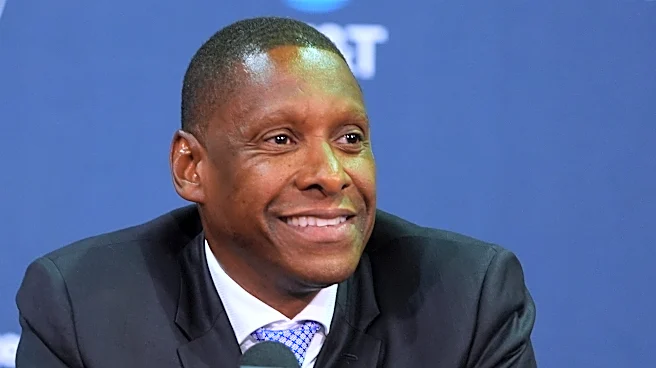
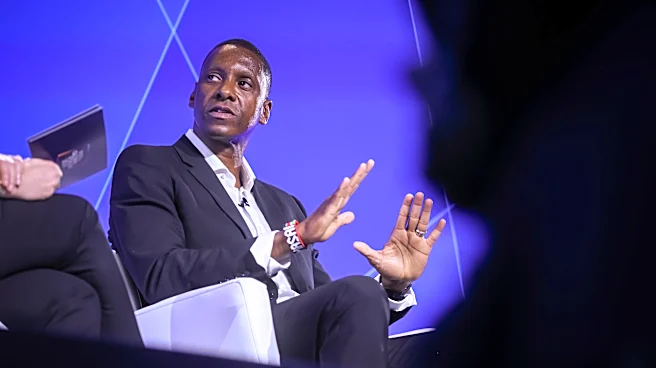
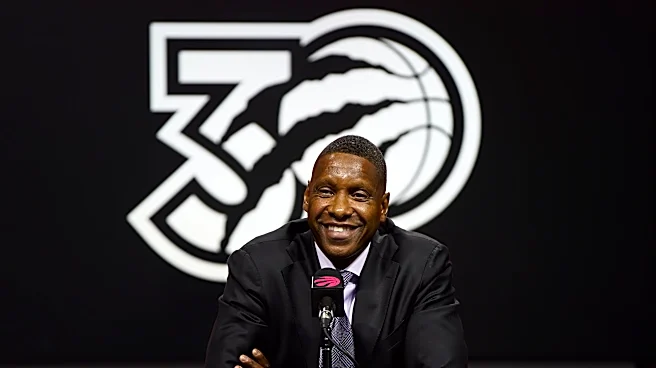
Tuesday, for the first time, a brighter horizon actually felt possible when the Mavericks introduced Masai Ujiri as the team’s new president of basketball operations and alternate governor.
Not because Patrick Dumont sold the team. Because Dumont brought in someone whose entire career has been the photographic negative of the man he replaced. Someone whose first instinct in front of a microphone was to acknowledge what happened, name the wound, and offer a path forward that did not pretend the wound was imagined.
The pivot is straightforward: Patrick Dumont trusted the schmoozer. Now he is trusting the scout.
When the Rolodex was the resume
When Mark Cuban hired Nico Harrison alongside Jason Kidd in 2021, he was hiring a Rolodex.
After years of striking out in free agency, Cuban ostensibly convinced himself that the missing ingredient at the top of his front office was relationships. Connections. Access. Harrison had been at Nike for two decades. He had the cell phone numbers of every star in the league. He had brokered deals with Kobe and Curry and Kyrie and Durant. He could schmooze. That was the pitch.
The problem, as the Mavericks would learn the hard way, is that schmoozing was a job where Harrison could not lose.
At Nike, even if you flubbed a star’s pitch meeting (the famous Steph Curry / Under Armour story comes to mind), there was always another superstar coming through the door. Nike does not compete with 29 other shoe companies for a fixed pool of talent. The next star would always be there, ready to be courted. Failure in Harrison’s previous job was, in the most consequential sense, impossible.
The NBA front office is a different planet. You compete against 29 other teams. Talent evaluation is the entire job. Many of the men who become NBA general managers spent years grinding as scouts before they ever sat in a draft room with veto power, watching gym after gym, mapping international tournaments, building the eye that eventually recognizes a hidden gem and the spine to take the swing. Harrison did none of that. He was a shoe rep with the keys to a basketball empire.
The results came on schedule. “One team source recalls a document where Harrison placed Jrue Holiday within the same trade target tier as Nikola Jokić,” Tim Cato reported at DLLS Sports last fall. Read that sentence again. A real general manager does not put Jrue Holiday and Nikola Jokić in the same tier of trade targets. A schmoozer does, because the difference between Holiday — a decorated guard whose best version was already behind him — and the generational Joker does not exist in the world of brand partnerships.
That blindness explains the Anthony Davis trade. Davis had appeared on Harrison’s Instagram a decade earlier, dousing him with ice water during the ALS Challenge. That version of Davis, the prime All-Star Davis of 2014, is the one Harrison saw when he looked at the trade assets on the Lakers roster. The brittle 30-something Davis who would play 29 regular-season games across two partial Mavericks seasons before being salary-dumped to Washington for spare parts? That Davis was invisible. Harrison saw the friend, frozen in time.
The Mavericks never endured the kind of long, semi-intentional wilderness years that let a franchise stockpile picks between eras. The Mavs leaned into asset-burning to build around Dončić. By 2025, Luka qualified for the supermax. The supermax would have given Dončić more money than any player in NBA history, along with the institutional power that comes with that contract. That power would have made Luka virtually impervious to Harrison’s outsized need for control. So Harrison did the boldest thing a schmoozer driven by ego can do. He traded the king before the king could outrank him.
“The easiest thing for me to do is nothing,” Harrison told reporters at the Cleveland press conference the day after the trade. “Everyone would praise me for doing nothing.”
He could not stand to be praised for doing nothing. He needed his shining moment. He needed his real-life PlayStation move. He needed to prove that he, the shoe executive, was the architect of a championship and not a passenger in the Luka Dončić era.
He got fired instead.
The scout’s path
Ujiri did not arrive at Tuesday’s introductory press conference from a cushy industry job. He arrived from the gym.
Ujiri’s career began as an unpaid scout in 2002, working for the Orlando Magic and the Denver Nuggets. Kiki Vandeweghe and Jeff Weltman hired him onto salary at Denver. The Dallas connections in that scouting tree are real. Amadou Gallo Fall, a longtime Mavericks scout and director, was Ujiri’s friend and mentor, and Ujiri name-checked Fall, Donnie Nelson, and Vandeweghe in his opening remarks Tuesday. The braid back to the Mavs predates this hire by twenty years.
To become a scout, Ujiri had to outwork other scouts. To become an assistant general manager, he had to outwork other scouts who had also outworked other scouts. To become an executive vice president and general manager of the Denver Nuggets in 2010, he had to demonstrate, year over year, that his hits on Kenneth Faried and Wilson Chandler and the post-Melo Nuggets roster he helped assemble were not luck. They were the work born of a process started years earlier, before the accolades.
The work paid off. In 2013, Ujiri was named NBA Executive of the Year, the only non-American ever to win the award. The Nuggets won 57 games that season, the most in the franchise’s NBA history. Then he went on to Toronto and built another contender from what remained of the Bargnani-era roster he inherited. And in 2018, he made one of the riskiest moves any general manager has ever made. He traded the longest-tenured Raptor and franchise face DeMar DeRozan for Kawhi Leonard, a one-year rental of a two-way superstar coming off an injury-marred season and a public divorce from the Spurs.
It worked. The Raptors won the 2019 championship. Kawhi left as a free agent that summer. Ujiri’s team played the long game and the short game in the same window, and won both.
The recent Toronto stretch was not pristine. The OG Anunoby trade for RJ Barrett did not yield what Ujiri wanted. The Quickley extension was rich. The Ingram trade looked desperate. The Collin Murray-Boyles draft pick is still developing. No executive bats a thousand, and the latter years in Toronto were the years when the puzzle around Ujiri stopped giving him pieces to put together.
But a championship can keep an executive in a chair past the point where the chair still fits. The Mavericks learned that lesson with the waning years of Donnie Nelson’s tenure. For Ujiri, the fit in Toronto ran long. Twelve years. Five Atlantic Division titles. Two Eastern Conference Finals appearances. One NBA championship that almost no one outside the team’s own building saw coming.
What Dallas needed and now has are the fresh eyes of a seasoned, unsentimental evaluator with the power to evoke real change. Anthony Davis and Kyrie Irving were spoken of mythologically by Nico Harrison. I do not get that sense from Masai Ujiri. He has shown, throughout his career, that he can attach to players without becoming attached to them. He can pull the trigger on a trade when the math says pull the trigger, even if the trade is for a one-year rental who might not re-sign, even if the trade involves moving the most beloved player on the roster.
Bring the calm
“I hope to bring calm,” Ujiri said early in his opening remarks Tuesday. “I hope to bring to this place winning.”
The first half of that sentence is more important than it sounds. Calm has not been a recurring feature of the Mavericks’ recent operating environment. The Harrison era was a blender. Opaque decision-making, late-night trades, manufactured dysfunction narratives served to ownership in private while the actual roster was being built around a generational player. Calm is the antidote.
It is also a tonal philosophy. Watch how Ujiri handled the inevitable Luka questions Tuesday. Asked twice (once about a healing process, once about whether he would have made the trade), Ujiri did not throw his new boss under the bus. He did not call the trade a mistake. He also did not pretend the wound was not there.
“There’s a healing process with that,” he said.
And then he gave the franchise something it had not been given by anyone in the organization since that fateful Shams bomb on a cold February night. A frame.
“Luka is a Hall of Famer, a future Hall of Famer, and that’s the past. I always say in Africa, we say when kings go, kings come, and a king went, and we have a little prince here that we’re going to turn into a king.”
That is a culturally specific framing that does real work on the grief. The throne is not empty. The loss is real. The path forward is the prince, and the prince is right there in the building, 19 years old and newly minted Rookie of the Year.
The Harrison version of this answer (and the Jason Kidd version, which I wrote about at length on Easter Sunday) was a clipped we have to move on, with the unstated insistence that there was nothing to see here, that the trade was good, that the fans were the problem for refusing to get over it. Ujiri eventually got there too, saying “we really have to move on,” but only after giving the grief oxygen first. He gave fans permission to mourn what was lost and a structure for walking toward what comes next. Different operating system entirely.
That is what calm looks like in practice. Acknowledgment plus forward motion.
The Brooklyn irony
There is a quote you should know about, if you do not already.
The date was April 19, 2014. The location was Maple Leaf Square in Toronto, where thousands of Raptors fans had gathered for a rally before Game 1 of the Eastern Conference first round against the Brooklyn Nets. The Raptors’ relatively new general manager, fresh off his Executive of the Year award in Denver, took the stage. He grabbed the microphone. He shouted “F*** Brooklyn!” at the assembled crowd.
The NBA fined him $25,000. He later said he was not taking it back, and that if the Raptors got the rematch he would say it again.
The head coach of the Brooklyn Nets at the time was asked for his response.
“You gotta tell me who the GM is,” Jason Kidd said. “I don’t even know who their GM is.”
He knows now.
This historical wrinkle matters because it tells you something about the dynamic Kidd is walking into. Asked about Kidd’s future Tuesday, Ujiri did exactly what he should have done. He praised Kidd as a Hall of Fame player. He said Kidd had done a great job. He referenced his own track record of keeping inherited coaches: George Karl in Denver for three years, Dwane Casey in Toronto for five. Both were inherited. Both were eventually replaced. Read between the lines if you wish, or do not. Either reading lands you in the same place.
What Ujiri did not do was endorse Kidd as the Mavericks’ coach. He could have. He could have said the obvious thing: that Kidd is a Hall of Fame player, that he took this team to the Finals, that Cooper Flagg’s relationship with him is real and worth preserving. Instead, Ujiri said: “…we’re going to look at this thing from head to toe.”
That is the right answer. For too long, Kidd’s halo as a Hall of Fame player and his 2024 Finals run insulated him from a dispassionate evaluation. His Dallas regular-season record finished this season hovering around .500 across five years, with three lottery-bound seasons in five. His best playoff outcomes came when he had the second-best player on the planet running the offense.
There is also a question of whether Kidd wants the new arrangement. Under Harrison, Kidd had outsized power. He had sway over personnel. He had an enabler at GM who shared his preferences. Whether Kidd was the Cleveland-hotel-room Pollyanna he claimed to be is a question I addressed at length last month. What is no longer in question is what the new front office will be. Masai Ujiri is not going to outsource personnel decisions to his head coach. The cook-with-the-groceries era is over, even if it never quite existed in the form Kidd publicly claimed.
The power dynamics around Kidd have been upended. The veterans on this roster may now be assets to be moved rather than minutes to be allocated. Klay Thompson is on the third year of his three-year contract. Daniel Gafford is a useful big man on a reasonable deal. PJ Washington is a versatile forward in his prime. Even Kyrie Irving, whom most every Mavericks fan loves, will be a trade market question if he returns from his ACL injury looking like himself and other teams come calling.
I do not get the sense that the Mavericks’ new president will hesitate to improve the roster or the asset stockpile. Ujiri has made a basketball life out of evaluating players with the eyes of a scout and the deal-making of a card shark. The mythologizing is for the rest of us.
That may not be Jason Kidd’s preferred operating environment. We are going to learn very soon whether Kidd would rather take the new dynamics or whether he would rather find a job somewhere else where he can again be both coach and shadow GM…or, for that matter, actual GM.
The full body scan
The Mavericks have needed a full body scan for a long time.
Not just the front office. The medical staff, which Ujiri flagged twice Tuesday as an area where the franchise has to get better. What fate awaits the interim general managers, Matt Riccardi and Michael Finley? The same can be asked of the coaching staff. The scouts. The development pipeline. Every player on this roster not named Cooper Flagg.
A full body scan is not as glamorous as confetti. Confetti is the schmoozer’s gift: the false sense of arrival, the borrowed credit for someone else’s hard work, the trophy you did not earn but get to hold. Confetti is what Patrick Dumont may well have mistaken for understanding when he bought this team.
A full body scan is the scout’s gift. It is unglamorous. It is slow. It involves sitting down with people and asking them to defend their work. It involves looking at processes and asking whether they produce results or just produce comfort. It is what the Mavericks needed in 2021 and did not get. It is what they needed during the aftermath of the trade and did not get. It is what they have, finally, on the table now.
The reset that a significant chunk of this fanbase wanted (every face associated with the Luka trade out of the building) was never going to happen on the timeline they wanted. Patrick Dumont and Miriam Adelson are not selling the team. Ownership stays. But what Tuesday showed is that the reset can come from a different direction. By evaluating everyone. By saying that nobody in this building is untouchable, except the 19-year-old prince who wears jersey number 32.
“This is a winning organization. We want to get back to that,” Ujiri said Tuesday.
He cannot tell you how. Yet. He is going to scan the body first.
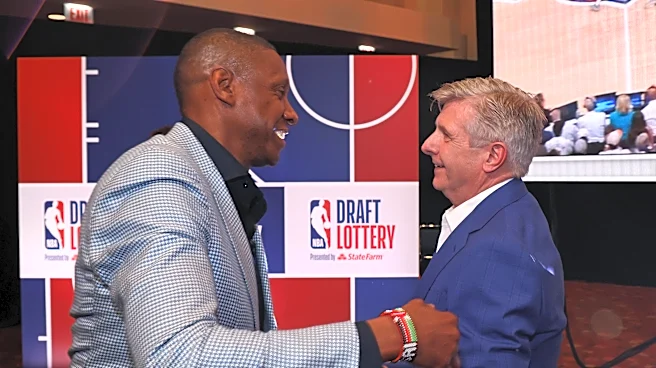
The lottery last May gave the Mavericks two gifts in one ping-pong ball. The first was Cooper Flagg, the generational player around whom everything else now reorients. The second was the chance to bring Ujiri to Dallas. Because Ujiri, when asked Tuesday whether he would have taken this job without Flagg, did not pretend the question was unfair. He listed the Western Conference gauntlet: Wembanyama, Luka, Anthony Edwards, Shai Gilgeous-Alexander, Jokić. He said you cannot beat them without something in your pocket. And in his pocket, he has Cooper Flagg. The job was the job because Flagg was the player.
I have watched the Dallas Mavericks since 1980. The schedule last season felt like a slow-moving funeral procession, even with Cooper Flagg’s Rookie of the Year campaign in progress. Watching this team grind through the back half of a tanking season under the weight of a trade nobody wanted to talk about was harder than I expected.
Tuesday was the first day in a long time I felt actively excited to write about this team again.
Dallas finally and at long last got rid of the schmoozer and replaced him with the scout. The full body scan that this organization has needed for years can finally begin.