




In 2026, the internet is largely built around the “gotcha”.
It’s chess. The goal is to corner the opponent into a logical error. Identify the error, and bask in the incandescent warmth of looking smart on the internet. Life is good.
On the basketball internet, that often means an anonymous Player A vs Player B. You’ve got an agenda. Other people think an NBA player (or prospect) is worse than another. You have a master plan. You’ll post their stats without revealing who they are, only to lift the veil
and reveal that Player A was your guy. Example:
Player A:
12.5 points per game (PPG), 4.5 assists per game (APG), 4.1 rebounds per game (RPG), 2.5 steals per game (SPG), 0.7 blocks per game (BPG), 52.1% three-point percentage (4.4 attempts per game), 11.4 Box Plus/Minus (BPM)
6’3″ 6’3″ wingspan (WS)
Player B:
11.1 PPG, 2.9 APG, 4.7 RPG, 0.8 SPG, 0.5 BPG, 26.7% three-point percentage (2.2 attempts per game), 6.5 BPM
6’6″, 6’9″ WS
Congratulations, you are Rafael Stone. You’re the general manager of the Houston Rockets. You’ve got the third pick in the 2024 NBA Draft, and both of these prospects are on the board.
Who are you taking?
The Rockets made an obvious choice in 2024
It’s Player A, right?
Sure, Player B has six inches of wingspan on Player A. That matters, but it’s inconsequential compared to Player A’s pros.
There are two lenses to consider, as is infamously the case in draft discourse: best player available, and fit.
For some, the idea of drafting for fit is tantamount to a sacrilege. It’s an unspeakable horror. I disagree (in case you’re entirely incapable of discernment), but here’s the rub:
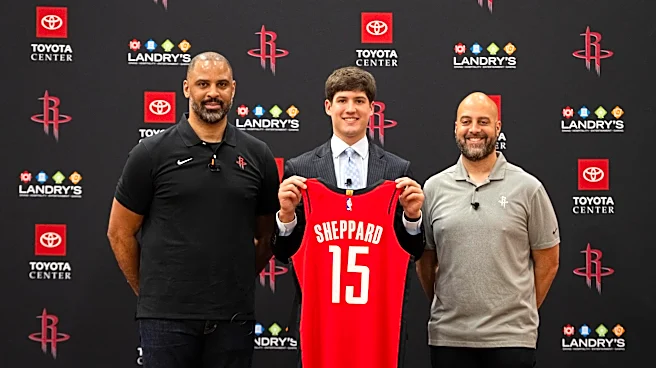
Reed Sheppard was the best player available, according to the stats, by a country mile.
Oops, did I say Reed Sheppard? I meant Player A. OK, fine. The jig is up: This is Reed Sheppard and Stephon Castle.
Sheppard nearly doubled Castle’s BPM. He was a historic three-point shooting prospect. He was practically a historic defensive playmaking prospect, despite obvious flaws on that end.
That leads to the Castle case: Eye test. Sure, you could see that Castle was 6’6″ with long arms and a real capacity to handle the ball. He was an intriguing prospect. That doesn’t outweigh the reality that, by the numbers, Sheppard was a much better player coming out of college.
Suppose you’re an eye test purist. You wouldn’t care if Sheppard was the best college player in basketball history, and Castle was the worst. You’re a savant. You know what your eyes are telling you.
So, despite the chasm separating these two statistically, you’ve got them in comparable tiers. Despite your unfailing eye test, you’ll concede that Sheppard’s significantly stronger statistical profile means something.
If you’ve got two players in a similar tier, you consider fit. That’s where the Rockets practically had to draft Sheppard. They’re built around a non-shooting big and a non-shooting wing/guard hybrid. In what universe were they going to draft another non-shooting wing/guard hybrid with an all-time shooting prospect with vastly superior numbers on the board?
Sheppard still has room to grow with the Rockets
Listen – if you’re reading this, and you know you had Castle ahead of Sheppard, you might be frustrated. Sure, but even if the result is vindicating your priors, that doesn’t mean your process was sound.
Also, you should know that you’ve only won a battle. The war is ongoing.
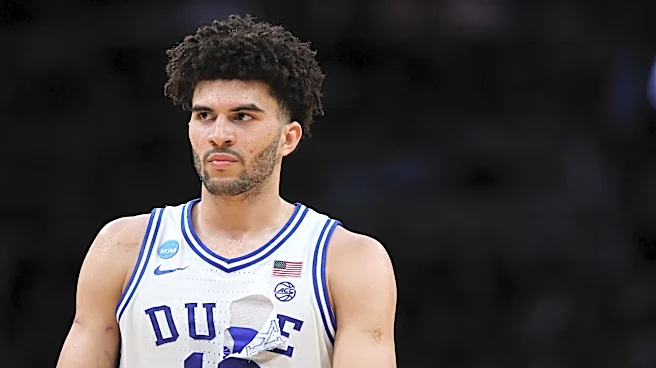
Castle is shooting 36.1% from deep in these playoffs. That’s a higher number than many would have expected from him as a sophomore in his first NBA playoff run. It reaches a threshold where, yes, maybe his 6 extra inches of arm length would be enough to put him decidedly ahead of Sheppard.
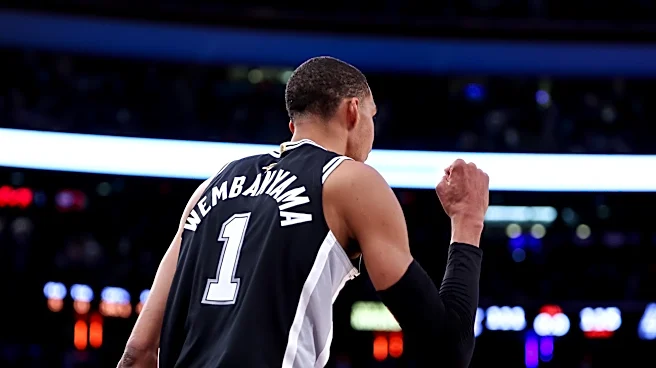
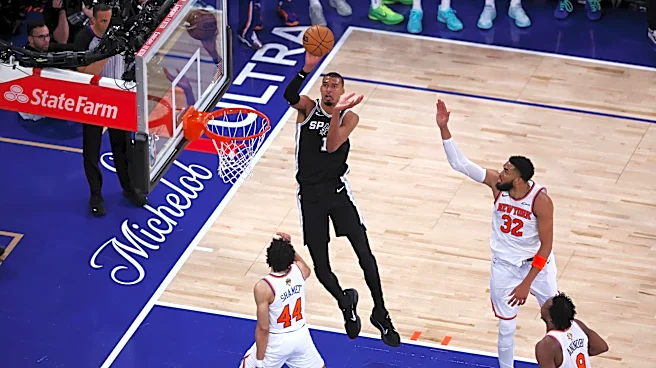
What percentage do we think Sheppard would be shooting from deep if he played alongside Victor Wembanyama? He hit 39.4% of his threes in 2025-26 despite the Rockets’ infamously horrendous spacing.
It should also be noted that in the playoffs, Castle is turning the ball over 3.5 times per game with just 6.2 assists per contest. He’s not exactly establishing himself as a prolific primary ball-handler. Castle thrives off cuts and open threes.
He’s good! He’s on pace to be better than Sheppard. That can’t be denied. Unless you expect clairvoyance from Rafael Stone, that’s not pertinent to the question of who he should have drafted in 2024. Stone took the statistically better, better-fitting player.
Save your “gotcha” for X.