

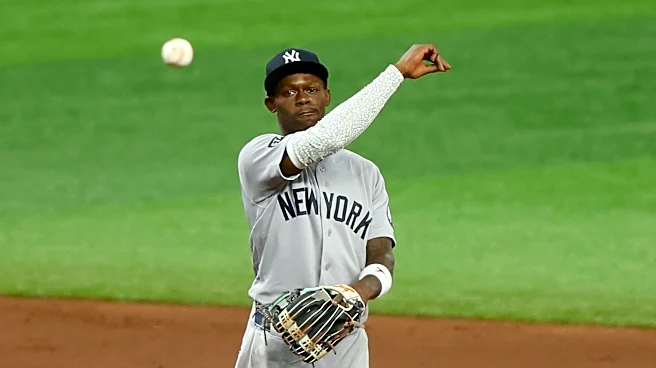
A good chunk of the heroes from Yankees history are one-team players who spent their entire careers in the Bronx. I’m talking Lou Gehrig, Joe DiMaggio, and Mickey Mantle to modern ones like Derek Jeter and Aaron Judge.
However, it’s somewhat well known that the first couple decades in franchise history weren’t very successful. When the Yankees did finally reach the mountain top in 1923, the roster — including Babe Ruth — had a lot of key players who had notable runs elsewhere that had been acquired
through trades.
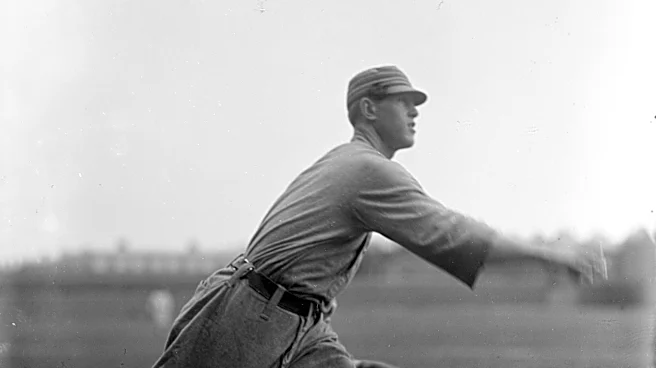
One of that list includes Bullet Joe Bush, who would be celebrating a birthday today.
Leslie Ambrose “Bullet Joe” Bush
Born: November 27, 1892 (Ehime, MN)
Died: November 1, 1974 (Fort Lauderdale, FL)
Yankees Tenure: 1922-24
Bush was born in Minnesota in 1892, one of seven children. He was dubbed “Joe” as a child, although the Bullet part of his nickname wasn’t added until his baseball career, as you might expect. As a child, Bush was said to practice his pitching by throwing “rotten apples through a crescent-shaped hole of a neighboring outhouse.”
He began playing more organized baseball for the Brainerd, MN town team when he was 13 years old. Originally, Bush played third base. However, he was converted to a pitcher after the team captain noticed the speed at which his throws came in at. That’s when he truly began to get noticed, and a Montana-based minor league team eventually signed him when Bush was 18.
In Montana, Bush’s manager was Cliff Blankenship, who had been credited for discovering Hall of Fame pitcher Walter Johnson. Blankenship mentored Bush before recommending him to Philadelphia Athletics’ manager Connie Mack. The A’s legend took his advice, and Bush was soon making his MLB debut as a 19-year old in August 1912.
In 1913, A’s ace Jack Coombs missed most of the season with an illness, which led to Bush getting a more prominent role for the team. His numbers on the whole weren’t spectacular, but he went 15-6 for Philadelphia as they won the AL pennant. In the World Series, Bush was entrusted to start Game 3, and allowed just two runs (one earned) in a complete game victory over the Giants. The series was tied going into Game 3 and Philadelphia rode that win to take the series in five.
After that season, Bush became a fixture in the A’s rotation. It took until 1916 for his rate stats like ERA to become genuinely good, but he did help Philadelphia make it back to the World Series in 1914, although they were swept by the Braves.
However, as Bush began to become an excellent pitcher, the A’s team began to become way less than excellent. With the introduction of the rebel Federal League, Mack began to sell away players from that 1913 World Series-winning team rather than get into bidding wars, including Home Run Baker to the Yankees. It was hardly all his fault, but Bush ended up suffering a league-leading 24 losses in 1916.
Eventually, Bush became part of the A’s sell-off and he was sent to the Red Sox in December 1917. In Boston, Bush immediately turned in one his best seasons to date in 1918, helping the Red Sox to the World Series. Boston ended up beating the Cubs in six games in the series. Bush lost his only start in Game 2, but he came out of the bullpen in Game 4. A still-pitching Babe Ruth was nursing a one-run lead going into the ninth but allowed the first two runners to reach. Bush came in and got a bunt force out at third and a double play to seal a 3-2 win. That gave Boston a crucial 3-1 lead in the series.
An arm injury forced Bush to miss almost all of the 1919 season, but he came back in 1920 armed with a new weapon. During his return from injury, Bush stumbled across the forkball, which he is credited with inventing. While he was only okay in 1920, by 1921 he had mastered the pitch and was back to his best.
However once again, financial concerns soon led to the breakup of a World Series-winning team Bush was on. Red Sox owner Harry Frazee began selling off players from that 1918 team. Many of those deals saw Red Sox stars going to the Yankees, most notably Ruth. Bush eventually became part of that list as he, fellow pitcher Sad Sam Jones, and shortstop Everett Scott were traded to New York in December 1921.

Once again though, Bush joined a team on the brink of success. Thanks in part to Bush’s 26 wins, the Yankees won the AL pennant in 1922, although they fell to the Giants in the World Series. However the following year, Bush pitched a team-high 275.2 innings, helping the team back to the World Series. This time they emerged victorious, besting the Giants in six games. Bush himself got dinged with a loss in Game 1 despite allowing only one run in 6.2 innings out of the bullpen. In Game 5, he again came up big in the Fall Classic, allowing just one run in a complete game, giving the Yankees a 3-2 lead in the series. They clinched the franchise’s first championship the following day.
Bush had a down season in 1924 as the Yankees failed to make it back to the World Series. The team opted to trade him to the St. Louis Browns for fellow pitcher Urban Shocker. Bush became a bit of a journeyman after that, playing for several teams before ending his MLB career back with the A’s in 1928.
After a couple more years playing in the minors, Bush transitioned to coaching and led the Allentown Buffaloes to the Eastern League pennant in 1930. After leaving baseball, Bush held a variety of jobs before retiring to Florida, where he lived until passing away in 1974.
Bullet Joe Bush is one of just two dozen or so players to have won a World Series championship with three different teams. He also came up remarkably big in all of those championships too.
See more of the “Yankees Birthday of the Day” series here.