







What is up, people of the internet? So, you may know that the World Cup is just around the corner and we here at BFW are putting together a series of articles about Germany in the build-up to the tournament itself. Teddy is already working on the top 10 goals that Germany has scored in World Cup history, so I proposed an idea that we should relive the best wins that Die Mannschaft has experienced. Which is why I’m here to introduce my top 10 Germany wins at the World Cup.
For this, I’m going to include
matches that I know and watched in person (live, on the TV, haven’t got the facilities to watch Germany live in the stadium yet) and I will also rank each match based on how special the match is to me.
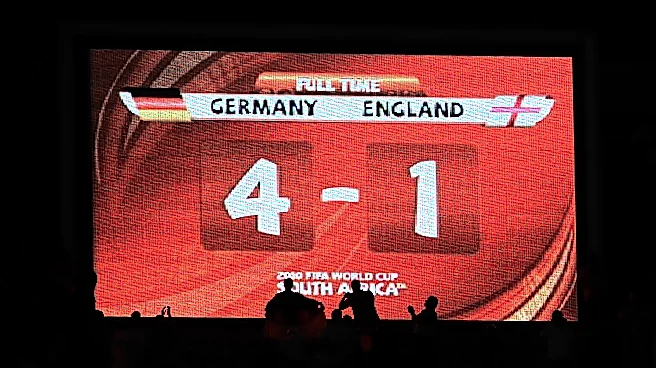
7. Germany 4-1 England, 2010 World Cup Round of 16
Germany has seen many improvements since the late 1990s, one of the biggest being the reunification in 1990 and phenomena like urbanization and modernization producing sweeping changes across the country. Like its national football team, it has seen its ups and downs and the same can be said for its record against historical rivals England.
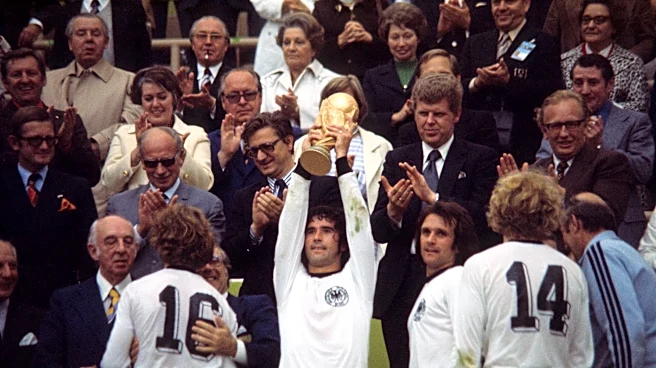
The 1966 World Cup final between what was then West Germany and England was one of the most controversial matches in the minds of the Germans as two supposedly “valid” goals from England and West Ham United striker Geoff Hurst should not have counted: one for not crossing the line and the other because fans had spilled onto the pitch. Although the Germans somewhat reduced the arrears by eliminating England in the next World Cup in 1970, it was still not enough.
At the turn of the millennium in 2000, Germany won the last ever match at the old Wembley Stadium (it was demolished in 2003 and the new one completed by 2007), the same stadium where the Germans knocked England out in the Semifinals of the Euros in 1996. The English sought revenge which came to be the infamous 5-1 defeat in 2001, which was, to put it lightly, a total disaster.

The Germans never forgot 1966 and 2001, and the chance to one-up them again came in the Round of 16 at the 2010 World Cup in South Africa. This German team was comprised of young blood who were already established players at their respective clubs, while the national team was well into a rebuild since 2006.
The match in Bloemfontein began and was scoreless for 20 minutes before Germany get a goal kick. A young Manuel Neuer took a few steps back before booting the ball high up the field and it seemed destined to meet the head of John Terry in the England back line. That’s fine, the Germans can always try to win the ball back and score another way.
Except Terry wasn’t there, and neither was his defensive partner, Matthew Upson; both defenders were at a considerable distance from the loose ball. Miroslav Klose saw an opportunity and ran into the space left by the defenders and used his strength to fend off Upson before poking the ball past an onrushing David James to put Germany 1-0 up.

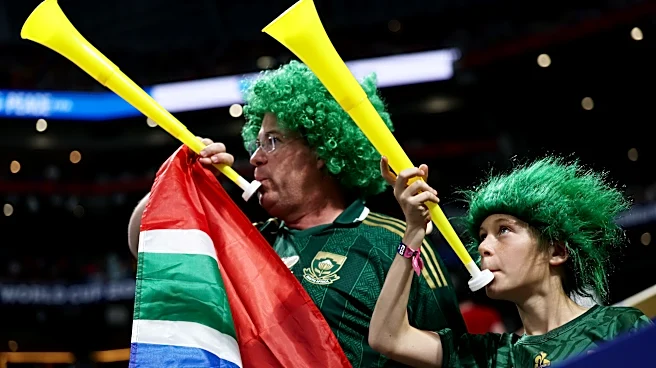
Cheers and Vuvuzelas rang throughout the stadium. A complete lapse in defense allowed Germany to take the lead, and Neuer, a goalkeeper, earned a first World Cup assist (widely accepted as the first of its kind at a World Cup). It was evident that this Germany team with its vigorous youth and experience was the real deal, and the quality of the players was once again on display as a series of one touch passes left the English defence in complete disarray. This allowed newcomer Thomas Müller to exploit the space left by the hapless defenders and cross it to Lukas Podolski to control it and shoot hard and low between James’s legs and into the net to put Germany 2-0 up.
England were unravelling in front of millions of eyes, so they knew it was imperative that they get back in the game. They did get one back off a short corner kick, wherein Steven Gerrard crossed it into the German box and Upson (somewhat) redeemed himself after scoring a header off a rare Neuer mistake. Alright, this fired up the England squad who pushed for an equalizer which leads to one of the most controversial moments in World Cup history.
Bastian Schweinsteiger missed an easy pass which found its way to James Milner, who then passed it to Jermaine Defoe who ran into a swath of German players. The ensuing scramble meant the ball bounced back into play and into the feet of Frank Lampard who tried to lob it over Neuer and into the goal. The ball did end up in the goal but instead of celebrating, the English were left dumbfounded as the goal was somehow not given. Judging by Lampard’s reaction to the goal (or non-goal), they had witnessed something extraordinary.

They should be level at 2-2; a perfectly fine goal was not awarded to them. Lampard tried again from a free-kick in the second half, but his effort arrowed off the crossbar. Again, Lampard tried another free-kick in the second half, but it bounced off the German wall and into the feet of Gareth Barry who could not get the ball through. Instead, it was Germany who went on the counterattack where Müller passed the ball along to Schweinsteiger on the left. Basti then drifted inside and passed it out wide to Müller, in acres of space, who shot at the near post where James got an elbow to it but couldn’t stop it from going in.
Germany was 3-1 up, and England simply couldn’t keep up. It was the same for the fourth goal, which came off a Glen Johnson throw in: Terry found his way high up the pitch—perhaps England threw caution to the wind at this point—and laid the ball down for Joe Cole who tried a cross. It didn’t work, with his tame effort sparking yet another counterattack from the Germans. A long pass found a breaking Mesut Özil, who beat Barry for pace and ran all the way to the England box and, despite an attempt from Ashley Cole to diffuse the situation, passed it to a wide open Müller who scored his second of the night and Germany’s fourth.

England were stunned by the brilliance of the Germans who sent them packing after their elimination was confirmed. The talk of the town was Germany being one of the favorites to win the World Cup, but much of the discourse circled back to Lampard’s “goal”. In a retrospective interview, Neuer himself confirmed that the ball bounce off the crossbar and did go down over the line, but he acted in such a way that he tricked the referee and linesmen into thinking it wasn’t a goal. This incident, coupled with several incidents at club level in the previous decade, paved the way for goal-line technology which would be followed by video assistant referees (or VAR).
At the end of the day, Germany announced themselves to the world as a side that would take some beating.
Join the conversation!
Sign up for a user account and get:
- New, improved notifications system!
- Fewer ads
- Create community posts
- Comment on articles, community posts
- Rec comments, community posts