
Playing on the road in college football is challenging enough.
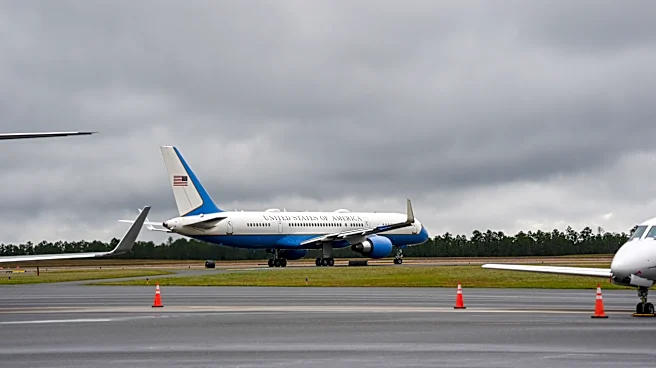
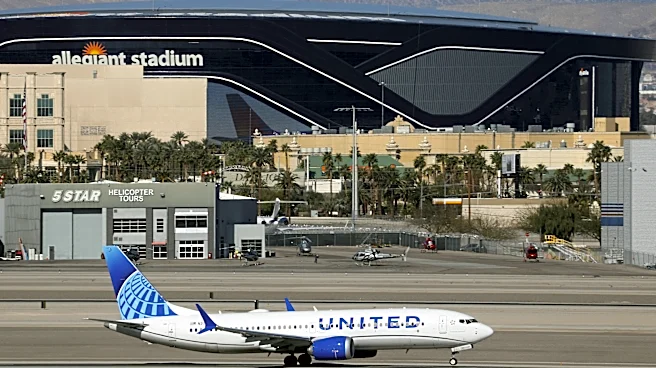
But for several programs in Week 11 of the 2026 season, getting to the stadium became a battle of its own. On Friday, Nov. 13, the Federal Aviation Administration (FAA) issued a nationwide ground stop, disrupting air travel across the country. The stoppage was just the third nationwide ground stop of the 21st century, following the Sept. 11, 2001 attacks and a Jan. 11, 2023 system outage.
The Tulane Green Wave were preparing to fly to Houston
for their matchup against Rice when their travel plans came to an abrupt halt. With no clear timeline when flights would resume, Tulane pivoted to an alternative that wasn’t a feasible option for many other programs affected by the shutdown. The Green Wave decided to take a nearly six-hour bus ride to Houston.
“I want to give a big shoutout to (Chief of Staff) Chris Hatcher and (Director of Football Operations) Rory Thornton,” Tulane head coach Will Hall said. “When we got stopped right there on the tarmac, the efficiency with which they were able to turn this thing around — also credit to our administration, David Harris our athletic director, Patrick Norton, Justin Schemmel, and everybody involved right there to make sure this team was taken care of the best it could.”
Tulane’s busses stopped in Lake Charles for a driver change before continuing west on the six-hour trek. The Green Wave ultimately arrived at its Houston hotel past 2 a.m. on Saturday. During the early stages of the trip, Rice and the American Conference agreed to delay the kickoff time two-and-a-half hours, pushing it from 1 p.m. CT to 3:30 p.m. CT.
“We ended up bussing over,” Hall said. “We had our normal hotel meetings at the facility. We ate at the facility, we bussed over, we got here about 2:30 in the morning. And thank the league and thank Rice for backing up the kick time a little bit to allow our guys to sleep a little longer. It wasn’t an easy turn of events, but it’s what we want. We know that hard times develop hard men and tough times develop tough men. That’s what we tell our young men, and I thought they handled it elitely. They didn’t in any way use it as an excuse. We knew we had to win this game together. We knew it was gonna take all three phases, and we did it.”
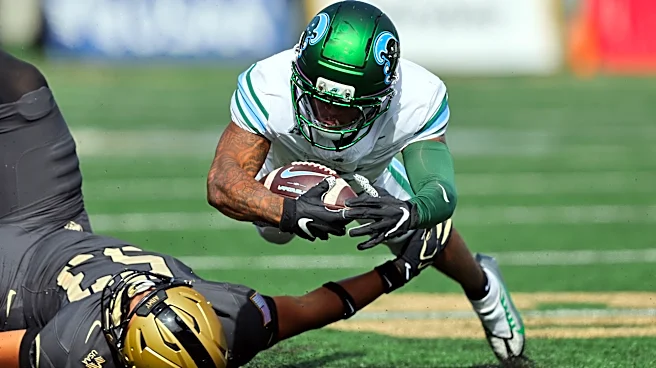
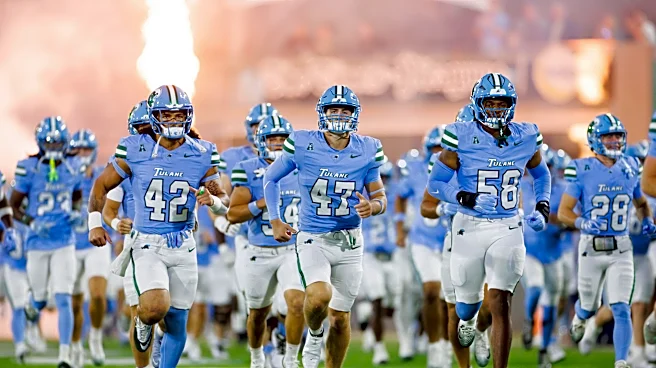
Roughly 13 hours after arriving in Houston, Tulane kicked off at First Community Stadium. The Green Wave withstood a sluggish start and turned a 17-6 halftime deficit into a 20-17 victory. A second half shutout from the defense and a late offensive surge allowed the team to secure its second consecutive road win over Hall after a night of complicated travel.
“On the five-hour drive, it was good bonding,” inside linebacker Makai Williams said. “A lot of us slept. I know that we got to the hotel around 2 in the morning. But this group of guys is resilient. It doesn’t matter if we got to the hotel at 5 in the morning or 6 in the morning. It doesn’t matter if we had to play at 1 p.m. instead of 3. The group of guys that we have are so positive and so resilient, it doesn’t really matter whatever the case is. We just continue to work.”

However, the travel situation was not the only unusual adversity Tulane had to overcome Saturday. The Green Wave also had to find their footing in a more literal sense.
Since 2014, First Community Stadium has used a AstroTurf GameDay Grass 3D60H as its playing surface. The 3D60H synthetic turf was first introduced to the college football world in 2011 at Kansas State, although the Wildcats had since updated their surface in 2018. Given the uniq playing surface, Tulane arrived with a special adjustment of its own — turf shoes the program had invested in earlier this fall.
“Credit to Cody Heidbreder, our equipment guy,” Hall said. “He was on top of it about five weeks ago. We had turf shoes in. We had been wearing those on Thursdays in walkthroughs to break them in. We gave the young men the opportunity to wear turf shoes or cleats in pregame. Most of them wore the turf shoes. It is a different type of surface that you don’t see hardly anymore, but I thought our young men played exceptional on it. Didn’t see a lot of slipping and falling.”
Tulane extended its pregame warmup time so the players could get comfortable in the shoes and acclimate to the surface. The roster was already aware of this potential adjustment, as the coaching staff emphasized it throughout the week and players had already practiced in their turf shoes.
“I think almost everybody wore the shoes. I would say at least 95 percent,” wide receiver Bredell Richardson said. “Coach Hall made a big emphasis this week to wear the shoes during practice. We wore them last week as well too. Also, getting out here early. We got here earlier than normal and warmed up longer than normal to be able to adjust.”
Still, not everyone abandoned their usual footwear by kickoff. Some players started the game donning their traditional cleats before experiencing in-game action made them switch to the turf shoes.
“I came out here with my cleats to begin with, and I ended up in my shoes,” Richardson said. “We had a lot of players who, on the first drive, started in their cleats and switched to their shoes.”
Tulane’s players noticed tangible differences between the regular cleats and turf shoes — which have shorter rubbed nubs opposed to longer studs — highlighting why the turf shoes provided them an edge against Rice.
“They’re shorter. The studs on the bottoms of the cleats, they’re a lot shorter,” Williams said of the turf shoes. “It helps when you don’t have as many pebbles, or if the turf is short, you can stick in there. Some guys that would wear the longer cleats — and every cleat is different — but the longer cleats, you’re kind of sticking up almost another inch off the ground. So if you try to play or cut, that can make you slip.”
Richardson referenced the additional traction as the greatest advantage of the turf shoes, particularly when making sharp cuts.
“It’s just the grip,” Richardson said. “If you’ve ever been in an indoor facility with turf and it doesn’t have pebbles — these cleats just stick into the ground more. Normal cleats, we were just sliding too much. I couldn’t get left or right.”
Between an unexpected overnight bus ride and an unfamiliar playing surface, Tulane faced a series of obstacles that could have disrupted its preparation. Instead, the Green Wave adjusted on the fly several times, made the necessary changes, and left Houston with a hard-fought comeback victory.
The reward waiting for them at the end? An airplane, expediting the triumphant trip back to New Orleans.