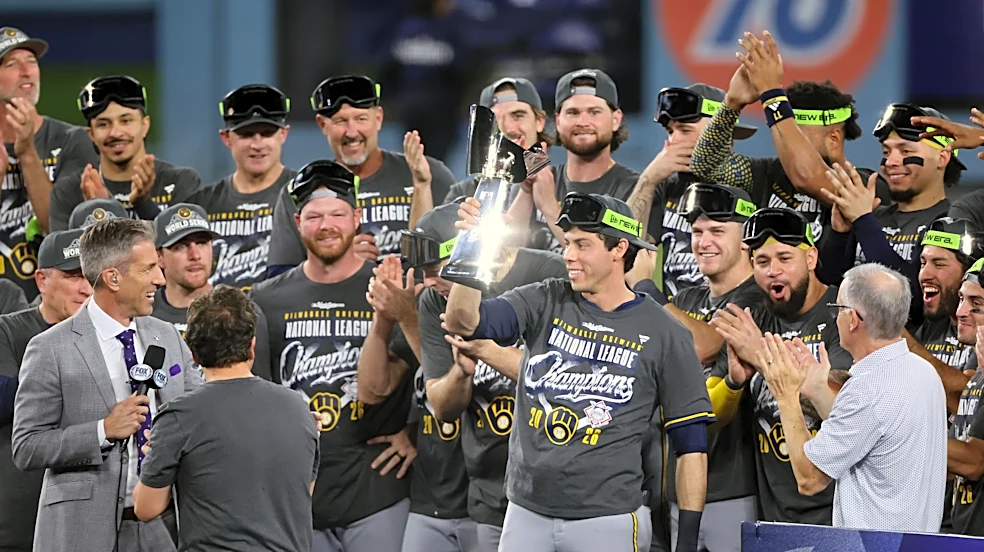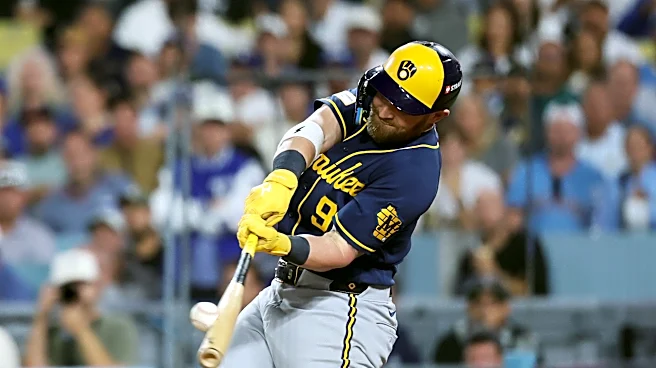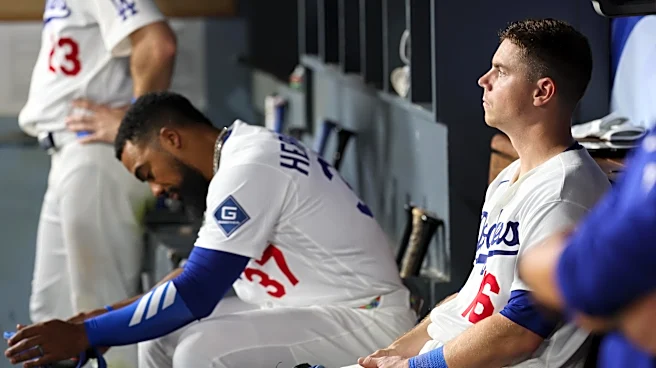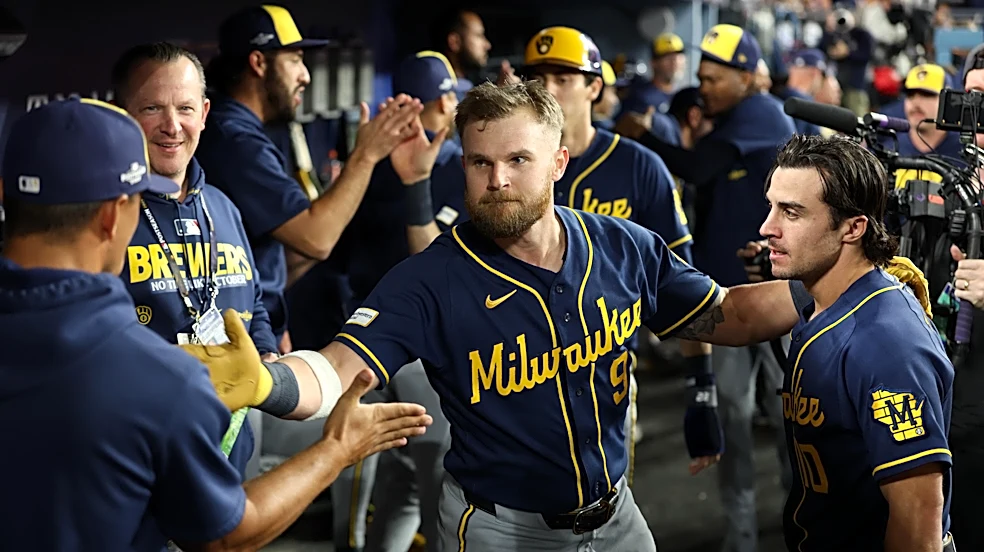

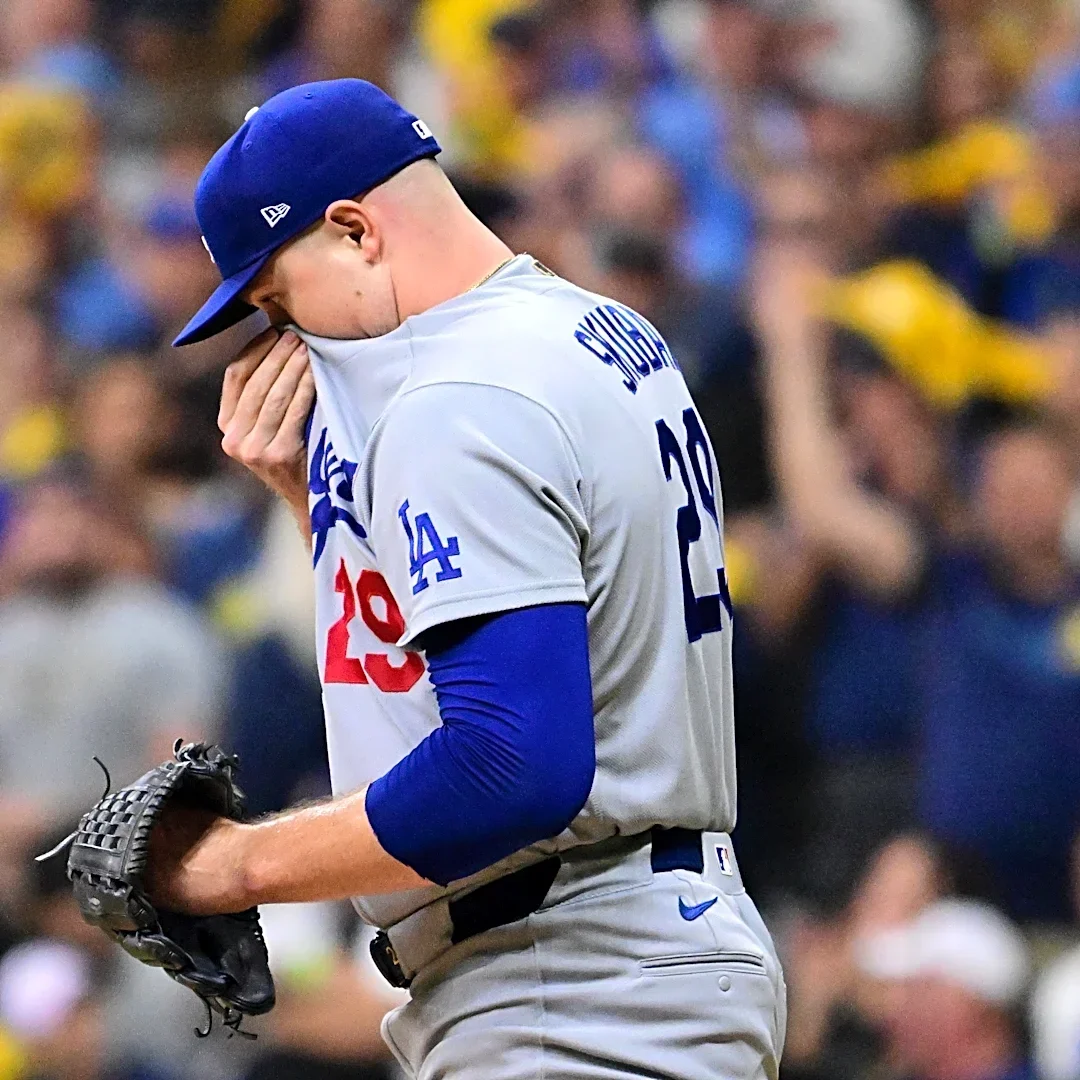

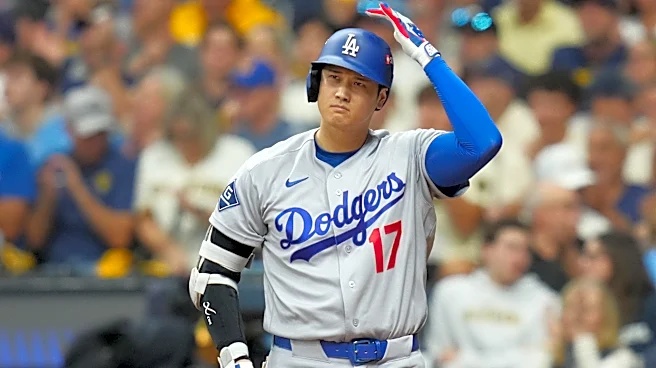

Last night the Brewers swept the Dodgers in Los Angeles. It was the perfect answer to the Brewers’ 2025 playoff exit, when they were swept by the Dodgers. This year, everything came up Brewers. It didn’t matter that likely Cy Young Award winner Jacob Misiorowski only went 4.1 innings in his start, because Aaron Ashby threw 6.2 scoreless innings of high leverage relief across three games. Even when they were down four runs in Game 4, you could almost feel that they were going to come back. Of course
NLCS MVP Jake Bauers got the comeback started [VIDEO].
But there’s another battle looming in baseball, one with even higher stakes than which teams will play in the 2026 World Series: this year’s renegotiation of baseball’s Collective Bargaining Agreement. The terms of that fight have been coming into focus for over a year now, with MLB commissioner Rob Manfred and company laying the groundwork to make their case for a salary cap with fan focus groups, citing survey results showing fans want a cap, trips around the league to try and break union solidarity and a relentless barrage of content on the disparities between the big and small market teams.
The Dodgers All-Star team that costs $339 billion in 2026 (with more than a billion dollars in contract deferrals) being summarily swept out of the playoffs by MLB’s smallest market Milwaukee Brewers was clearly not part of the plan.
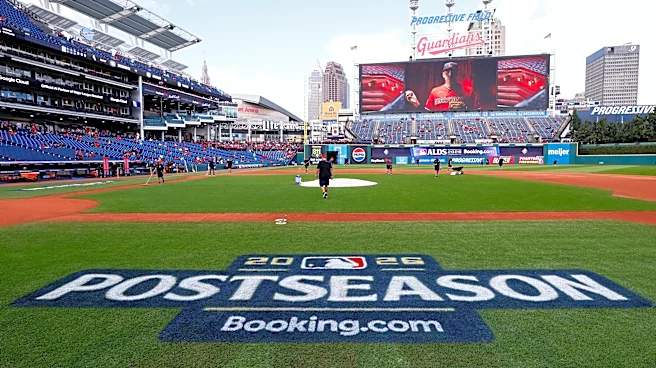
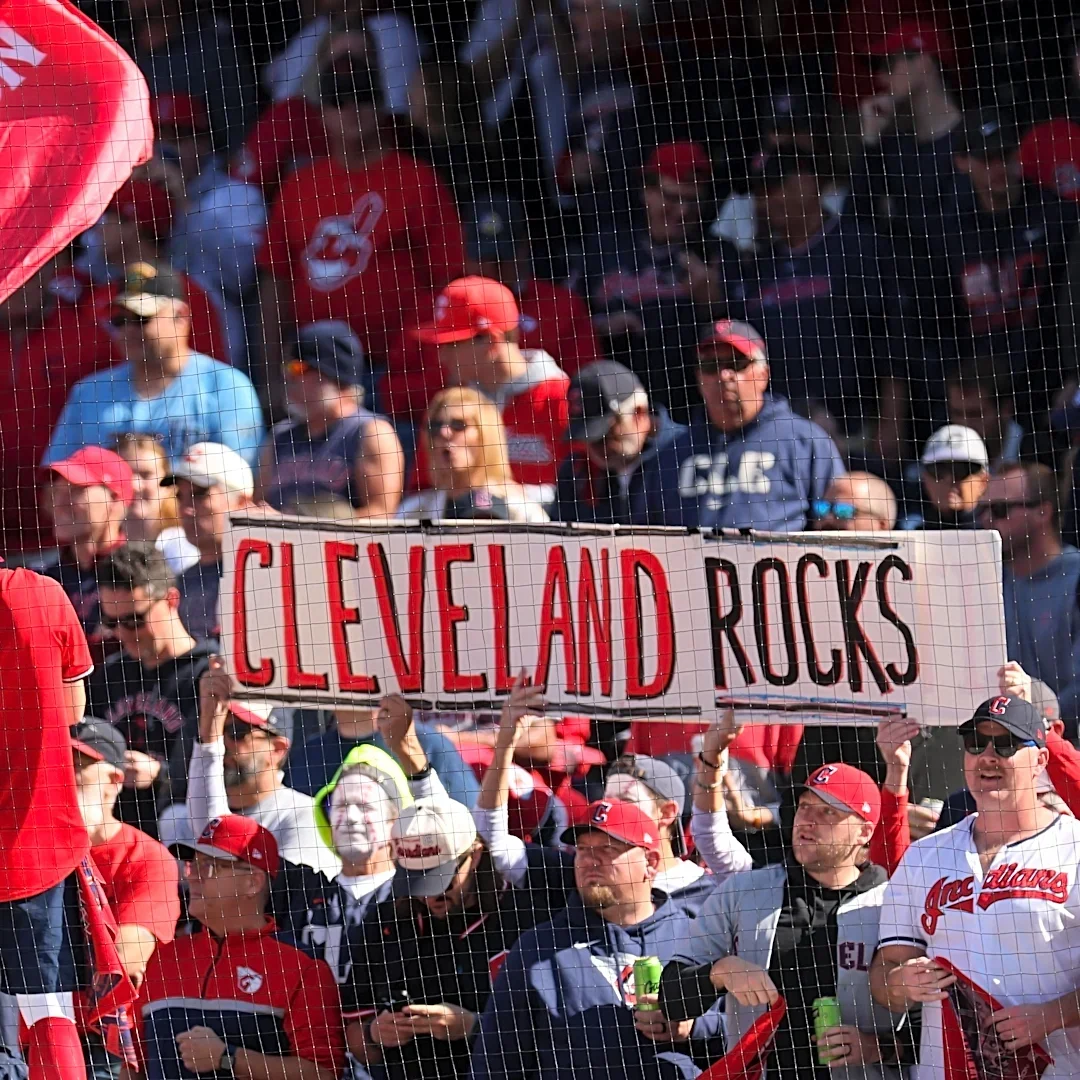
Meanwhile, the American League Championship Series is a battle royale between the teamwith the smallest payroll in MLB, the Guardians, and the team with the 28th smallest payroll in the league, the Rays. That’s right, one of the analytics darlings who don’t spend enough and are supposedly hamstrung by the massive salary differences in the league that make competitive balance impossible is guaranteed to win the 2026 World Series. It undermines the very core of the argument MLB and billionaire owners have been making for more than a year.
The question is, does it matter?
It certainly weakens the fan rationale for a salary cap. Manfred has been front and center for the better part of a year building his case for a cap around fans in Cleveland, Tampa Bay, and Milwaukee who deserve a shot at a championship. Those poor fans in Milwaukee who might have seen their team extend the Freddy Peraltas of the world rather than trade them if only baseball’s economic system mirrored the other big sports in America. Take for example, Manfred’s remarks during a media availability at the All Star Game:
MLB commissioner Rob Manfred says the gap between the Los Angeles Dodgers and the lowest-spending clubs in baseball is the reason he’s pushing for a salary cap.
“The gap is $441 million,” Manfred said, per ESPN’s Jesse Rogers. “It defies human experience to ask a fan to think that the bottom end of that gap has the same opportunity to win as the top end.”
Manfred added, per USA Today’s Bob Nightengale: “I have an ownership group that is more united than any group in my entire time in baseball.”
However, the degree to which fan sentiment has always just been a useful canard for billionaires who are really looking for labor cost certainty in their investment cannot be overstated. Evan Drellich made this point emphatically when he reported on the real motivations behind the league’s salary cap push in May for The Athletic:
Why, at a time when MLB has otherwise built positive momentum, would the league pursue such an acrimonious change, and risk alienating fans with a work stoppage? Many issues are at play, but none supersede the long game owners are playing. Their mission is to maximize the worth of their teams.
Baseball has always been a business, yes — but not like this. Private equity has flowed into the sport for the better part of a decade, and someday, those investors will want a return. And even though every team continues to grow in value, many owners believe that their clubs should command still-higher prices.
The average baseball team is worth $2.9 billion, more than double MLB’s $1.3 billion average from a decade ago, per Forbes’ annual estimates. But some franchises are appreciating at a much slower rate than others. When they put their teams up for sale in recent years, the owners of the Los Angeles Angels, Washington Nationals and Minnesota Twins were disappointed by the bids that came in.
Admittedly, that piece of reporting predates Angels owner Arte Moreno selling LA’s second most valuable MLB franchise for $4 billion. It’s quite the return on a $182.5 million purchase in 2003. If only all of our retirement accounts could produce a profit of 22 times the original investment. To be clear, Moreno was one of the four holdouts who voted against ratifying the 2022 CBA, citing, amongst other things, concerns about the luxury tax levels:
Four Major League Baseball owners — Bob Castellini of the Reds, Chris Ilitch of the Tigers, Ken Kendrick of the Diamondbacks and Arte Moreno of the Angels — objected to raising the competitive balance tax to the levels the league ultimately proposed most recently, three people briefed on an owner-wide call held this week told The Athletic. MLB moved forward with the proposal anyway, moving its offer on the first threshold to $220 million — up $10 million from where it was in 2021, and $6 million from its previous offer, but still far below the players’ ask of $238 million.
The luxury tax’s rate of growth has not kept pace with the overall revenues growth in the sport, making it one of the main concerns for the players.
The resistance of the four owners reveals at least some of the hard-liners who are likely influencing perhaps the single-most contentious issue in negotiations that have already cost the sport games. One person briefed on the call noted that White Sox owner Jerry Reinsdorf, a hawk in the 1994-95 dispute, was not among those to stand in the way. Not all small-market owners — owners who theoretically would be most disadvantaged by an increase in the luxury tax, which curtails high-end spending — were opposed to the raise, either. Rather, at least some of the four owners took stances based on their personal feelings toward costs and baseball’s economic system, sources said.
Apparently, an original investment appreciating from $182.5 million to $4 billion in 23 years just isn’t enough for the wealthiest people among us. They want more, they always want more. You don’t become a billionaire who owns one of only 30 MLB franchises without demanding even more for yourself, your investments and your interests.
And frankly, with that type of money, billionaires have a tendency to build their own reality. Which gets to the core of the real reason it probably doesn’t matter that the last three teams standing eviscerates the case MLB and the owners have made for the better part of a year for a salary cap. They’ll just abandon that specious argument and pivot to some other justification for a salary cap. Afterall, it’s all about maximizing profits for their investors at the end of the day.
Meanwhile, the Brewers might have to face their former ace Freddy Peralta if Tampa Bay beats Cleveland. It’s quite the turn of events after the team with the highest payroll in baseball, the New York Mets, couldn’t win enough to justify holding onto the flamethrower at the trade deadline. Yet another player who keeps thriving in smaller markets with robust analytics departments staffed by humans, jobs that apparently aren’t quite ready to be turned over to yet another billionaire dream of reducing labor costs, AI.
Amidst all of the gamesmanship around the future of the sport, I can’t help but return to this year’s NLCS MVP, Jake Bauers. While the titans of industry argue about who should reap the riches of America’s multi-billion national pastime that saw franchise valuations rise more than 50 percent to $87 billion from 2021 to 2026, his heroics at the plate weren’t the only reason Bauers was front and center throughout the Brewers v. Dodgers series. MLB on Fox just couldn’t resist the sharing the anecdote that Bauers thought about retiring, but then his wife got pregnant, and, well, like a lot of us, he needed his job to make sure he had healthcare:
A small market World Series is probably not going to save us from an offseason of billionaires risking chopping off the head of their golden gooses in the interest of making even more money. But seeing our own financial precarity, and the types of decisions we all make about jobs and healthcare, in the face of the NLCS MVP might be enough to move more fans into the Major League Baseball Player’s Association side of this fight. Who among us hasn’t stayed at a job longer than we probably should have to make sure we have healthcare?