

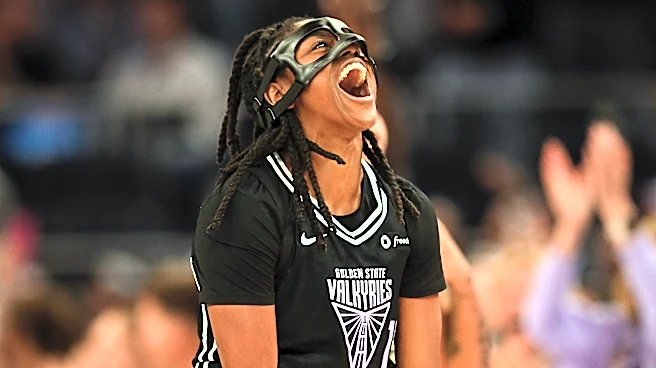
Before the 2026 WNBA season, I expressed a good deal of optimism about the Seattle Storm, arguing that they have the brightest future in the league.
Although I still endorse that assessment, how the season unfolded in Seattle sparked some skepticism.
So, let’s look at the good and not-so-good from what was understood to be a rebuilding season in Seattle.
In the comments, be sure to share your thoughts. How did the 2026 season influence your opinion of the Storm’s future? Are you more encouraged? Did
you find reasons for discouragement? And, what should be the next steps as the organization aims for an eventual postseason return?
The Storm’s young core proved their star potential

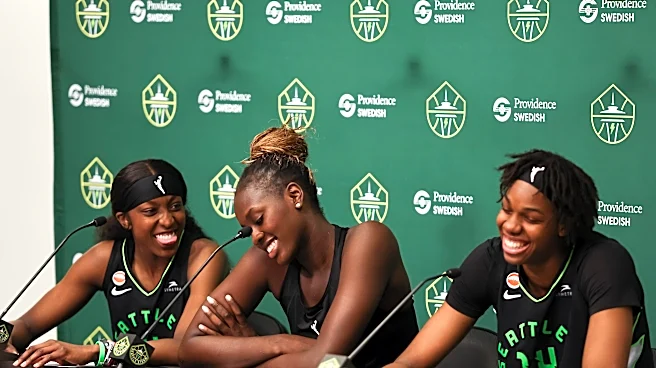
For the Storm, it’s all about the young core of Dominique Malonga, Flau’jae Johnson and Awa Fam.
Starting with Malonga, the sophomore took the leap expected, earning first-time All-Star honors as she stepped into a starting, primary option role. After averaging less than 15 minutes per game as a rookie, she approached 27 minutes per night, raising her scoring average from 7.7 to 17.1 points per game, with her rebounds jumping from 4.6 to 8.8 per game. She also better deployed her physical advantages on the defensive end, with a 2.4 stocks per game.
Even more encouraging than those overall averages were performances that previewed Malonga’s superstar ceiling.
She put up a pair of 30-plus point double-doubles, with 37 points and 12 rebounds against the Dallas Wings and 31 points and 10 rebounds against the New York Liberty. She also posted a 28-point and 14-rebound double-double against the Indiana Fever. That’s three monster performances against three playoff teams.
Flau’jae Johnson, likewise, showed off her star upside, with six games scoring 25 or more points.
Her biggest night came against the Las Vegas Aces, when she not only scored a season-high 29 points, but added six boards, six rebounds and four steals. She also gave the Aces 25 points on another occasion, while she treated the Liberty to 28-point and 25-point efforts. Flau’jae also dropped 26 points on the Minnesota Lynx, while she delivered a 24-point and 11-rebound double-double against the Dream.
As with Dom, its’ a positive sign that these big games came against some of the league’s best teams.
For the season, Johnson, an All-Rookie selection, averaged almost 15 points per game, along with nearly five rebounds, three assists and 1.5 steals.
Although Fam didn’t join Johnson on the All-Rookie squad, she had the kind of season that, in most years, would have made her a shoo-in.
Just like her teammates, Fam turned in nights that substantiated her star intrigue. Against the Wings, she scored a season-high 22 points, in addition to a 21-point game against the Dream and a 20-point and nine-rebound effort against the Portland Fire. In all of those games, Fam made at least four 3-pointers on 50 percent shooting or better from downtown.
The outside stroke, a question for Fam entering the WNBA, might be the most significant takeaway from her rookie season. She averaged 4.3 attempts per game and hit 35.2 percent of them; if that’s her starting point as a 3-point shooter, with her volume and efficiency increasing with experience, Fam’s offensive upside, already high thanks to her shorter-range touch and face-up ability, ascends to a higher level.
Overall, she averaged 10.3 points per game, along with nearly six rebounds and two assists.
The talent, in short, is there for Seattle trio. Back-to-back late June wins over the Liberty and Dream, when the young core were the drivers of two dominant victories, offered the most inspiring evidence what could become a regular occurrence in Seattle.
The Storm’s young core also exposed their flaws

That future, however, still might be awhile away.
Those two uplifting wins were balanced by a lot of losses.
Yes, Seattle entered the season expecting losses. But, a league-worst 8-36 mark? And two losing streaks that reach double digits? Eight losses by 20 or more points? The worst winning percentage in franchise history?
The Storm have talent, but translating that talent into consistent winning could prove difficult.
And just as their young stars’ were responsible for the season’s high points, they also were factors in Seattle’s failings.
Johnson just turned 23 years old, while Malonga and Fam are both 20 years old; the shortcomings are understandable. Letting them play through rough patches also is preferable to benching them in favor of vets whose futures likely would be elsewhere. Still, the depths Seattle sunk to is enough to raise some low-volume alarms.
For Malonga, it’s assumed that the consistency will come, but, for now, the high highs are balanced by still too frequent lows. This, in large part, is an efficiency issue, as her overall percentages are not great; beyond the immediate basket, her touch and shot is still shaky. It’s also fair to question Malonga’s mentality. In WNBA, Unrivaled and French national team settings, Dom’s flashes of dominance are followed by games where she fades. Malonga’s appears to be on a glide trajectory to stardom. Can she instead decide to go grab it?
Johnson, in contrast, embraced being empowered as a star scorer as a rookie. Her opportunity came with inefficiencies that outpaced Malonga’s.
Flau’jae barely shot 40 percent from the field, while converting less than 30 percent from 3. Encouragingly, her struggles didn’t deter her aggressiveness. But, it’s worth questioning if the optimized version of Johnson is a player who should command star scorer usage on a game-in-and-game-out basis. While possessing the potential for star-making nights, Johnson’s offensive stylings seem better suited as a secondary option, where she can use her quickness and craftiness to attack titled defenses instead of being the one responsible for getting the defense in rotation.
For Fam, the inconsistencies of youth and inexperience also apply. As she was extended less opportunity than her teammates, it’s hard to express too many concerns, with the main complaint being that Fam was not more frequently empowered to explore the extents of her game.
For the season Malonga, Johnson and Fam logged 481 minutes together, registering an offensive rating of 108.6 and a defensive rating of 109.9, which metes out to a -1.2 net rating. Considering their overall youth, that’s not bad, although it would be nice if the defensive mark was stronger, as the three have the tools required to be more impactful on that end.
It’s also fair to attribute the Storm’s too often uncompetitive outings to roster around the trio. An experienced point guard (hey, Sue?) and 3-and-D players, in particular, would have made the lives of Malonga, Johnson and Fam a lot easier.
Establishing an infrastructure in which the three can together succeed has to be the priority for the Storm this offseason. Giving the young core—which might expand to four with another incoming lottery pick—an environment where they’re better situated for their strengths to shine will permit a clearer evaluation of the state of Seattle’s rebuild.
If that happens, I would expect my all my optimism about the Storm to be back in full force by this time next year.