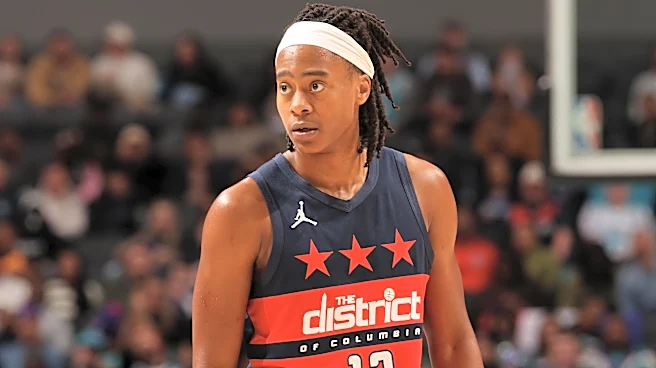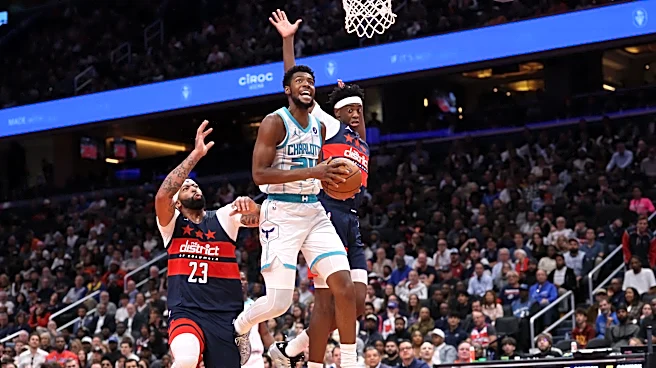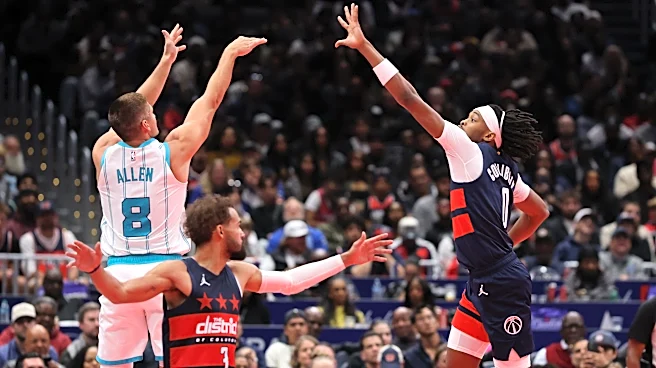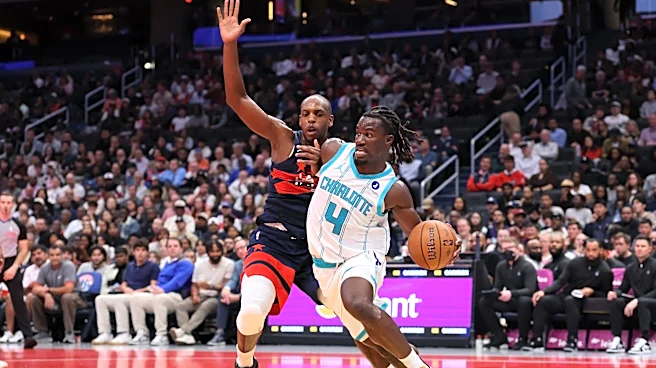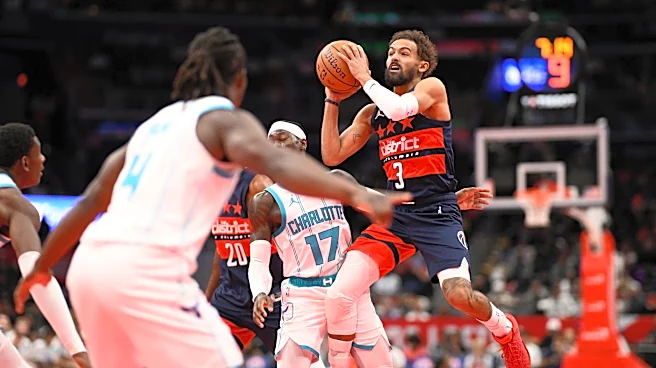


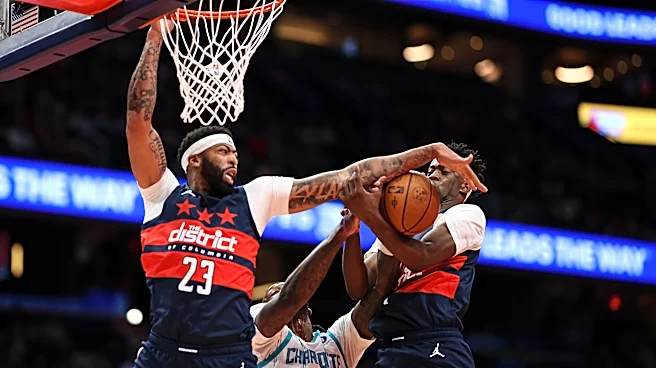

With Trae Young in the fold, the Wizards have something they’ve long lacked: high end, whip-smart passing. As Kevin noted the other day, if Young sees a teammate open, he will hit him in the hands.
When the Wizards run pick and roll, other teams are well aware of this. They will switch hard or trap the ball, stopping Young from ranging downhill. They know that with space to work inside the arc, Young will use eye fakes and head fakes to break open a gap.
Defenses are betting that it’s better for them
if someone else is in that decision-making position, even if Young springs them into an advantage.
So far this season, it’s been Alex Sarr most often in that spot. Including in the core double-big alignment, Sarr is a frequent screener for Young. Certainly, this is how it should be; Sarr is a skilled multi-level scorer with soft hands. One of the growing pains of the early season, though, comes down to Sarr’s passing and decision-making on these pick and rolls.
Sarr is, by nature, a short-roll center. He tends to set a screen and either pop for a three or matriculate toward the elbow or floater range, a little like Joel Embiid (though of course, Sarr is also capable of rolling hard for lobs). When defenses send two to the ball, Young will deliver an on-time pocket pass into that area every time. And even when they switch, Young will still often take advantage of an in-between moment and find Sarr as he battles a smaller defender.
The Wiz’s offensive success depends in part on what happens in these situations. Sarr is most comfortable jab-stepping into a short midrange. He’s also honing an expansive set of pivots and post moves. But when defenses swarm, which happens often in the double-big alignment, Sarr will have to gradually grow more comfortable making the right read.
Sometimes, the right read is aggression. Sarr will have plenty of chances to bully smaller defenders and force his way near the rim. Part of making that happen comes down to screening angles and timing. With a little creativity, Sarr can pin Young’s defender or the third guy rotating over. The Wizards use a set of precursor actions designed to distract the defense and get Sarr screening on the move, with Young dribbling downhill on his right hand.
Even when another defender comes over, though, Sarr’s first instinct is to dip into his bag of tricks. To get the ball movement machine moving, the Wizards need him to mix in quicker decisions and kickouts to shooters.
One of those reads will be the lob or soft dish under the hoop. That’s a spot where Bilal Coulibaly in particular likes to slink around as a lob threat, capitalizing on defenses that range away from him. The second-side kickouts are also how Kyshawn George and Tre Johnson can attack scrambled defenses.
With the way teams are playing Young, Sarr and Davis taking full advantage of these situations is a big swing factor. Young has always been able to hit difficult skip passes to shooters and lobs to the dunker spot. But against hard traps and switches, Young has to dust the defense before those passes come available. The quick dish to the big is the more direct route to smooth ball movement and advantage basketball.
The Wizards’ collective passing and hive-mind creation remains an open question for their future. The Sarr-AD combo has struggled so far, posting a minus-4 net rating in 113 minutes, though that’s obviously a small sample. To get it humming, they’ll need slicker movement and cleaner passing.