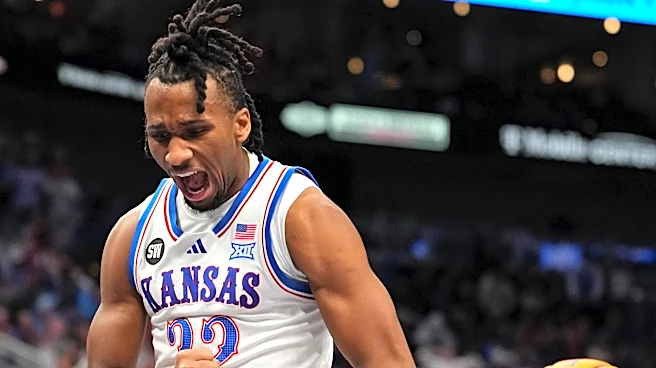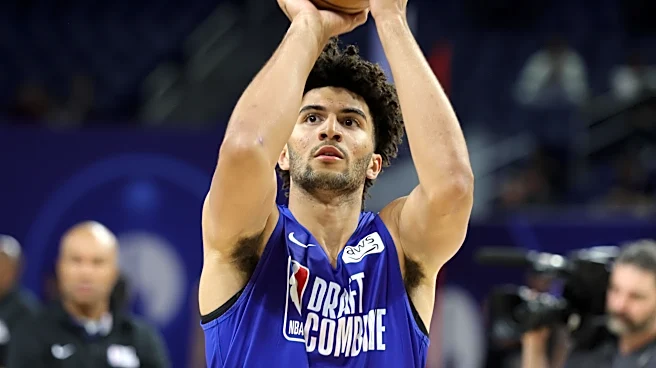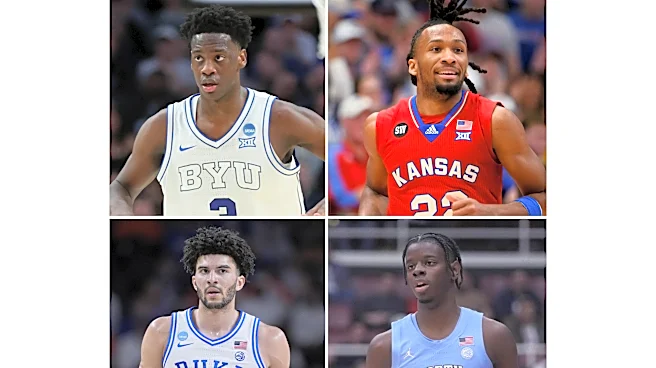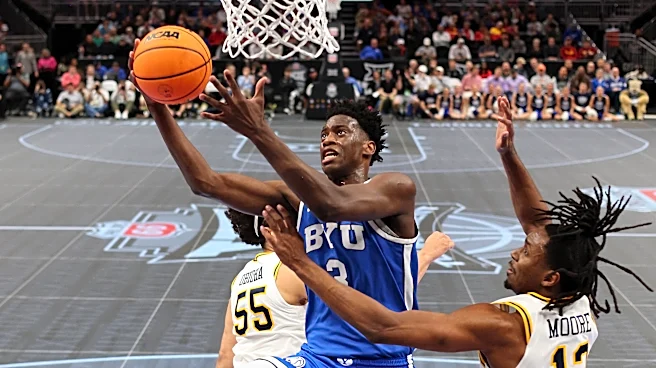








When the Washington Wizards go on the clock at the NBA Draft on June 23, they’ll have a wealth of options — each of whom could be The Franchise Player that leads them for the next decade or so. In the first two parts of this ongoing series, we’ve looked at AJ Dybantsa and Cam Boozer. Today: Kansas guard Darryn Peterson.
Let’s start with the weird — Peterson missing a dozen games and totaling under 700 minutes for his freshman season. He missed games and pulled himself others due to severe and debilitating
cramping, and on at least one occasion needed a trip to the emergency room and hours of intravenous fluids. Doctors thought he was dehydrated.

The absences and exits were somewhat mysterious. Head coach Bill Self couldn’t provide a full explanation due to privacy laws and regulations, and Peterson apparently didn’t know the cause — in part because apparently the Kansas medical team wasn’t able to discern the cause.
After the season, Peterson learned that the cause was high doses of creatine he started taking at Kansas. He told ESPN’s Ramona Shelbourne that post-season blood tests found a high natural baseline for creatine. The supplements pushed him to an unsafe level.
The emergency room episode was downright harrowing — fully body cramping so unrelenting that the medical staff at Kansas couldn’t find a vein to start IV treatment. That’s traumatic, and it makes sense that it affected him mentally throughout the season and led to things like missed games and early exits. This was an 18-year-old kid (he turned 19 on Jan. 17) who was trying to figure out how to navigate an uncertain situation, and his every move had major ramifications to the commitments he’d made to Self and Kansas and his professional future.
The best information available say the cramping episodes appear to be resolved. Yes, there are conspiracy theorists saying the story Peterson tells is a cover up, which amount to surely they would have figured all this out when he went to the ER. To which I’d point out a few things:
- The nature of ERs is not to engage in hunts for subtle causes of the presenting condition. ER treatment is intended to stabilize the patient and relieve the immediate symptoms.
- ER professionals thought they were dealing with an athlete suffering from dehydration. IV fluids relieved the symptoms. When the treatment appears to have fixed the problem, they’re not going to look further — they’re going to deal with the next emergency and the next and the next.
- Despite ongoing issues, Peterson and medical staff were unlikely to look deeper during the season. They shared a goal of getting and keeping him on the court. Plus, they all thought they had the answer: keep him hydrated and help him through the fear. The most likely course of action is the one they took — soldier through the season and investigate further when it ended.
Missed diagnoses are a real thing. I have multiple personal examples, including a friend who was erroneously told he had multiple sclerosis (it took a decade to get that corrected), and an infant taken to the ER where the doctor said he was dehydrated when the baby had meningitis.
There are plenty of examples at the NBA level, as well. Think about…well…just about everything medical professionals thought about what was behind Markelle Fultz’s shooting. Or the time a player dealing with compartment syndrome that required emergency surgery to save his foot was diagnosed with a routine calf strain. I’ll stop here — this list could get long.
The point assuming Peterson’s medical issues are behind him (and that’s the best assumption we can make without access to the records team medical professionals will be reviewing), we’re left looking at Peterson’s considerable talent.
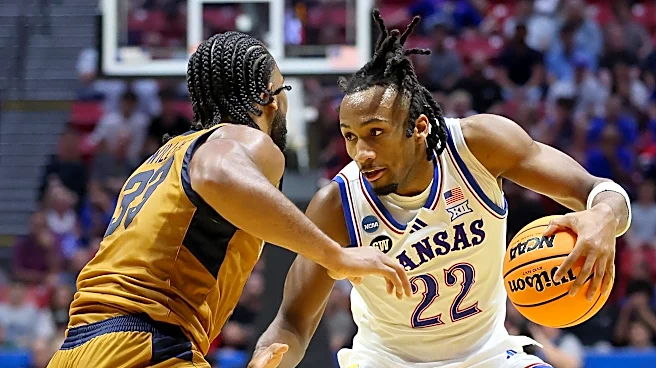
At Kansas, Peterson’s on-court production was excellent — 27.8 points per 40 minutes, strong rebounding for a guard, excellent three-point and free throw shooting, and more than enough steals and blocks to indicate defensive motor and impact.
After playing most of his life as his team’s primary ball handler, he took an off-ball role at Kansas. This was partly due to roster construction, and partly due to Self trying to ease Peterson’s physical load and manage his health. Although he generated few assists at Kansas (2.2 per 40) and had as many turnovers as assists, the available evidence suggests he has been a willing and skilled playmaker and that he was doing what he was asked to do at the NCAA level.
My read of the data, including combine measurements and scores, is that Peterson is the prototype modern guard — big (nearly two standard deviations above average for a guard in the measure I use for YODA), athletic, with excellent skills, deep shooting prowess, and experience on- and 0ff-ball.
He doesn’t have a perfect record. I have two caution flags.
- His two-point percentage was just 48.7%, which could indicate some challenges either finishing inside or creating easier shots.
- His agility times at the combine was a little below average for guard prospects. There’s nothing on film to suggest he lacks sufficient agility to be a great NBA player, but all things being equal, I’d prefer to see the objective measure match the reputation.
One final “not nothing” thing — a number of respected draft analysts who spend years scouting and tracking prospects keep talking about Peterson as the most talented player in the draft. I don’t put too much weight on this — there’s no objective measure for “talent,” and scouts miss on these kinds of evaluations all the time. But they’re also right with regularity, and their observations have some value and should be considered.
I’m far less concerned with fit than any other factor — the Wizards roster will change significantly over the next 2-3 years, and they need talent everywhere. That said, Peterson is a strong positional fit because he’s that versatile lead guard prototype who can play with or without a ball handling backcourt running mate.
Will Peterson be the pick? Current odds at FanDuel indicate he’s second most likely to be chosen number one overall. Dybansta’s hold on the top spot has strengthened in recent weeks. Boozer and Caleb Wilson are deemed much less likely.
My guess is that the broad consensus is correct and that Dybantsa will be the top pick. In most other drafts, Peterson would be the runaway number one — he’s that good. Whether or not he becomes Washington’s pick, Peterson is fairly likely to be a franchise-level player wherever he lands — with the Wizards or not.