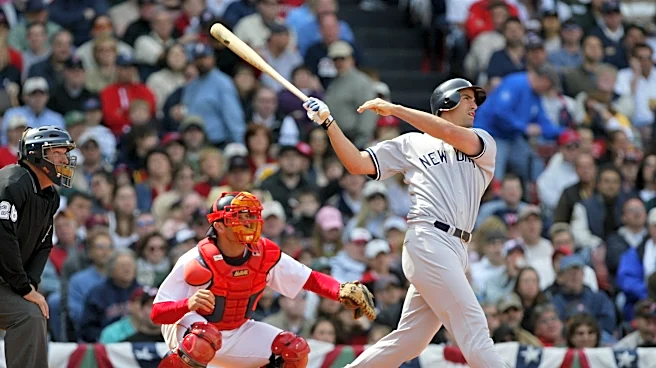

The most successful players in the world aren’t only successful because of their innate abilities. Sure, some of those who walk this planet can naturally throw a ball harder than others, but being able to throw a ball hard and honing the craft enough to make it to the major league level are two very different things. And that’s where coaches come in.
Every single player who has walked away with a major award at the highest level has likely had many influential coaches in their baseball lives. And
there have been a handful of big names who credit Mark Connor as their guiding light.
Mark Peter Connor
Born: May 27, 1949 (Brooklyn, NY)
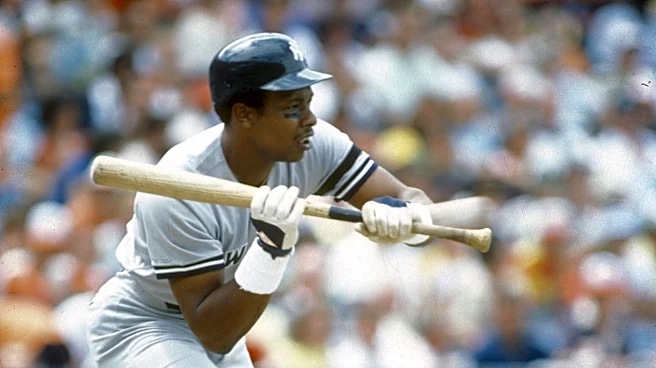
Yankees Tenure: 1984-87, 1990-93 (all as coach)
Connor was born in Brooklyn and played college baseball at both Belmont Abbey College and Manhattan University. He was a right-handed pitcher and ended up drafted by the Minnesota Twins in the 22nd round of the 1971 MLB Draft out of Manhattan. He would only play two pro seasons, the first with the Low-A Auburn Twins in 1971 and the second with the Low-A Wisconsin Rapids Twins in 1972. He was primarily used as a reliever, pitching in 20 games (and starting only three) with a 4-5 record in 1971, finishing with a 2.78 ERA. His second season saw him post a 3.83 ERA and a 3-3 record in 32 games with zero starts.
The major drop-off in ERA from one year to another was caused by a brutal injury to Connor’s pitching shoulder in that first season with Auburn. In a future interview with Mid-Atlantic Sports Network (MASN) during his time with the Baltimore Orioles, he talked about having completely blown out his shoulder and having to take lots of painkillers and medicine to try to ease the inflammation.
However, he also spoke about that injury sparking a desire in his brain to figure out why he got hurt and how improving pitching mechanics can help prevent injuries.
And thus, Connor’s future in baseball was decided: his time would be spent in the dugout, the bullpen, and in the clubhouse as a scout and pitching coach.
Following the end of his playing career, Connor headed to the University of Tennessee-Knoxville not just to earn his Master’s Degree, but also to be the Volunteers’ pitching coach under manager Bill Wright. He was a member of the staff from 1974 to 1978 and saw four seasons of success with the team going 29-15 (1974), 32-16 (1975), 33-17 (1976), 24-24-1 (1977), and 25-21 in 1978. And following his time in Knoxville, he received a call to come help a major league squad — the New York Yankees.
Connor didn’t automatically start with the big club. Instead, he was brought in to be a scout in 1979 and worked his way into the pitching realm with the Yankees’ minor league teams the following seasons. He first worked with the Greensboro Hornets from 1980 to 1982, where he threw batting practice to a crop of hopefully-future Yankees players. One of those hopefuls who became a legend in his own right within the organization, Don Mattingly, was with Connor as he moved up the minor league ranks from Greensboro to Columbus with the Clippers in 1983. He even gave Connor his nickname, “Goose,” as Connor would serve up batting practice to the left-handed hitters on the team, and they would be smashed into the street called “Goose Creek” over the fence.
Connor started in 1984 with the Clippers, but was promoted to pitching coach for the Yankees on June 18th after the firing of Sammy Ellis, marking the first time he worked with a major league squad. He would be working alongside Jeff Torborg and under manager Yogi Berra, becoming the 20th pitching coach that George Steinbrenner had in his 12 years (to that point) as the club’s owner.
Until August of 1985, Connor was with the Yankees, but he was soon demoted to the Fort Lauderdale Yankees, where he also served as pitching coach. That demotion was temporary as he returned to the Yankees in May 1986 as the team’s pitching coach, holding the position through the 1987 season. Such was the turbulent life under Steinbrenner at the peak of his meddling days.
Through his first few seasons, Connor worked with the likes of Ron Guidry, Phil Niekro, and Dave Righetti, and with Tommy John at the end of his career. John was one of the players who said he owed a lot to Connor’s brain and understanding of the pitching motion, mentioning in his book “T.J.: My Twenty-Six Years in Baseball” that because of what Connor did for his motion, it added multiple seasons to the end of his career.
“He knew what to look for in my motion and had an intuitive understanding of the way I threw the baseball.” – Tommy John
Connor eventually returned to Tennessee to become the head coach of the Volunteers program in 1988 and 1989. His tenure as manager, though, did not yield great results, as he finished with a 44-65 record and finished in ninth and 10th in the SEC, respectively.
Following his return to college and a less-than-ideal time as head of a program, Connor found himself back in the Bronx first as a bullpen coach in 1990, then as the pitching coach in 1991 and 1992, and back to the bullpen coach in 1993. He played a role in a bit of notable Yankees history as well, advising Jim Abbott on September 4, 1993 to “work the outside more and mix in breaking pitches” since his velocity had been lacking of late. The southpaw had been rocked in his last start by the burgeoning Cleveland offense. This time around, he no-hit them.
However, following the 1993 season, just before the Yankees’ dynasty was to begin in the late 90s, the team decided not to renew Connor’s contract, and his time in the Bronx ended. Connor spent the rest of his career elsewhere.
The rest of Connor’s career was linked to another key player in Yankees history — Buck Showalter — whom he met first in Triple-A Columbus when Showalter was in his late-20s. Connor coached under him in 1992 and 1993 with New York as the Yankees slowly resurrected themselves from their early-’90s nadir before a staff overhaul by Steinbrenner that led to Connor’s dismissal.
In 1996 and 1997, Connor was the pitching coordinator for the expansion Arizona Diamondbacks, who had hired Showalter as their future manager when Steinbrenner forced him out of New York as well. Connor assisted Showalter and company with the 1997 expansion draft that birthed the first D’Backs roster, and continued to help with scouting duties during that period before becoming the big-league pitching coach from 1998 to 2000 under Buck. And while a 65-97 season in 1998 wasn’t an ideal start to his time as pitching coach, the 1999 season proved worth it for Connor, as he helped lead a staff anchored by the Big Unit Randy Johnson, who won back-to-back National League Cy Young Awards under Connor’s tutelage in 1999 and 2000.
Showalter and Connor were let go after a disappointing 2000 season following their National League West title in 1999, and while Showalter had a couple of years off, Connor went north of the American border to Toronto and coached the Blue Jays in 2001 and for the early part of the 2002 season. His stint with the Blue Jays did not last past June, as he submitted his resignation following the firing of manager Buck Martinez.
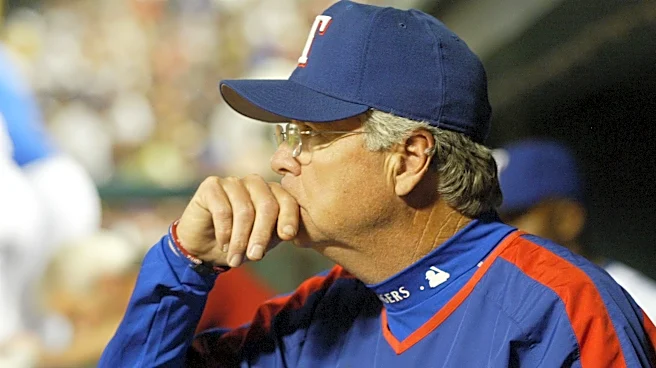
Then, when Showalter returned to the top step of the dugout, this time in Arlington with the Texas Rangers, he came calling to his old friend Connor, and he took the job down south as the bullpen coach from 2003 to 2005, and then served as the pitching coach in 2006 before Showalter was, once again, fired by management after a disappointing season and four straight years of no playoffs. While Showalter was on his way out, the new manager, Ron Washington, decided that Connor was worth keeping around, given his previous work. He remained the pitching coach for Texas until 2o08, when he was fired, but he didn’t leave the organization until 2010, staying with them as a Player Development Consultant.
Connor’s final stop on a major league coaching staff came under Showalter in Baltimore in 2011. But his tenure there was short-lived, as he resigned from his position as pitching coach for personal reasons, a move the Orioles brass was not aware of until it happened. Three months following the surprise departure, he was rehired by the Rangers as a Special Advisor to Baseball Operations and also served as their Minor League Special Assistant for Pitching from 2012 to 2018.
Mark Connor lived and breathed baseball, and he lived and breathed pitching. He worked with so many influential hurlers in his time as a bullpen coach and pitching coach for multiple organizations, and while he wasn’t with the Yankees during the glory years of the late ’90s, he still had a part to play in the team’s development to success. Happy birthday, Mark!
See more of the “Yankees Birthday of the Day” series here.