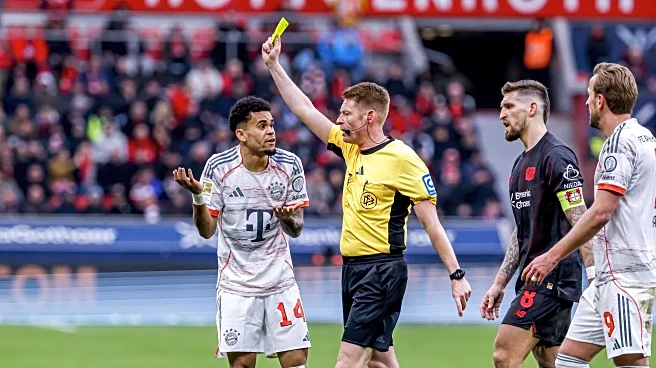

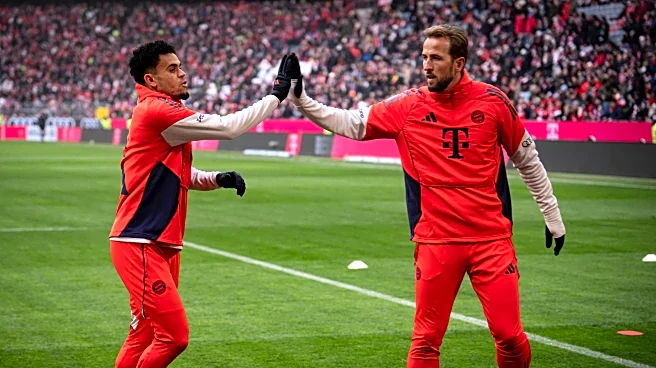
Controversy around refereeing decisions is nothing new in football, but occasionally a moment arises that leaves clubs feeling particularly aggrieved. That appears to be the case for Bayern Munich following a contentious decision that led to the dismissal of Luis Díaz during the team’s 1-1 draw with Bayer Leverkusen on Saturday.
Díaz’s ejection was a moment that has clearly not sat well with the club’s leadership.
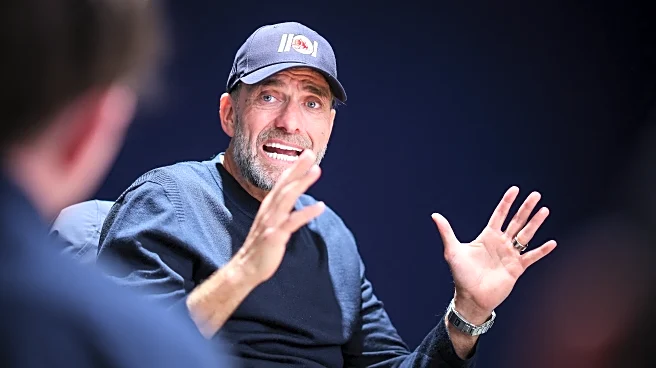
Bayern Munich president Herbert Hainer rarely speaks publicly about refereeing decisions,
which makes his latest comments stand out even more. When someone who typically avoids criticism of officials chooses to address a call directly, it signals just how strongly the club feels about the situation.
“I don’t usually comment on referees, but this time he had a bad day. That was a complete disaster. The fact he admitted after the game that he wouldn’t have given Luis Díaz a red card after seeing the TV footage is commendable – but it doesn’t help us or Lucho at all,” said Hainer (as captured by @iMiaSanMia).
The remark highlights a recurring frustration in modern football: the gap between post-match accountability and in-match consequences. While it is notable that the referee acknowledged the mistake after reviewing the footage, the damage to the match itself cannot be undone. A red card fundamentally alters the flow of a game, forcing a team to adapt tactically while potentially influencing the final result.
From Bayern Munich’s perspective, that admission may provide a degree of validation, but it offers little practical relief. The match outcome, the suspension implications, and the competitive disadvantage remain unchanged.
Situations like this inevitably reignite debates about officiating standards, the use of video review, and how football should handle clear mistakes after they occur. Transparency from referees can be appreciated, but clubs and supporters often want more than acknowledgement — they want systems that prevent such decisive errors from happening in the first place.
For Bayern Munich , Hainer’s comments capture a simple reality — admitting a mistake is admirable, but it rarely changes the consequences once the final whistle has blown.