
Ever since he was drafted fifth overall by the Astros in 2015, Kyle Tucker has been a well-known name in baseball. By the time the three most prominent outlets put out their top 100 or 101 lists in the winter
of 2015-2016, Tucker was a consensus top-100 prospect in the sport. And by the time the 2019 season was getting underway, all three of Baseball Prospectus, Baseball America, and MLB Pipeline had him in their top fifteen.
Tucker’s really stuck at the big league level in the pandemic-shortened season in 2020. Having made 72 plate appearances with the Astros in each of the 2018 and 2019 seasons, he played in 58 games in 2020 and finished the season with a 122 wRC+ and 1.8 fWAR. He never looked back from there.
In each season since things started getting back to normal in 2021, Tucker has been worth between four and five wins by fWAR. From 2021 through 2023, he averaged 149 games played per season and had a cumulative 138 wRC+ with a total of 14.7 fWAR. And in 2024, a season that saw him play in just 78 games because of a shin injury, he played the best baseball of his life when he was on the field. Tucker hit 23 home runs in just 339 plate appearances, had a 179 wRC+, and was worth 4.2 fWAR in less than half a season of work.
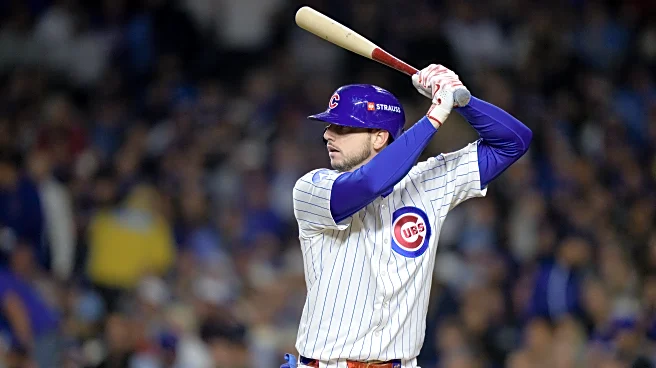
The Astros traded Tucker to the Cubs following that campaign, and he was his typical self in his lone season in Chicago before hitting free agency. In 136 games, he hit 22 home runs, had a 136 wRC+, and finished the season with 4.5 fWAR. And as of the time of this writing, he’s still a free agent.
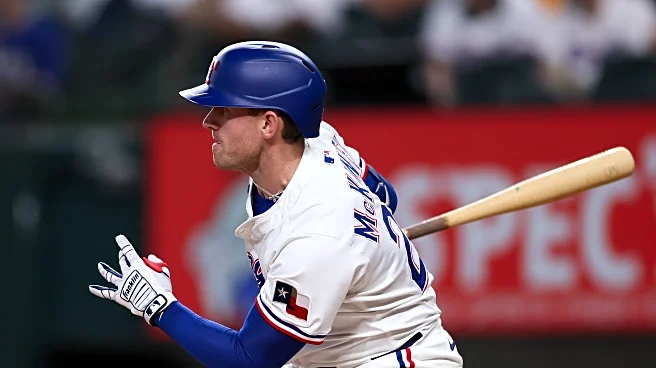
Entering his age-29 season, Tucker was ranked the top free agent in baseball by FanGraphs when the offseason began. And the Mets have chosen to make massive changes this winter, having jettisoned four players who have been big parts of the team’s identity over the past several years: Brandon Nimmo, Edwin Díaz, Pete Alonso, and Jeff McNeil.
David Stearns hasn’t done a ton to make the lineup look better following those departures. Marcus Semien, who came to the Mets in the trade that sent Nimmo to the Rangers, has some great seasons at the plate to his name, but he’s coming off a season that saw him finish with an 89 wRC+ and only had a 101 wRC+ in 2024. Entering his age-35 season, his last great year at the plate got underway nearly three years ago. He’s currently projected to bat second in the Mets’ lineup.
And Jorge Polanco, who signed a two-year deal with the Mets to learn first base or serve as the team’s designated hitter, is penciled in to the cleanup spot. He’s coming off a much better season at the plate, one that saw him put up a 132 wRC+ with the Mariners. And his track record is much better over the past five seasons, even if he had his own terrible year at the plate in the midst of that stretch with a 93 wRC+ in 2024.
The Mets very much do have two of the best players—and hitters—in baseball in their primes, though, in Francisco Lindor and Juan Soto. Lindor has hit 30 or more home runs in three straight seasons, and he’s averaged 6.5 fWAR over the past four seasons. Even his first season with the Mets, the worst of his tenure, saw him finish the year with 3.9 fWAR. And as he enters his age-32 season, there’s no reason to think that he’s not very much still in his prime.
Soto is only heading into his age-27 season, and while Lindor was the better player by fWAR thanks to Soto’s atrocious defense in right field, Soto had one of the best offensive seasons in Mets history. With 43 home runs and a 156 wRC+ in 715 plate appearances, Soto ended the year with 5.8 fWAR. To state the blatantly obvious, he is in his prime.
And as high as the Mets’ payroll is right now, the team’s only long-term commitments have been made to those two players. Beyond the 2027 season, only two other players are even guaranteed any money from the Mets: Semien and recently-signed relief pitcher Devin Williams.
The crowdsourced projection for Tucker’s contract in the aforementioned FanGraphs free agent rankings had him getting an eight-year, $280 million contract when the offseason started. Whether or not he’s still going to demand a deal like that at this stage in the offseason remains to be seen, but the Mets’ preference would be to sign him to a shorter-term deal with a high average annual value. The Blue Jays are reportedly willing to go longer.
Should the Mets be a bit more flexible in that regard? Maybe. While Tucker certainly isn’t in the same tier as Lindor and Soto, he’s no slouch. Since the beginning of the 2022 season, Tucker’s 18.5 fWAR trail puts him a couple of notches behind Soto’s 23.9 and Lindor’s 25.9. But he ranks 14th in all of baseball over that span, and the Mets don’t have a realistic path to acquiring anyone else in that group right now.
When you’ve gone and signed a contract like the fifteen-year, $765 million one that the Mets agreed to with Soto ahead of the 2025 season and already have a farm system that’s widely considered to be one of the best in the sport, doing what it takes to add Tucker might be the way to go.
The Mets have other problems, of course, and haven’t made any changes to a starting rotation that was a mess in 2025. And their best prospect this side of Nolan McLean, who barely retained prospect status after a dazzling stint in the big leagues to end his season last year, is Carson Benge, a left-handed-hitting outfielder.
With an owner who is already among the richest people in the world—with a money-printing casino set to be built on the former site of Shea Stadium—and two of the best players in the sport in their primes, having other holes to fill and a possibly-redundant prospect don’t seem like good enough reasons to let Tucker sign elsewhere.