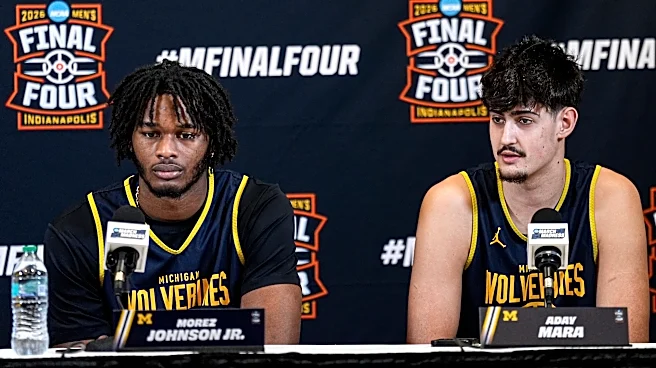




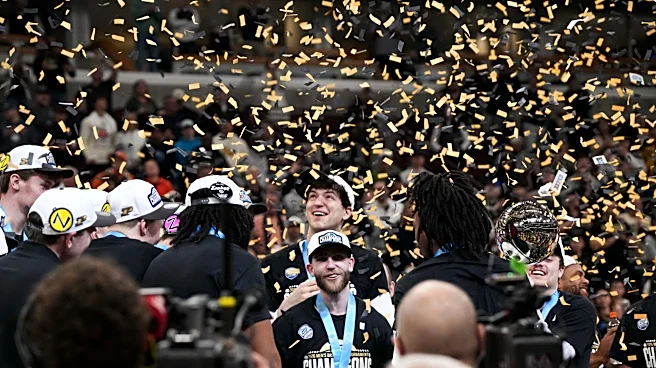
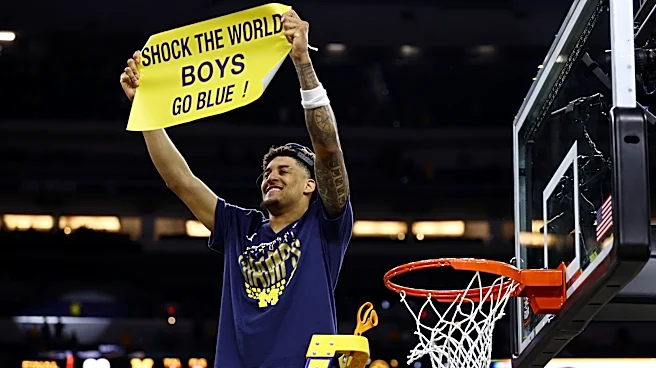
Aday Mara spent two seasons playing for Mick Cronin and the UCLA Bruins. In those two seasons, he started nine games and rarely played more than 15 minutes per game. In one season at Michigan under Dusty May, Mara started in 39 contests, had career-highs in every major statistical category, won Big Ten Defensive Player of the Year and won a national championship.
So what changed that led to all his success this year?
To answer that question, we need to examine Mara’s time under Cronin. He is notorious
for rewarding hustle and effort. While that’s certainly not a bad trait in a head coach, it doesn’t play to the strengths of a 7-foot-3 teenager who stepped foot on UCLA’s campus in the summer of 2023.
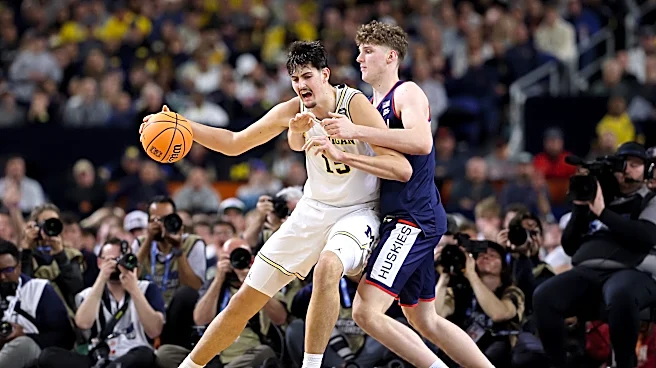
As odd as it may sound, Mara was not and is not a dominant rebounder despite his size. Even at Michigan, he was a significantly better scorer, passer and shot blocker than he was a rebounder. For Cronin, a 7-foot-3 center not being an elite rebounder was a non-negotiable.
Another constant theme of Mara’s first two years was his conditioning. A review of his tape as a Bruin shows a big man struggling to get up and down the court. Cronin acknowledged that Mara dealt with a handful of illnesses during his tenure which may have affected his conditioning. It’s unknown to what extent that played a factor, but given how little it affected him at Michigan, it’s safe to say Mara was fully healthy this past season.
While it’s fun as fans to dunk on Cronin for keeping a player like Mara on the bench knowing what we know now, it’s worth noting Cronin had valid reasons. He knew Mara was tantalizingly talented but he needed to extract the effort, enthusiasm and hustle out of Mara to unlock his potential.
Enter Dusty May.
When Mara committed to Michigan, he was just the 46th rated transfer in the portal and the eighth-best center. It’s comical to look back at transfer portal rankings after the season has played out. Mara was behind Jayden Quaintance (Kentucky), Moustapha Thiam (Cincinnati), Henri Veesaar (North Carolina), Pharrel Payne (Maryland), Owen Freeman (Creighton), Oscar Cluff (Purdue), and Zvonimir Ivisic (Illinois). Mara had easily the best season of the bunch.
With Mara now fully healthy, May complimented Mara’s skillset with other bigs who could pick up his slack in the rebounding department, such as Morez Johnson Jr. and Yaxel Lendeborg. May also installed a defense that allowed Mara to remain mostly paint-bound (with a few exceptions in opponents that ran five-out offenses). Lastly, Matt Aldred and the strength and conditioning staff went to work on increasing Mara’s footspeed.
It all paid off, as Mara was a catalyst for Michigan this year.
The reason Mara’s career trajectory took off at Michigan is because of three things: health, opportunity and roster construction. His conditioning was notably improved in Ann Arbor, his playing time increased dramatically because of how May ran the offense, and he was asked to do things he excelled at. Some of this may have happened in time had Mara remained at UCLA. However, May has an innate ability to unlock the best in his players by identifying their strengths and weaknesses at an elite level.