

As far as non-stressful jobs in sports go, backup catcher to an established star would be a pretty good one to have. For nine years in New York, Charlie Silvera got to fill that role, and not just behind any old star — he was the backup to Yankees icon Yogi Berra. For his career in the Bronx, Silvera made less than 500 plate appearances, yet he still got to play a role on one of the most successful eras in the history of the most successful franchise.
Charles Anthony Ryan “Charlie” Silvera Born: October
13, 1924 (San Francisco, CA) Died: September 7, 2019 (Millbrae, CA) Yankees Tenure: 1948-56
Silvera was born in San Francisco in 1924, going on to become one of a number of Yankees of that era to hail from the city. In his youth, he played sandlot baseball with fellow future Yankees Bobby Brown and Jerry Coleman. In 1942, he caught the eye of the Yankees, who signed him to a deal.
Silvera debuted in the minors as a 17-year old in 1942, playing for the Class D Wellsville (NY) Yankees as an outfielder. However after 75 games there that season, he joined the military, serving in the Air Force in World War II. Silvera would miss the entirety of the next three seasons while serving, although he did play on a military team during that time.
Upon returning to baseball, the Yankees converted Silvera into a catcher. He spent the next three seasons in the minors before earning a call-up to the Yankees late in the 1948 season. He appeared in four games, recording three hits in both of his first two games, and going 8-for-14 in total.
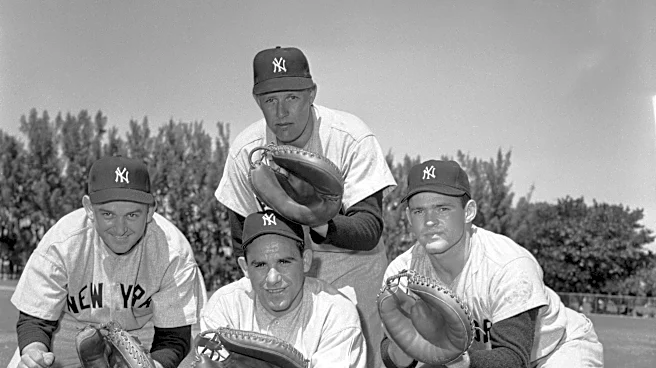
After that cameo, Silvera earned the Yankees’ backup job for the 1949 season. He would spend the next nine seasons filling that role. The most games he ever appeared in a season came in his full debut year in ‘49. Starter Yogi Berra missed some time through injury and Silvera hit decently enough in his 58 games that season, putting up a .315 batting average and a .403 OBP. However, he was never going to fully replace the budding star in Berra, and never would. The Yankees also advanced to the 1949 World Series. Silvera came off the bench in Game 2 of the series, as Berra again had to exit due to injury. He went 0-for-2, as the Yankees lost that game but won the series. Despite playing in an era where the Yankees were winning and playing in the Fall Classic a lot, that was the only postseason appearance Silvera would ever make.

Over the next seven seasons, Silvera played in just 18, 18, 20, 42, 20, 14, and seven games respectively. Despite that, he would win five more World Series rings during his time with the Yankees. Opposing players would often try to trash talk Silvera for his lack of playing time, but the catcher was never bothered. He later said “the opposition would call me ‘Jesse James, the payroll bandit.’ I’d tell them, ‘Go ahead and give it to me, but Yogi Berra tips me more than you make.’”
Having only appeared in 21 games over his last two seasons in the Bronx, the Yankees traded Silvera to the Cubs ahead of the 1957 season. Silvera put up a completely respectable — for a backup catcher — 86 OPS+ with the Yankees, he was just never going to replace Berra.
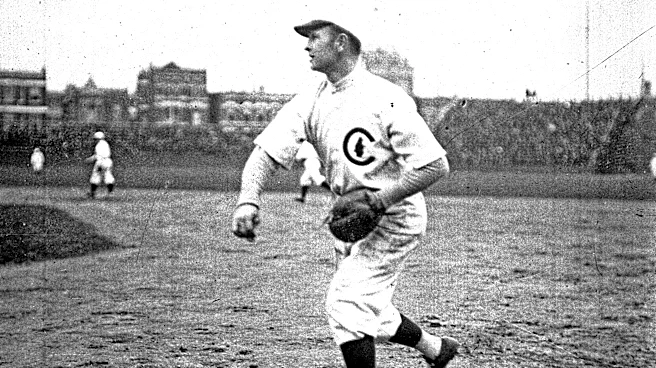
Upon going to the Cubs, Silvera was given the No. 8 that Berra wore in New York. He appeared in 26 games for Chicago that season, but struggled and missed time with injury. The Cubs released him after that season. Silvera played a couple more years in the minors but never made it back to the bigs, leaving the playing ranks after 1960.
Silvera stayed in baseball in various roles after his playing career ended. He joined former teammate Billy Martin on the coaching staffs of the Twins, Tigers, and Rangers when Martin was beginning his managerial career. He served as the bullpen coach for those teams, although Martin didn’t bring him back to the Bronx when Martin went back there.
After coaching, Silvera got into scouting with the Cubs and Marlins. He received a seventh World Series ring for his work for the 1997 Marlins. He often came back for Yankees Old-Timers’ Day but he did return to the San Francisco area in his later years, where he resided until his passing in 2019. Prior to his death, he had been the last surviving member of the Yankees dynasty to win five championships in a row from 1949-53.
Had he played in the modern era, Silvera very likely could’ve gone to another team in free agency to get more playing time. However, the rules at the time were what they were, and the Yankees were plenty happy to keep him around as a backup. Ending up with more than a hand’s worth of World Series rings would be a nice consolation prize.

See more of the “Yankees Birthday of the Day” series here.