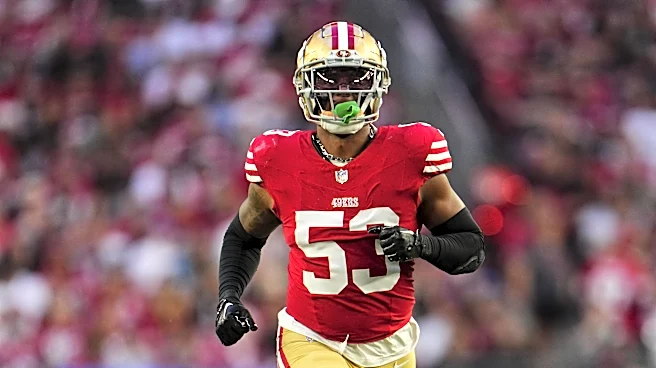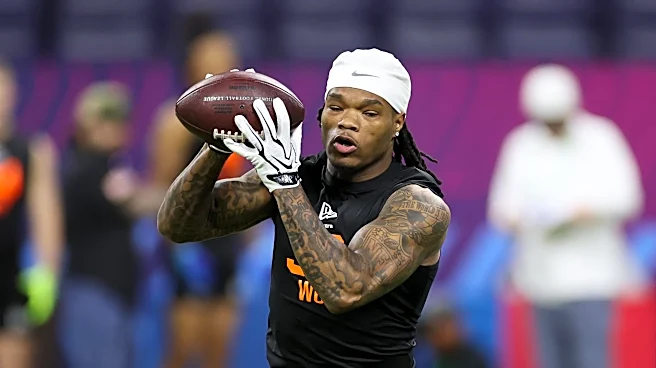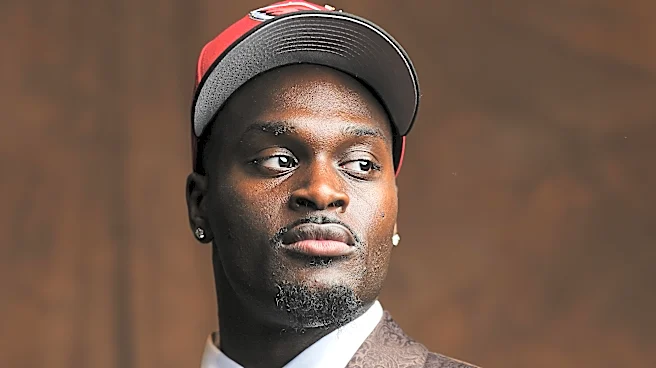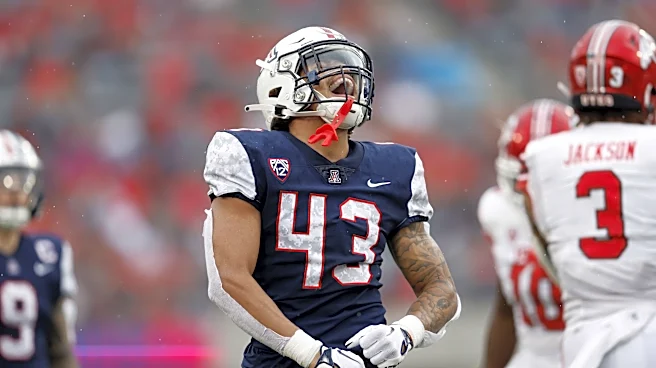


The Las Vegas Raiders entered the 2026 NFL draft with a thin secondary and added four defensive backs to solve that problem, including former Arizona safety Dalton Johnson. The fifth-round pick may fill more of a backup role in Las Vegas, but he can at least bring a ton of versatility off the bench.
Last season, Johnson split his time almost evenly between strong safety, free safety and nickelback, recording 271, 247 and 233 snaps at each respective position, according to Pro Football Focus. On top
of that, he was PFF’s highest graded safety overall (84.8) in the Big 12 and in coverage (88.6), and received grades in the mid-70s as a run defender during each of the last three seasons.
The ability to lineup at multiple positions and contribute in both phases of the game is what makes the former Wildcat a Swiss army-knife type of player, and the tape backs up the numbers.
The biggest reason Johnson makes an impact as a run defender is that he’s willing to get involved in run fits, even when playing from depth.
Arizona shows a two-high look pre-snap here, and then rotates into single-high post-snap. The latter helps Johnson since he’s already moving forward, and once he keys and diagnoses the offense’s play design, the safety triggers downhill.
Meanwhile, Arizona State dials up a quarterback-counter where the running back and pulling guard serve as the lead blockers on the edge. The quarterback presses the line of scrimmage to try and make Johnson wrong by coming downhill, but the safety does a good job of filling the open lane, breaking down and making the tackle to keep this to a one-yard gain.
The Arizona product lines up in the box as a strong safety this time, but this play is very similar to the last one.
He’s on the backside of another counter run; it’s just a read option instead of a pure quarterback run. That means Johnson has to stay home for a second to make sure the quarterback hands the ball off. Once he sees the exchange, that’s where the safety’s instincts come into play, as he sees the gap created by the slanting defensive lineman and shoots it to make another tackle near the line of scrimmage.
Don’t expect Johnson to be a force when taking on blocks at the next level, but his instincts and willingness to get involved in run fits can help him make an impact on early downs.
All of that being said, the first-team All-Big 12 performer was at his best in coverage last season. He collected a career-high four interceptions, and the one above was arguably the most impressive of the bunch.
Arizona is rotating to Cover 4 post-snap, but the Cougars fumble the snap. That leads to the other safety—Raiders’ second-round pick, Treydan Stukes—getting overaggressive by vacating a deep quarter of the field to make a play on the quarterback. However, the ball bounces right back to the quarterback, and the tight end is wide open in Stukes’ area.
Luckily, Johnson opens up to the middle of the field on the scramble and recognizes that no one is covering the tight end. So, he puts his 4.41 speed to good use, sprinting to the other side of the field and stepping in front of the pass to turn what could have been an easy touchdown or at least an explosive play into a turnover.
That’s an excellent example of Johnson’s high football IQ, as he steps out of his assignment to make a play and save the defense from a disaster.
This time, the Wildcats rotate into a Cover 1 look, and Johnson plays the center field role perfectly.
While getting to his depth post-snap, he shows great eye discipline by taking a peek at the receivers to see if any deep routes are coming before getting his head back around to the quarterback. Then, it’s just a matter of reading the quarterback’s eyes, and once the QB rears back for the deep shot, the safety knows exactly where to go after getting that initial look at the route combination.
Finally, Johnson tracks the ball in the air and manages to come up with an interception on the slightly underthrown pass.
We’re still focusing on the fifth-rounder’s ball skills, but this rep is a slight change of pace with him playing underneath and getting a PBU that sets up an interception.
The Wildcats are playing Cover 3, where Johnson is the curl-to-flat defender on the trips side of the formation. With the tight end and the running back being involved in the pass protection call, he doesn’t have any immediate threats underneath. So when the slot receiver runs an out and up, the strong safety works for depth to help the deep third defender/corner. That’s especially significant because when the outside receiver runs a post, the corner is going to be late or needs extra time to get to the slot on the out-and-up route.
As a result, the quarterback has to throw over Johnson for a hole shot instead of putting the ball on a line to the receiver. That’s a difficult throw, and the defender capitalizes by making a play on the ball for the volleyball assist on the cornerback’s interception.
This is what happens when sound, fundamental football meets playmaking athleticism.
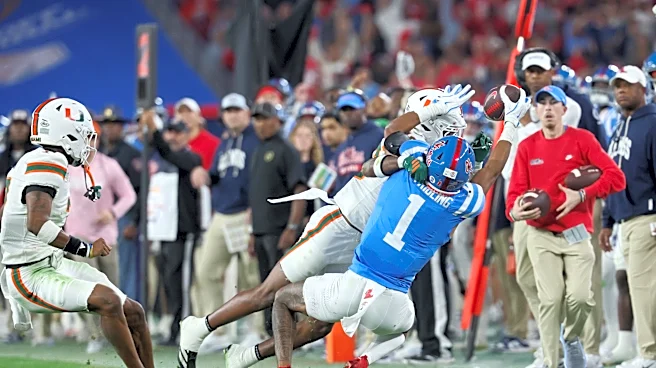
We’ll wrap up with another broken-up pass by Johnson, this time via a big hit.
He’s back at free safety this time, as Arizona runs quarters. Meanwhile, Arizona State runs double slants on his side of the field, and the quarterback looks to hit the outside receiver since the cornerback bails off the line of scrimmage post-snap.
This is another example of good eye discipline from Johnson, as he takes a look at the route concept first and then gets his eyes in the backfield to read the quarterback. Once the QB’s throwing motion starts, the safety knows which slant to attack and where the receiver will be, crashing downhill and bringing some force at the catch point to keep the receiver from hauling in the pass.
Johnson falls into the “jack of all trades, master of none” category, which could prevent him from becoming a starter in the NFL. But his versatility offers tremendous value as a backup defensive back. He can fill in at either safety spot and contribute at nickelback to serve in a “12th-man” type of role, so to speak.