
The piggyback is the best thing going for the Mariners’ rotation right now.
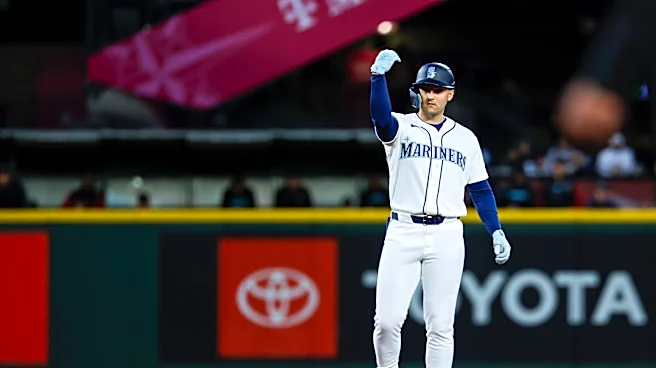
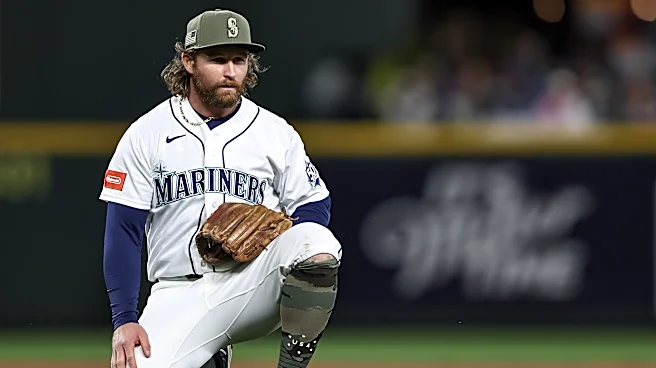
The Mariners on Sunday will use Bryce Miller and Luis Castillo in a tandem start against the Diamondbacks. Miller will get the ball first and pitch for a while, then Castillo will come out of the bullpen to finish the job. It’s the third attempt at this strategy, and it’s likely the final one for at least a couple weeks. To be entirely up front, I hope it comes back.
I assume you know the story. Miller began the year on the injured
list. Emerson Hancock took his spot, as he has in the past. But unlike the past, Hancock has been good — so good that it would be unconscionable to remove him from the rotation. That meant when the Miller returned, there was no natural, five-man rotation spot for him to claim. The Mariners have George Kirby, Bryan Woo, and Logan Gilbert as their main trio (with Hancock threatening to make it a quartet), and they have Castillo as their once-great veteran to round out the group. It’s not the best rotation in the league, but it’s a unique rotation, with four or five good starters and no true holes.
This dynamic created a handful of options:
- Keep Miller in Tacoma after his rehab stint was up
- Release or trade a starter
- Move a starter to the bullpen
- Adopt a six-slot rotation
- Create a tandem start out of a five-slot rotation
The Mariners went with option five, asking Miller and Castillo to “piggyback” their outings, with one throwing half the game and the other taking what remains. They’ve done it twice, and both times it worked. The first, Miller started and Castillo relieved. The Mariners lost because they only scored one run, but together they combined for eight innings, 11 strikeouts, two hits and two runs. The second, Castillo started and Miller relieved. They covered all nine innings with 10 strikeouts, seven hits, and two runs allowed.
The tandem through two starts has thrown 17 innings with a 2.11 ERA, 2.34 FIP, 11.7 K/9, and 2.6 BB/9. That would be the Mariners best starter. The sample size is meaningless, and these numbers will be different by supper time. But there’s a reason it’s working, and there’s a reason it needs to.

The Mariners on the first turn through a lineup have a league-best 2.70 FIP. They’re striking out batters, limiting walks, and justifying their reputation as a dominant pitching organization. It’s across the board, too. Castillo, Miller — all of them — have been good on the first pass.
It gets sticky from there. On the second turn, the Mariners have been worse. This is to be expected: Batters gain an advantage the more they see a pitcher in a game. Five of the Mariners pitchers are still above average on the second pass — Woo has even gotten better — and they’re one of the best teams on this split overall. But Castillo has struggled mightily as soon as the lineup turns over, which is why he was chosen for the tandem.
The wheels come off for most of them on the third turn. The Mariners have been one of the 10 worst rotations by FIP after 18 batters, giving up lots of hard contact and homers. With their early-game excellence, no rotation has faced more batters on the third pass, making the drop quite abrupt. Note that Castillo looks a bit better on this split, but the sample is small because he’s often pulled before or during the third turn. Miller looks bad, too, though he reached the third pass just once in his first outing.
Regardless, we can see why the Mariners would want to piggyback. They have six pitchers who’ve been great for one turn, they have five pitchers who’ve been good for two turns, and they have just two pitchers who’ve been passable late. The drop-off in quality has been an issue for this group dating back to last season (I even advocated for the piggyback over the winter).
That’s the logic of the strategy. Sticking two starters together allows the Mariners to cluster more innings around those first-pass splits and avoid both the third pass and the low-leverage bullpen. Sure, it may eat up a reliever spot, but because the piggyback can cover three or four turns through the lineup, they can get most or all the job done on their own. The piggyback and a travel day gave the Mariners bullpen two full days of rest this week, and it’s possible they could get a third with another strong performance Sunday.
This is also why I wince at the notion of a six-man rotation. It might solve the issue of needing to hoard quality starting pitchers, but it doesn’t address the fundamental, in-game longevity issue the Mariners face. It may even compound it by adding more games with starters unlikely to finish six, forcing more innings onto the low-leverage bullpen while still eliminating a reliever.
And so I’m disappointed to hear the Mariners will switch to a six-man rotation after Sunday’s piggyback, at least temporarily. The rationale is there are only three off days in June, and the arrangement will help manage their workload. They’re stalling, in other words.
Now, the issue with the piggyback — and the reason the Mariners are stalling — is it’s not popular with the guinea pigs. Miller and Castillo have each expressed dissatisfaction, and there’s been a few awkward shots of the fellas huffing and puffing in the dugout.
For Miller, it’s understandable. He’s been great, and he probably feels that he’s being punished for his injuries. That said, the Mariners aren’t wrong for holding him back initially. I wrote this winter that Miller last year showed a steep decline in velocity and release point on the third pass. It was worth being cautious, allowing him to ease back into the majors and start from a place of success.
And he has. His stuff is sharp and varied, with a massive, unpredictable arsenal chock full of plus pitches. And he’s held a mid- to high-90s fastball for as long as he’s been asked. The good and healthy version of Miller could be the Mariners best pitcher, and he looks good and healthy right now. The shift to the six-man rotation tells m the Mariners agree and are ready to see how he manages a proper workload.
Technically, this gives Castillo a sort of “prove it” period as well, but I think his fate is somewhat sealed at the bottom of the depth chart. He’s a former ace-ish pitcher in the decline phase of his career. What Castillo offers right now is something between a very good swingman and a perfectly fine spot starter. Anything more than that, he gets exposed. Anything more than that, the Mariners are worse for it. To be fair, it’s a unique situation, as Castillo would be a fine mid-rotation starter for many other teams. It’s just here where Castillo represents a notable dip.
But it’s also here where his specific skillset could be a boon. Whether it’s Miller or Hancock or even just a general, rotating piggyback, the Mariners have several pitchers who struggle deep in games. Somebody has to cover those innings, and Castillo remains a highly effective pitcher at medium length. He can still be a weapon for this team. He can still be a rock. Maybe it’s less of a piggyback, and more of a catapult.