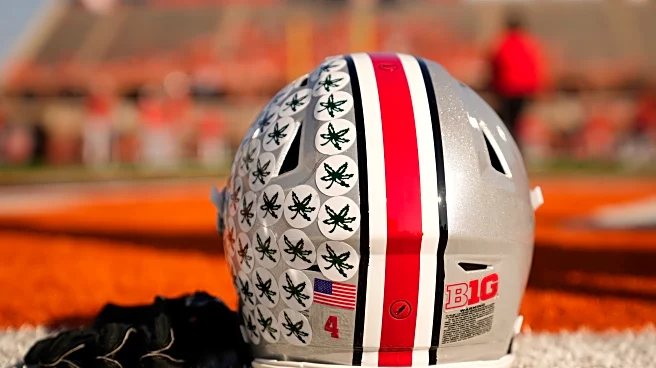

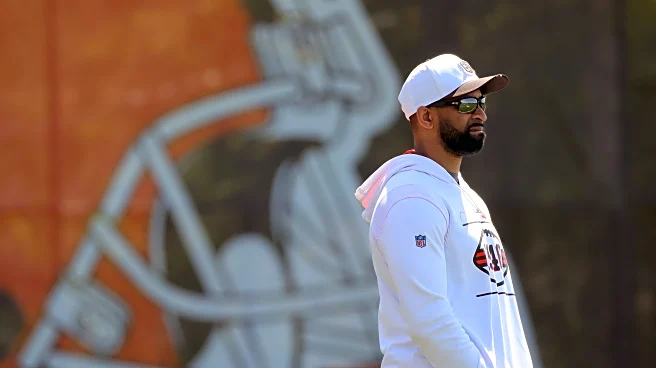
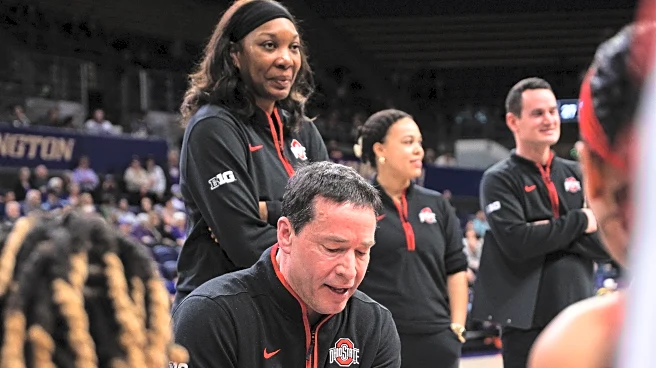
Ohio State did not just lose one tight end this offseason, it lost the entire core of last year’s group.
Max Klare declared for the 2026 NFL Draft after leading the room in production, while Will Kacmarek moved on after exhausting his eligibility. Add in Jelani Thurman transferring out, and the position suddenly went from a luxury piece to a roster emergency.
The response was aggressive and intentional. Ohio transfer Mason Williams gives Ohio State a ready made “dirty work” tight end who can play early,
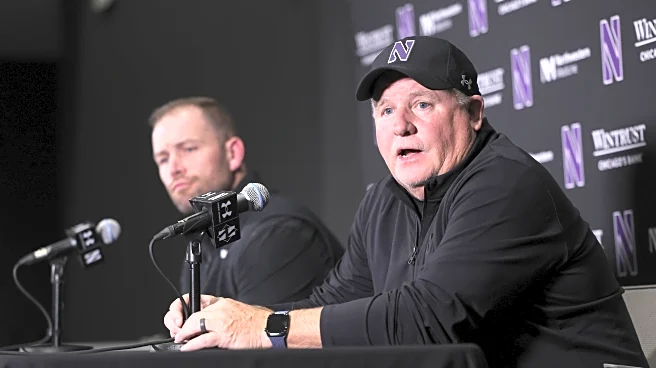
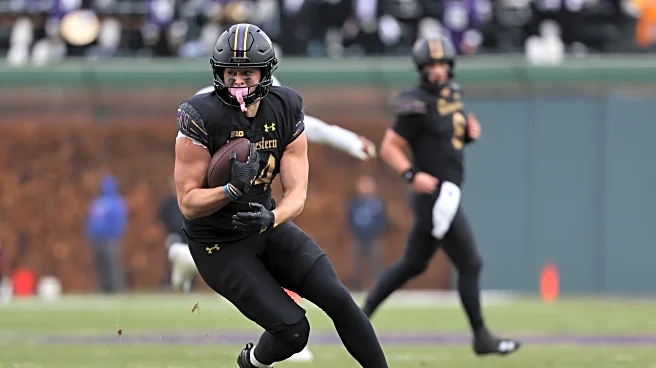
while Northwestern transfer Hunter Welcing adds veteran receiving utility and matchup flexibility.
Then you mix in Bennett Christian’s inline role and the high ceiling of Nate Roberts, and you have something that looks less like a rebuild and more like a retool.
Mason Williams: the Kacmarek blueprint, blocking first, snaps early
Williams is the cleanest projection in the room because the job description is so clear. He is coming to Columbus to block, set edges, clean up the run game details, and do the stuff that keeps an offense on schedule even when the box score is quiet.
At Ohio, Williams did have real receiving production in 2025, finishing with 26 catches for 276 yards and three touchdowns, but the more important part of the evaluation is how he earned snaps.
Ohio State is not asking him to be Max Klare. It is asking him to be playable on first down, trustworthy in protection, and physical enough to live in 12 personnel without tipping play calls. That is how you get on the field fast in this offense, especially after losing two tight ends who were trusted in the run game and in the big moments.
If Williams hits, the ripple effect matters. It lets Ohio State keep Bennett Christian in his best lane, it lets the staff be patient with Roberts as a receiver, and it gives the offense a baseline tight end identity it can count on every week.
Hunter Welcing: the veteran receiver addition
Welcing is the swing piece, because he is the one who can change how defenses play Ohio State. He is entering a seventh year and brings the exact thing the staff has prioritized in this portal cycle, age, experience, and proven competence against high level competition.
The production is solid, not gaudy. In 2025 at Northwestern, Welcing posted 28 catches for 296 yards and two touchdowns. But the portal context is what tells you how teams view him. He was rated as a top 100 caliber portal player by 247sports as was the No. 3 TE, and Ohio State pursued him like a plug and play contributor rather than a depth flier.
Where Welcing can truly tilt the field is in the moments when defenses succeed in speeding Julian Sayin up. Those are the downs where tight ends become the offense’s pressure release. Quick outlets, seams behind flowing linebackers, chip-and-release routes, and play-action throws designed to punish aggressive edge rushers.
Welcing gives Ohio State a seasoned option who can create separation and finish plays without needing a pristine pocket. Even if his box score never reflects a featured role, that kind of reliability in chaos is a postseason skill, and one that quietly elevates an offense when margins disappear.
Christian and Roberts: floor and ceiling in the same room
Bennett Christian is the stabilizer. His role does not need to change much for Ohio State to get value from him. He is the kind of tight end you can attach to the formation, ask to block ends, and use in heavier groupings without overthinking it. With Williams arriving, Christian does not have to be more than he is, and that is a good thing.
Roberts is the opposite. He is the upside bet, the guy who can make this room more than functional. The staff already showed a level of trust by getting him on the field as a true freshman in a utility role, and the profile screams “breakout candidate” if his route detail and play strength take a jump this spring and summer.
If Roberts becomes a real receiving threat, the whole structure changes. Ohio State can live in two tight end looks without sacrificing explosiveness, and defenses have one more problem to solve when they are trying to tilt coverage toward the wideouts.
Behind that top group, Max LeBlanc, Brody Lennon, and Nick Lautar are the development layer. Whether any of them push for snaps will likely depend on special teams value and how quickly they can become reliable blockers.
Bottom line
The important thing to understand is that Ohio State is not trying to fill the TE role with one player. Klare is gone, Kacmarek is gone, Thurman is gone, and the answer was to rebuild the job list with multiple bodies.
Williams brings the blocking base and the early down reliability. Welcing brings veteran receiving skill and a portal profile that suggests real weekly involvement. Christian brings continuity in the trenches, and Roberts brings the ceiling that could turn “solid room” into “difference making room.”
That is what reloaded is supposed to look like. Not one hero replacement, but enough playable pieces that the tight end spot can matter again in the way a championship offense needs it to.