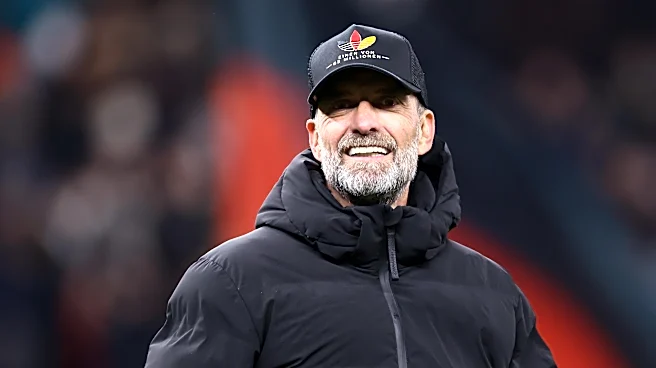


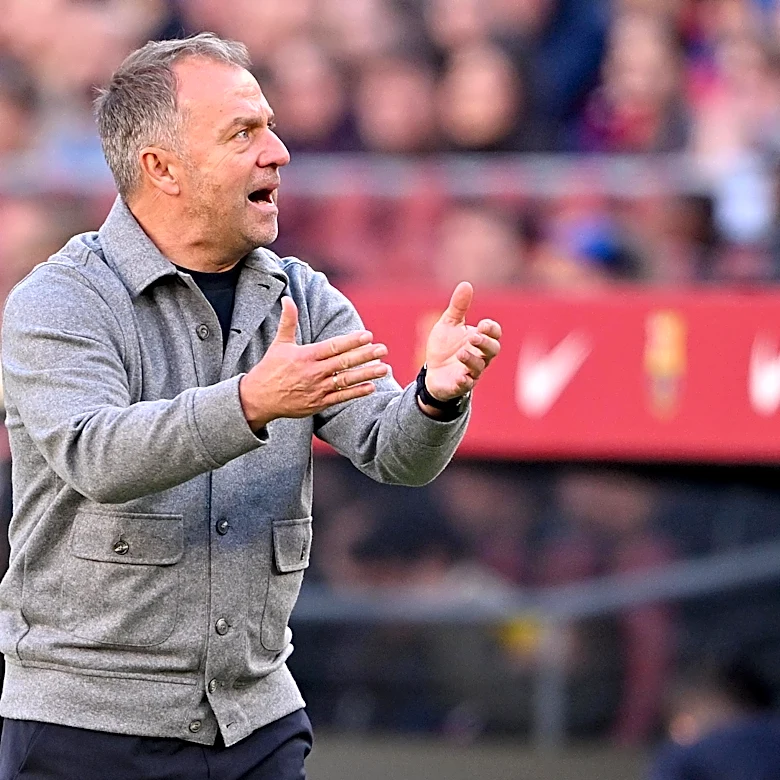

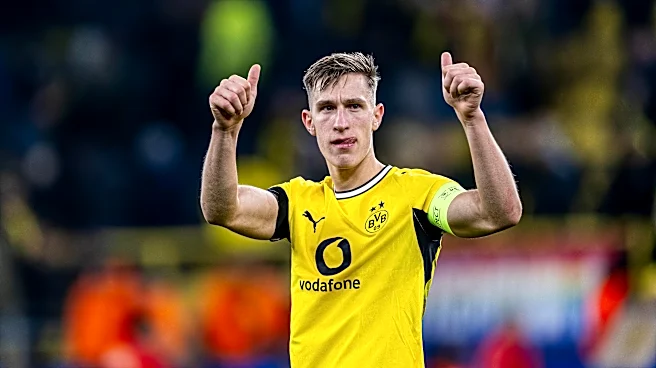
There is an interesting question surrounding Germany’s 2026 World Cup campaign: What might have happened if Jürgen Klopp had been in charge from the beginning?
Klopp had the opportunity to evaluate a large group of German players, experiment with different combinations, and establish a clearer picture of what he wanted from his national team. His approach offered an interesting glimpse into how Germany could have looked had he been given the job before the summer’s World Cup.
One of the most revealing
aspects of Klopp’s approach was his willingness to expand the player pool. He initially evaluated 44 players across his September and October international camps before narrowing his November squad to 24. That group included established stars, returning internationals, promising youngsters, and players who might not have received serious consideration under a more conservative selection process.
There was a method behind that approach.
Klopp was not necessarily interested in selecting the 26 most recognizable German footballers. He wanted players who fit his system, understood their responsibilities, and could contribute to a collective approach built around energy, pressing, and attacking football.
That could have made a significant difference at the World Cup compared to Julian Nagelsmann’s approach of leaning on players he was familiar with (such as an injured David Raum, a fading Leroy Sané, and a limited Pascal Groß) or ideas whose time had passed (Joshua Kimmich at right-back).
Looking at Klopp’s latest selections, his emerging preferred lineup, and the players he brought into the national team picture, there is a compelling argument that Germany could have approached the tournament with a different roster, a different starting XI, and a much more aggressive tactical identity.
Looking beyond the usual suspects
Perhaps the biggest difference between Klopp and a more traditional national team manager was how broadly he evaluated potential selections. His initial 44-player evaluation was particularly revealing. Rather than immediately settling on a core group and making a handful of changes, Klopp wanted to see who could contribute to his vision.
That approach would have been particularly valuable ahead of a World Cup.
Germany has plenty of established talent, but there are also players throughout the Bundesliga who offer specific qualities that could have made them valuable tournament selections. The November roster provided a good starting point.
The established core
Klopp continued to build around Joshua Kimmich, Jonathan Tah, Nico Schlotterbeck, Florian Wirtz, Kai Havertz, and other established internationals. Those players would have been obvious candidates for the World Cup squad. However, the interesting part was how Klopp surrounded them with different profiles.
The returning and overlooked players
Niclas Füllkrug’s return was one of the most interesting decisions. The Werder Bremen striker had been scoring consistently and earned his way back into the national team picture. His physical presence, ability to occupy defenders, aerial threat, and willingness to work without the ball made him an attractive option for Klopp.
Germany has sometimes struggled to find the right balance at center-forward. Havertz offered movement and technical quality, while Füllkrug provided a more traditional penalty-box presence. Having both available would have given Klopp considerably more flexibility.
Another interesting development was the emergence of Philipp Treu. The SC Freiburg defender became Klopp’s preferred right-back after starting five of his first six matches. His emergence also allowed Kimmich to move into his preferred midfield territory. That is precisely the sort of discovery that can change a tournament roster.
The younger generation
Klopp’s willingness to consider younger players was also notable.
Saïd El Mala, Brajan Gruda, Finn Jeltsch, and Derry Scherhant represented a younger generation that could have been given opportunities to contribute.
Karl’s technical quality, creativity, and willingness to attack defenders made him an intriguing attacking option. El Mala offered directness and unpredictability, while Gruda had already demonstrated that he could operate effectively alongside Wirtz—and dominate.
Jeltsch provided another defensive option, while Mohya’s first senior call-up at just 17 illustrated that Klopp was not particularly concerned about age when evaluating potential. Not every youngster would necessarily have made the final World Cup roster, but that was not the point.
Klopp could have used the expanded pool to create competition and identify players capable of providing something different from the established starters.
Germany would not have needed 26 players who performed essentially the same role. The team would have needed a group capable of responding to different opponents and different match situations.
Klopp’s selection philosophy could have helped create that versatility.
The Starting XI: A 4-2-3-1 built around Wirtz, Kimmich, and Havertz
The most interesting development under Klopp was his preference for a 4-2-3-1 formation rather than the traditional 4-3-3 associated with some of his most successful Liverpool teams. That formation made considerable sense with Germany’s available personnel.
Based on what appeared to be his Champagne XI from the recently completed break, perhaps the starting XI at the 2026 World Cup could have looked like this:
- GK: Marc-André ter Stegen
- RB: Philipp Treu
- CB: Jonathan Tah
- CB: Nico Schlotterbeck
- LB: Nathaniel Brown
- CM: Joshua Kimmich
- CM: Aleksandar Pavlović
- RW: Brajan Gruda
- CAM: Florian Wirtz
- LW: Derry Scherhant
- ST: Kai Havertz
There were several interesting decisions here.
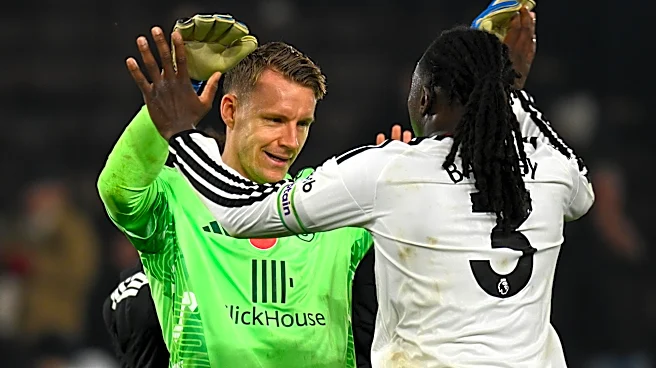
First, Ter Stegen would have been the starting goalkeeper. Klopp identified him as his preferred option when fit, giving the veteran another opportunity to establish himself as Germany’s No. 1. The veteran did not even make the World Cup team under Nagelsmann.
Jonas Urbig would have been an intriguing alternative, particularly given his performances when called upon, but Ter Stegen’s experience would have made him the logical tournament starter.
The defense is where Klopp’s approach became especially interesting. Treu emerged as the preferred right-back, allowing Kimmich to return to midfield. Brown moved ahead of David Raum in the left-back competition, offering athleticism and attacking ability. A dark horse here was Maximilian Mittelstädt, who was even better than Brown during this most recent break and appeared to be firmly in Klopp’s plans.
Tah and Schlotterbeck provided a combination of physicality, defensive aggression, and distribution.
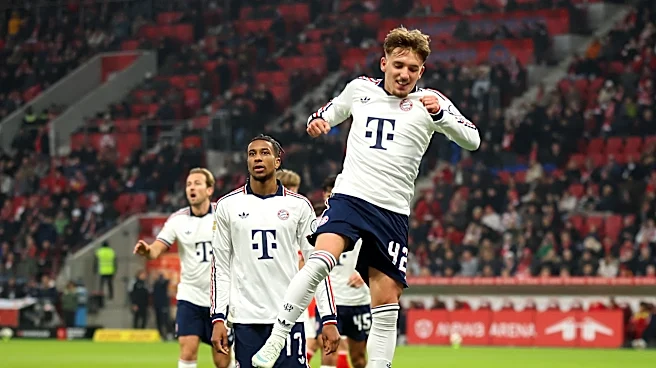
The midfield pairing of Kimmich and Pavlović was another important development. Both understood one another’s tendencies from their time together at Bayern Munich. Kimmich could dictate the tempo and organize possession, while Pavlović provided positional discipline and the ability to move the ball forward. Tom Bischof as the third option was one that some did not see coming—unless you were paying attention to BFW over the past year.
The former Hoffenheim star was inexplicably left off the World Cup squad in one of Nagelsmann’s most puzzling decisions. Now — if you believed Bild — he was ranked higher on Klopp’s depth chart than a player who started at the World Cup (Felix Nmecha).
Wirtz would have operated as the attacking midfielder, where Klopp found a way to maximize his creative qualities. The Liverpool playmaker was given considerable freedom to find pockets of space, combine with the forwards, and create opportunities. Simply put, he looked exactly like the kind of player who needed a dose of Klopp in his life—and he thrived because of it.
Gruda emerged as an interesting option on the right, particularly because of his developing relationship with Wirtz. Scherhant similarly established himself on the opposite flank. Both Gruda and Scherhant were likely not considered seriously for the World Cup last summer—now, they look like lockdown starters with the potential to possibly keep Jamal Musiala on the bench.
Maybe.
Havertz would have led the attack, although this is where Klopp would have had some difficult decisions because he checked so many boxes for what Klopp wanted (even if one of the boxes was not for finishing).
Füllkrug would have been a legitimate alternative, particularly against opponents defending deep or when Germany needed a physical presence in the penalty area. Musiala, of course, would also have been an enormous consideration. His ability to beat defenders and operate between the lines would have made him difficult to leave out of the starting XI when healthy.
In fact, a fully fit Musiala could have forced Klopp to reconsider the entire attacking arrangement. Musiala could have played left wing in place of Scherhant, or Wirtz could have bumped out to the wing, pushing either Gruda or Scherhant to the bench.
But hey, that was one of those good problems to have. That would have been an embarrassment of riches rather than a selection problem.
The biggest takeaway was that Klopp would have had several legitimate options without having to sacrifice his preferred system.
Strategy and Tactics: Germany would have played with more purpose and aggression
This is where Klopp could have made his biggest difference.
His teams have traditionally been defined by aggressive pressing, coordinated defensive movement, rapid transitions, and an attacking mentality that makes opponents uncomfortable.
Germany had the personnel to play that way. The question was whether the team could consistently execute it.
Gegenpressing would have become the foundation
Klopp’s preferred approach is to win the ball back immediately after losing possession. Rather than retreating into a defensive shape and allowing opponents to build attacks, Germany would have aggressively pressured the ball carrier, closed passing lanes, and attempted to recover possession in advanced areas.
This would have required considerable commitment from the entire team. Havertz would have initiated the press, Wirtz and Gruda would have closed passing options, and the midfield pairing of Kimmich and Pavlović would have moved forward to support the pressure. The objective would have been to make it extremely difficult for opponents to play through Germany.
More vertical attacking football
Germany would also have looked to move the ball forward more quickly. One criticism of some German performances has been the tendency to dominate possession without consistently turning that control into dangerous opportunities. Klopp likely would have demanded more verticality.
Wirtz would have been encouraged to receive the ball between the lines and immediately look for attacking options. Gruda and Scherhant would have made aggressive runs into space, while Havertz would have occupied defenders and created opportunities for teammates.
The full-backs also would have played an important role. Brown and Treu would have provided width, allowing the wingers to move inside and create overloads in central areas. This could have made Germany considerably more difficult to defend against.
A more flexible attacking approach
One of Klopp’s strengths is his ability to create different attacking solutions without abandoning his overall philosophy. Against teams that pressed high, Germany could have used Havertz’s movement and Scherhant’s speed to exploit space behind the defense.
Against teams sitting deep, Füllkrug could have entered the lineup to provide a more physical presence in the penalty area. Musiala could have been introduced to create individual moments of brilliance, while Karl and El Mala could have provided energy and unpredictability from the bench. The important thing would have been maintaining the intensity regardless of which attacking combination was on the field.
Defensive risks would still have existed
Klopp’s approach is not without weaknesses. A high defensive line can leave enormous spaces behind the center-backs, particularly against opponents with fast forwards and excellent passing ability.
Germany would have needed Tah and Schlotterbeck to defend large areas, while Ter Stegen would have had to remain comfortable operating outside his penalty area.
Kimmich and Pavlović also would have had to recognize when to press and when to protect the defensive structure. There would have been times when Germany needed to abandon the aggressive approach and defend more compactly.
A World Cup is not a 34-match Bundesliga campaign. There is no opportunity to recover from every mistake. Klopp would have needed to balance his preferred intensity with the realities of tournament football.
Still, Germany would have had a much clearer tactical identity.
Germany would have had an identity
Ultimately, Klopp’s biggest contribution might not have been a particular player selection or tactical formation—it would have been the mentality surrounding the national team.
His teams are built around collective responsibility. Every player has a job, every player is expected to contribute defensively, and nobody is exempt from the hard work required to make the system function. That could have been particularly important for a German team with so much individual talent.
Wirtz and Musiala would not simply have been expected to create opportunities. They would have had to contribute to the press. Havertz would not simply have been responsible for scoring goals. He would have had to lead the defensive effort from the front. Kimmich would have been responsible for organizing the team from the midfield, while the defenders would have needed to embrace the challenge of defending aggressively and pushing forward.
There would have been no hiding.
Klopp also has the personality to create an emotional connection between the team and its supporters. His enthusiasm, communication skills, and ability to motivate players could have helped establish a stronger sense of collective purpose.
Germany has historically been at its best when it combines individual talent with a shared commitment to winning. Klopp understands that better than most.
The Final Verdict: Germany would have been better with Klopp
There is no guarantee that Klopp would have delivered Germany another World Cup title, but it sure seemed like the squad would have had a better chance. His tactical approach carries risks, and the limited preparation time associated with international football would have presented its own challenges.
However, looking at the players he evaluated, the emerging starting lineup, and his tactical preferences, there is a compelling case that Germany could have been a more dangerous opponent at the 2026 World Cup.
The expanded player pool would have created additional competition and opportunities for emerging talent. The starting XI would have been built around a more clearly defined structure, with Kimmich back in midfield, Wirtz operating centrally, and players such as Treu, Brown, and Gruda earning important roles.
Most importantly, Germany would have played with a recognizable identity. Imagine a team capable of pressing opponents relentlessly, winning the ball in dangerous areas, and immediately turning defensive recoveries into attacking opportunities.
Imagine Wirtz and Musiala operating together, Gruda and Scherhant stretching defenses, Havertz and Füllkrug providing different attacking options, and Kimmich controlling the midfield.
That is a fascinating prospect.
During a simulation we ran, Germany advanced to the quarterfinals and lost to France — and truthfully — that would have made for a successful World Cup. Would that have been enough for you?
Klopp would not necessarily have needed to find a collection of completely different players. He would have needed to identify the right players for his system and convince them to embrace it.
The real what-if is whether Germany could have combined its considerable technical quality with Klopp’s trademark intensity, aggression, and mentality from the very beginning of the World Cup cycle.
That might have been a very different Mannschaft — and one that opponents would have been considerably less comfortable facing.
Join the conversation!
Sign up for a user account and get:
- New, improved notifications system!
- Fewer ads
- Create community posts
- Comment on articles, community posts
- Rec comments, community posts