






Whenever Barcelona play Villarreal, goals are virtually guaranteed. With Real Madrid having drawn level on points ahead of the fixture, the Blaugranes needed a response at Camp Nou and came up with it in a 3-2 comeback thriller.
Let’s take a look at three talking points from the match…
Another sloppy start

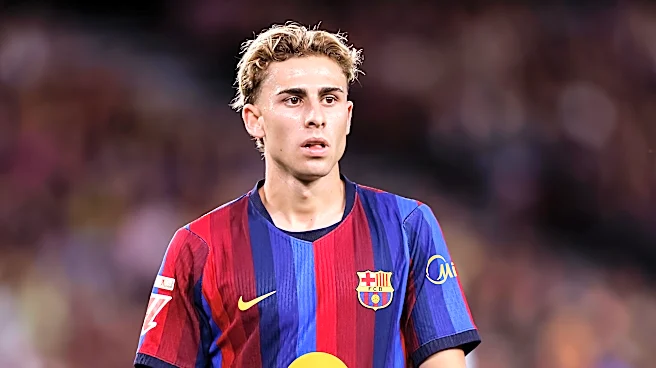
While you can never legislate for such an awful pass as the one played by Fermin Lopez to hand Villarreal the opener, the plain fact is that Barca, as a unit, weren’t anywhere close to having the focus required in the opening
exchanges of this match.
Not since the 1930s had the Catalans been 2-0 down so early in a home game, and the shock both on the pitch and in the stands was palpable.
Had Georges Mikautadze had his shooting boots on, it might even have been three before the 10-minute mark.
Whilst it’s unfair to place the blame on any individual for such a poor start, it’s clear that the visiting XI were much more up for the fight initially than a lethargic Barca, who arguably still hadn’t really got going with 30 minutes on the clock.
It’s not the first time we’ve seen it, and that has to be addressed.
Understated excellence from De Jong

Frenkie de Jong’s injury concerns shouldn’t be overlooked at this point in time because the Dutchman has struggled with his knee for some while.
Nevertheless, he provided a performance of real quality against Villarreal that would largely have gone under the radar.
By half-time, there had been signs that Barca could get back into the game, but they still needed some stability mixed in with some potency, and that’s exactly what de Jong helped to provide.
Lamine Yamal, rightly, will get the headlines, but when the highlights reel is watched back again, look at how many times the Dutchman not only calms things at the back, but provides the impetus to get Barca up the pitch and in a position to score.
Given the healthy amount of midfield talent available to Hansi Flick, could we see more of De Jong at centre-back, as a decent rotation option for Pau Cubarsi?
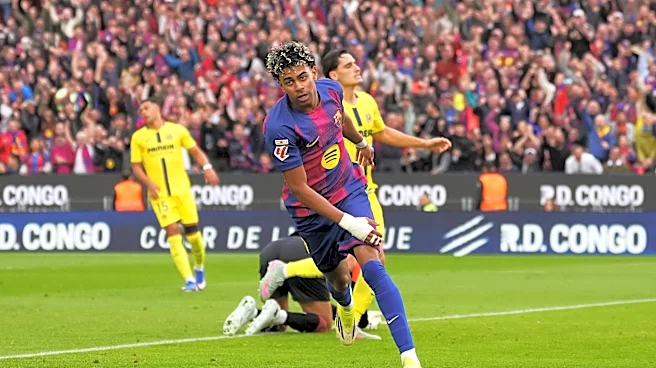
Cometh the hour, cometh Lamine

It’s worth pondering the two different halves of football that Lamine played.
Despite having begun the game in a below-par fashion, which included missing a penalty, the youngster didn’t allow this to cloud his entire performance.
Even those players more experienced would’ve been forgiven if they’d not been able to rally themselves to produce the goods, but Lamine is made of stronger stuff.
There’s a reason why many consider him the best player in the world, and the way in which he terrorised Villarreal down their left-hand side in the second half deserves plaudits.
At 19 years of age, and despite what everyone has come to expect, it still takes a very special talent indeed to be so mentally strong and changing games as regularly as Lamine has.
A joy to watch.